Liver transplantation is a complex, life-saving procedure that offers a second chance to patients suffering from end-stage liver disease. In India, where Living Donor Liver Transplant (LDLT) is the most common approach, the process involves rigorous evaluation criteria for both the recipient and the donor to ensure the best possible outcomes and maintain the highest ethical standards.
If you or a loved one are exploring this journey, understanding the fundamental criteria is the crucial first step.
The Recipient Criteria: Who Needs a Transplant?
The primary goal of the transplant evaluation team is to determine if a patient’s liver disease is severe enough to warrant a transplant, but not so advanced that they cannot survive the surgery.
- Medical Urgency: The MELD Score
The most critical factor for prioritizing patients for a deceased donor liver in India is the MELD (Model for End-Stage Liver Disease) Score.
- What it is: The MELD score is a numerical system (typically ranging from 6 to 40) calculated using three lab values: Serum Bilirubin, INR (International Normalized Ratio, a measure of clotting function), and Serum Creatinine (a measure of kidney function).
- Its Role: A higher MELD score indicates more severe liver dysfunction and a higher risk of death within 90 days. Patients with higher scores (generally $\geq 15$) are prioritized on the national waiting list for a deceased donor organ.
- The Alternatives: For patients with lower MELD scores but severe quality-of-life issues (like intractable ascites or frequent encephalopathy) or for those facing lengthy waiting times, the Living Donor Liver Transplant route is often recommended.
- Indications for Transplant (The “Why”)
A liver transplant is indicated for conditions where the liver has failed irreversibly:
- Chronic Liver Failure (Cirrhosis): Most commonly caused by Hepatitis B or C, severe alcoholic liver disease, or Non-Alcoholic Steatohepatitis (NASH/Fatty Liver Disease) that has progressed to end-stage failure.
- Acute Liver Failure (Fulminant): Sudden, rapid liver failure due to infections (like Hepatitis A/E) or drug toxicity (e.g., Paracetamol overdose).
- Liver Cancer (HCC): Patients with Hepatocellular Carcinoma (HCC) are candidates if their tumor burden falls within specific guidelines (like the UCSF or Milan Criteria), and the cancer has not spread outside the liver.
- Contraindications (When a Transplant is Not Possible)
The transplant team must rule out conditions that would make the procedure unsafe or unsuccessful:
- Active, Uncontrolled Sepsis (Infection).
- Advanced or Metastatic Cancer outside the liver.
- Severe, Irreversible Heart or Lung Disease making the patient unfit for major surgery.
- Inability to Adhere to Post-Transplant Medication (e.g., due to severe psychological or social issues).
The Donor Criteria: The Gift of Life
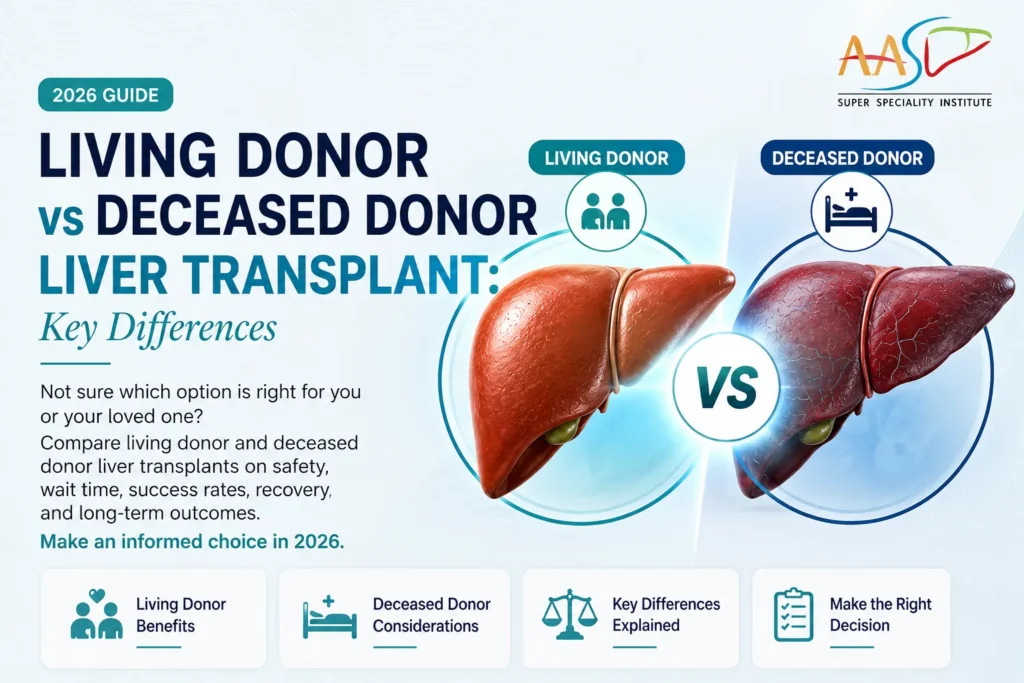
In India, the majority of transplants are Living Donor Liver Transplants (LDLT), where a portion of a healthy donor’s liver is removed for transplantation. The safety of the donor is the transplant team’s paramount concern.
- Legal and Ethical Requirements (As per THOTA, India)
- Relationship: The donor must typically be a “near relative” of the recipient (spouse, parent, sibling, child, grandparent, etc.). Non-relative donations require special authorization from a government-appointed committee to prevent commercial organ trade.
- Consent: The donor must be acting voluntarily and provide fully informed consent after understanding all risks, without any coercion or financial incentive.
- Medical and Physical Requirements
- Age: Generally between 18 and 55 years (criteria may vary slightly by center). Minors are not allowed to donate.
- Blood Type: The donor must have a compatible blood group with the recipient.
- Good Health: The donor must be in excellent physical and mental health, free from major chronic diseases such as:
- Uncontrolled diabetes or hypertension.
- Significant heart or lung disease.
- Active infections (like HIV or Hepatitis B/C).
- Any history of cancer.
- Liver Health: The donor must have a completely healthy liver. This is assessed via:
- Body Weight/BMI: Donors who are overweight or obese often have fatty liver disease, which is a strict contraindication to donation.
- Imaging (CT/MRI): These scans are vital to determine the liver’s anatomy, blood vessel structure, and—most importantly—to confirm that the remaining liver volume in the donor will be sufficient and safe after the partial removal.
- Liver Regeneration: The Safety Margin
The remarkable ability of the liver to regenerate is what makes LDLT possible. Surgeons only remove a portion of the liver (typically 40-70%) that is needed for the recipient. The remaining part in the donor will fully regenerate its size and function within a few months.
Seeking Clarity: Your Next Step
The journey to a liver transplant is complex, but with a clear understanding of the recipient and donor criteria, the path becomes manageable. At our liver transplant center, we emphasize meticulous evaluation and transparent communication at every step.
If you are considering a liver transplant for yourself or a loved one, the best course of action is to schedule a comprehensive evaluation with our expert team to determine both medical and surgical eligibility.
Contact us today to begin your comprehensive liver transplant evaluation.