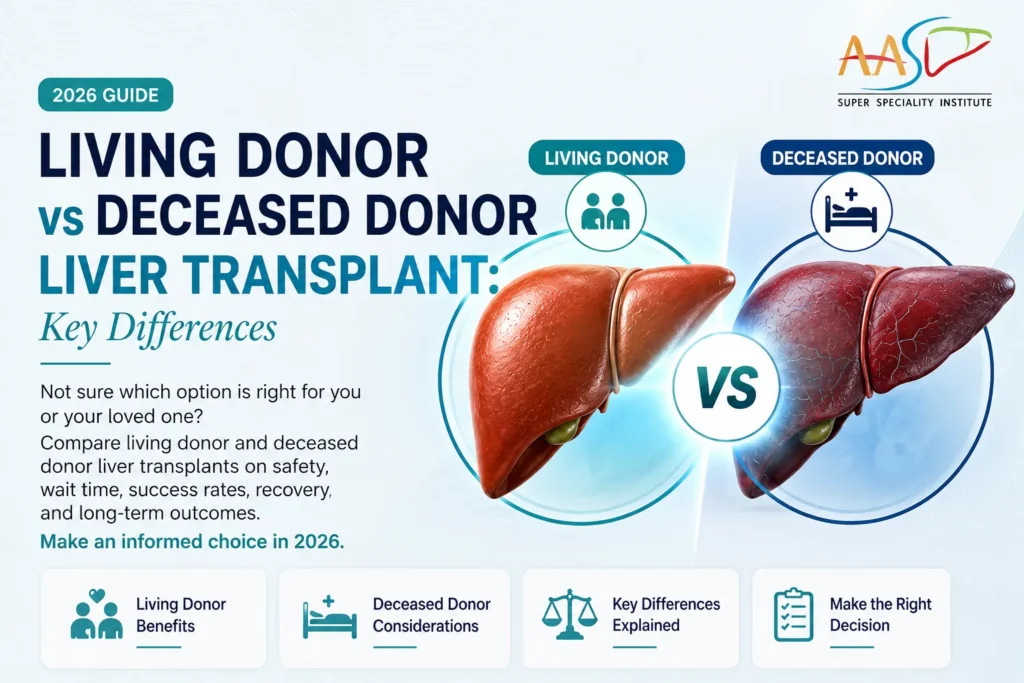
There’s a specific kind of devastation that comes from finding a willing, healthy donor within your family — only to be told their blood group doesn’t match, so they can’t donate. For years, that was the end of the conversation for a lot of families. It no longer has to be.
Why Blood Group Compatibility Mattered So Much
In a standard liver transplant, donor and recipient blood groups need to be compatible, similar to blood transfusion rules. This is because the recipient’s immune system carries pre-existing antibodies against incompatible blood group antigens, which can trigger a severe, rapid rejection of the transplanted liver — a reaction serious enough that ABO-mismatched transplants were considered unsafe for a long time and simply weren’t offered outside emergency, last-resort situations.
For families with only one willing living donor and a blood group mismatch, this meant either finding another donor, waiting for a deceased donor match, or, in some cases, having no viable path forward at all.
What Changed: ABO-Incompatible (ABOi) Transplant
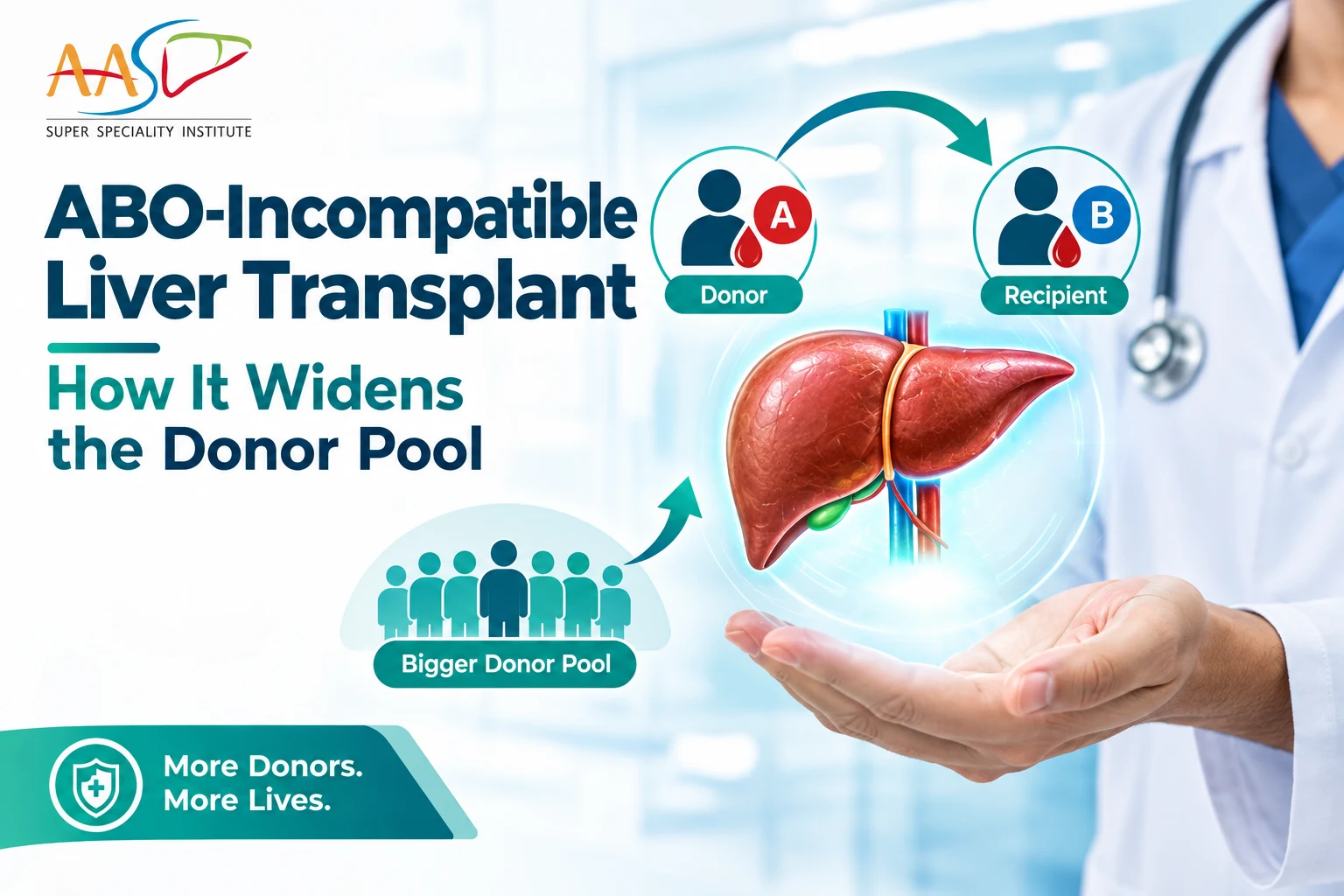
ABO-incompatible liver transplant allows transplantation across blood group barriers by neutralising the recipient’s harmful antibodies before surgery, rather than requiring a perfect blood group match. This is done through a combination of:
- Plasmapheresis or immunoadsorption — a process that filters the recipient’s blood to physically remove antibodies against the donor’s blood group antigens
- Rituximab, a medication given weeks before surgery to suppress the antibody-producing cells (B cells), reducing the chance of the antibodies rebounding quickly
- Intensified immunosuppression around the time of surgery and in the initial recovery period, since the rejection risk remains higher than in standard transplants
The recipient’s antibody levels (titres) are monitored closely before surgery to confirm they’ve dropped to a level considered safe to proceed.
Who Is a Good Candidate for ABOi Transplant?
This approach is generally considered when:
- The patient has a life-threatening liver condition needing transplant urgently
- No compatible living donor is available or willing
- The wait for a compatible deceased donor is likely to be longer than the patient’s condition can safely tolerate
It has proven particularly valuable in paediatric liver transplantation, where the outcomes of ABOi transplant in young children have been especially encouraging — children’s immune systems generally respond well to the desensitisation protocols used.
Is It as Safe as a Standard Transplant?
It’s fair to be direct here: ABOi transplant does carry a somewhat higher immunological risk than a blood-group-matched transplant, particularly the risk of antibody-mediated rejection in the early post-operative period. This is exactly why it’s performed at centres with specific experience in the protocol, with close monitoring in the days and weeks following surgery.
That said, outcomes have improved substantially with modern desensitisation protocols. What used to be considered high-risk and rarely attempted is now a recognised, viable pathway for carefully selected patients — the key phrase being “carefully selected,” since this isn’t a first-choice option when a compatible donor exists, but a genuine, effective alternative when one doesn’t.
Why This Matters for Families Who Were Told “No”
A meaningful number of families come to a transplant consultation having already been told elsewhere that their only donor “doesn’t match” and end up either continuing the search or, worse, giving up. ABOi transplant is a genuine option worth discussing before assuming a blood group mismatch is a dead end — it can be the difference between an elective, planned surgery with a known donor and an open-ended wait for a deceased donor match.
At AASLT, ABO-incompatible liver transplantation is offered as part of the broader complex liver transplant programme, alongside other advanced options like combined liver-kidney transplant and dual-lobe donor transplant for patients who don’t fit the standard transplant pathway. Dr. Vishal Kumar Chorasiya, an Associate Member of the International Liver Transplantation Society (ILTS), has built the transplant programme’s approach to complex cases specifically around not turning families away when the first donor doesn’t fit the standard criteria — evaluating every reasonable alternative, including ABOi and dual-lobe options, before concluding a family has no path forward.
What to Expect If You’re Considering This Route
The process is more involved than a standard transplant timeline, since desensitisation treatment needs to happen in the weeks before surgery, and monitoring afterward is more intensive. Expect:
- Confirmation of the blood group mismatch and antibody titre testing
- Desensitisation treatment (rituximab, followed by plasmapheresis closer to surgery)
- Repeat antibody titre checks to confirm it’s safe to proceed
- Surgery, followed by closer-than-usual monitoring for rejection in the initial recovery period
Research published in transplant literature, including studies reviewed by the International Liver Transplantation Society, has shown steadily improving graft and patient survival with ABOi transplant as desensitisation protocols have matured over the past decade.
Frequently Asked Questions
Does ABO-incompatible transplant work for all blood group combinations?
The specific antibody levels and desensitisation requirements vary by blood group combination. Your transplant team will assess titres for your specific donor-recipient pairing.
Is the recovery time longer than a standard transplant?
Hospital stay is often similar, but monitoring for rejection tends to be more intensive in the early weeks, with more frequent follow-up visits initially.
Can ABOi transplant be done for adults, not just children?
Yes, though outcomes and protocols have historically been most extensively studied in paediatric patients. Adult ABOi transplant is performed at experienced centres with appropriate patient selection.
If a blood group mismatch has been the roadblock in your family’s transplant plans, it may not be the final answer. Speak with AASLT’s transplant team about whether ABO-incompatible transplant is an option for your case.