“You have a fatty liver” has become one of the most common things doctors tell patients during a routine ultrasound in India — and one of the most casually dismissed. Most people hear it, shrug, and move on, partly because they feel completely fine. That’s actually the most important thing to understand about fatty liver disease: feeling fine doesn’t mean the liver is fine, and it also doesn’t mean it’s too late to fix.
What Fatty Liver Actually Means
Fatty liver disease means excess fat has built up in liver cells — a normal liver has very little fat, but when it exceeds around 5% of the liver’s weight, it’s classified as fatty liver. There are two broad categories relevant here:
- Alcohol-related fatty liver disease, caused by heavy alcohol use
- Non-Alcoholic Fatty Liver Disease (NAFLD), which occurs in people who drink little or no alcohol, and is closely linked to obesity, insulin resistance, and metabolic syndrome
Given how common NAFLD has become alongside rising obesity and diabetes rates, it’s now considered one of the most prevalent liver conditions in urban India.
NAFLD vs NASH: The Distinction That Actually Matters
This is where most people get confused, so here’s the simplest way to think about it:
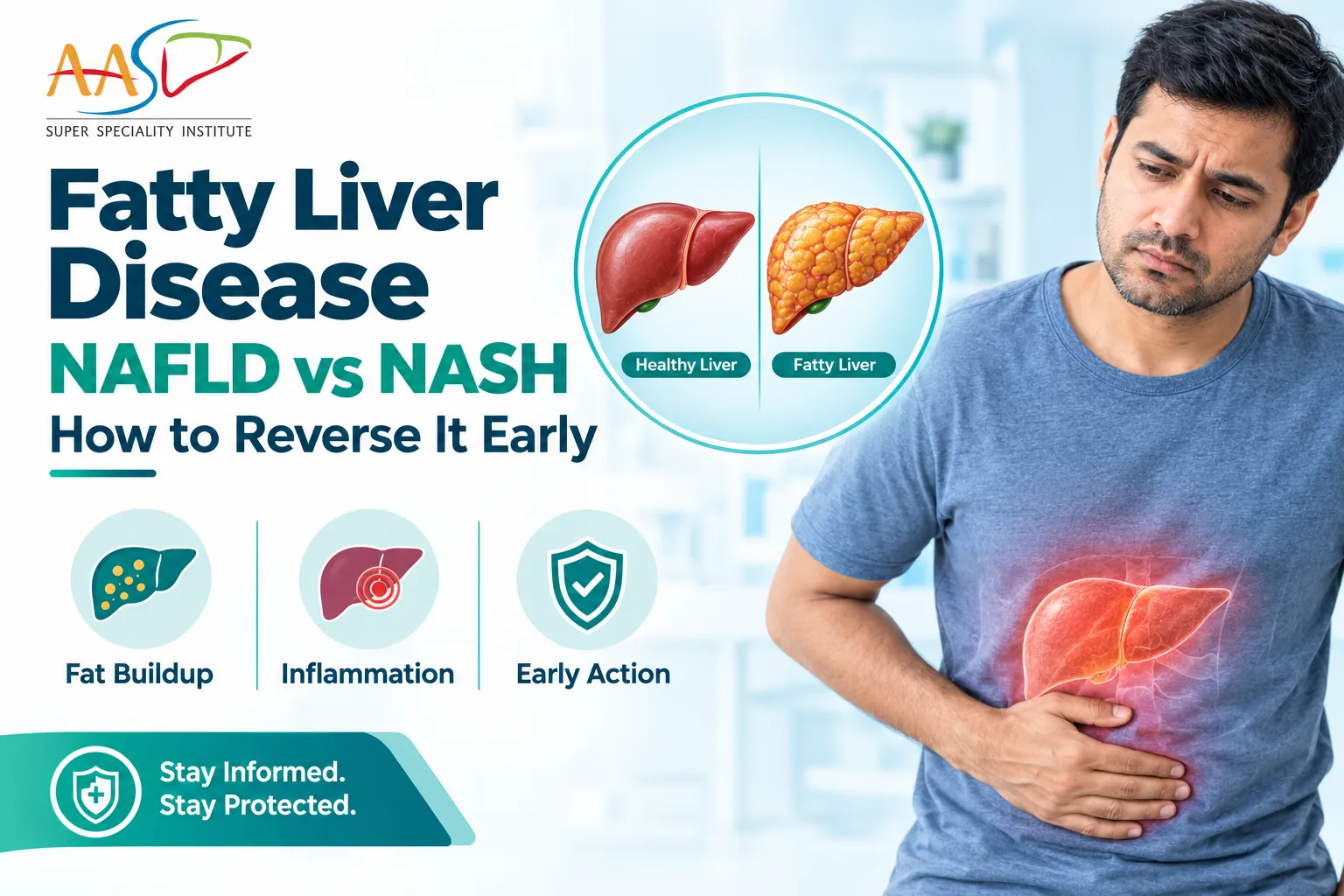
NAFLD is the umbrella term — simple fat accumulation in the liver, without significant inflammation or cell damage. At this stage, the liver is carrying extra fat but isn’t actively being harmed by it. This is the “reversible window” — the fat can be reduced and the liver can return close to normal with the right changes.
NASH (Non-Alcoholic Steatohepatitis) is what happens when that fat accumulation triggers inflammation and liver cell injury. Over years, this inflammation can lead to fibrosis (scarring), and in a subset of patients, progress all the way to cirrhosis. NASH is essentially NAFLD that has moved from “fat sitting there” to “fat actively causing damage.”
The tricky part: you cannot tell the difference between NAFLD and NASH just from how you feel, or even from a standard ultrasound alone in many cases. Both are frequently symptom-free until fairly advanced stages.
How It’s Actually Diagnosed
- Ultrasound typically picks up fat in the liver and is usually the first test that flags the issue
- Blood tests (liver enzymes, lipid profile, blood sugar/HbA1c) help assess metabolic risk factors and rule out other causes
- FibroScan (transient elastography) measures liver stiffness non-invasively, giving a much better sense of whether scarring has started
- Liver biopsy, in select cases, remains the most definitive way to distinguish NAFLD from NASH and to stage fibrosis accurately
If you were told “fatty liver” years ago and never had a FibroScan or repeat evaluation, it’s worth getting one — a lot changes between a first finding and where things stand today.
The Part Most People With Fatty Liver Don’t Realise
Here’s the genuinely good news buried in a diagnosis that sounds alarming: NAFLD, caught before it progresses to significant fibrosis, is largely reversible through lifestyle changes alone. Unlike many liver conditions, there’s no medication that’s a magic fix here — but there’s also no need for one, because the changes that work are well within most people’s control:
- Weight loss of 7–10% of body weight has been shown to meaningfully reduce liver fat and, in many cases, reverse early inflammation
- Reducing refined carbohydrates and sugary drinks, which drive fat accumulation in the liver more directly than dietary fat itself
- Regular physical activity, independent of weight loss, improves insulin sensitivity and reduces liver fat
- Managing diabetes and cholesterol aggressively if they coexist, since NAFLD rarely shows up alone
The catch is that this window doesn’t stay open indefinitely. The longer NAFLD goes unaddressed, particularly if it has already progressed to NASH with fibrosis, the harder it becomes to fully reverse, and the risk of eventual cirrhosis or liver cancer rises.
When Fatty Liver Has Already Progressed
For a smaller group of patients, NASH progresses despite lifestyle changes, or is caught late with significant fibrosis already present. In these cases, closer monitoring, sometimes newer pharmacological treatments (an evolving area of research), and periodic FibroScan or biopsy follow-up become part of the management plan. If fibrosis progresses to decompensated cirrhosis, the conversation shifts toward the same pathway covered on our liver diseases page — and in advanced cases, liver transplant evaluation.
At AASLT, patients with fatty liver are managed with this full trajectory in mind — not just treating today’s ultrasound finding, but tracking where a patient sits on the NAFLD-to-cirrhosis spectrum over the years. Dr. Vishal Kumar Chorasiya, with 18+ years across hepatology and liver surgery, has seen both ends of this: patients who reversed early fatty liver completely with lifestyle changes, and patients whose undiagnosed NASH quietly progressed to needing a liver transplant years later. That range of experience is exactly why fatty liver, despite sounding minor, is taken seriously here rather than brushed off.
A Note on “Detox” Diets and Supplements
It’s worth saying clearly: no supplement, juice cleanse, or “liver detox” product reverses fatty liver. According to the American Liver Foundation, the evidence-based approach to reversing NAFLD remains sustained lifestyle change — weight management, diet, and exercise — not detox products, most of which have no proven benefit for liver fat reduction.
Frequently Asked Questions
Can fatty liver be completely cured?
Early-stage NAFLD can often be reversed close to normal with sustained weight loss and lifestyle changes. Once significant fibrosis or cirrhosis has developed, damage is generally not fully reversible, though further progression can often be slowed or halted.
Does fatty liver cause any symptoms?
Most people with fatty liver have no symptoms at all, which is exactly why it’s usually discovered incidentally during a scan done for another reason.
Is fatty liver only a concern for overweight people?
No. While obesity is a major risk factor, a meaningful number of people with NAFLD have a normal body weight but still have underlying insulin resistance or metabolic risk factors.
If you’ve had a fatty liver finding on a scan and want a clear picture of where you stand, schedule an evaluation with AASLT’s hepatology team in Delhi NCR.