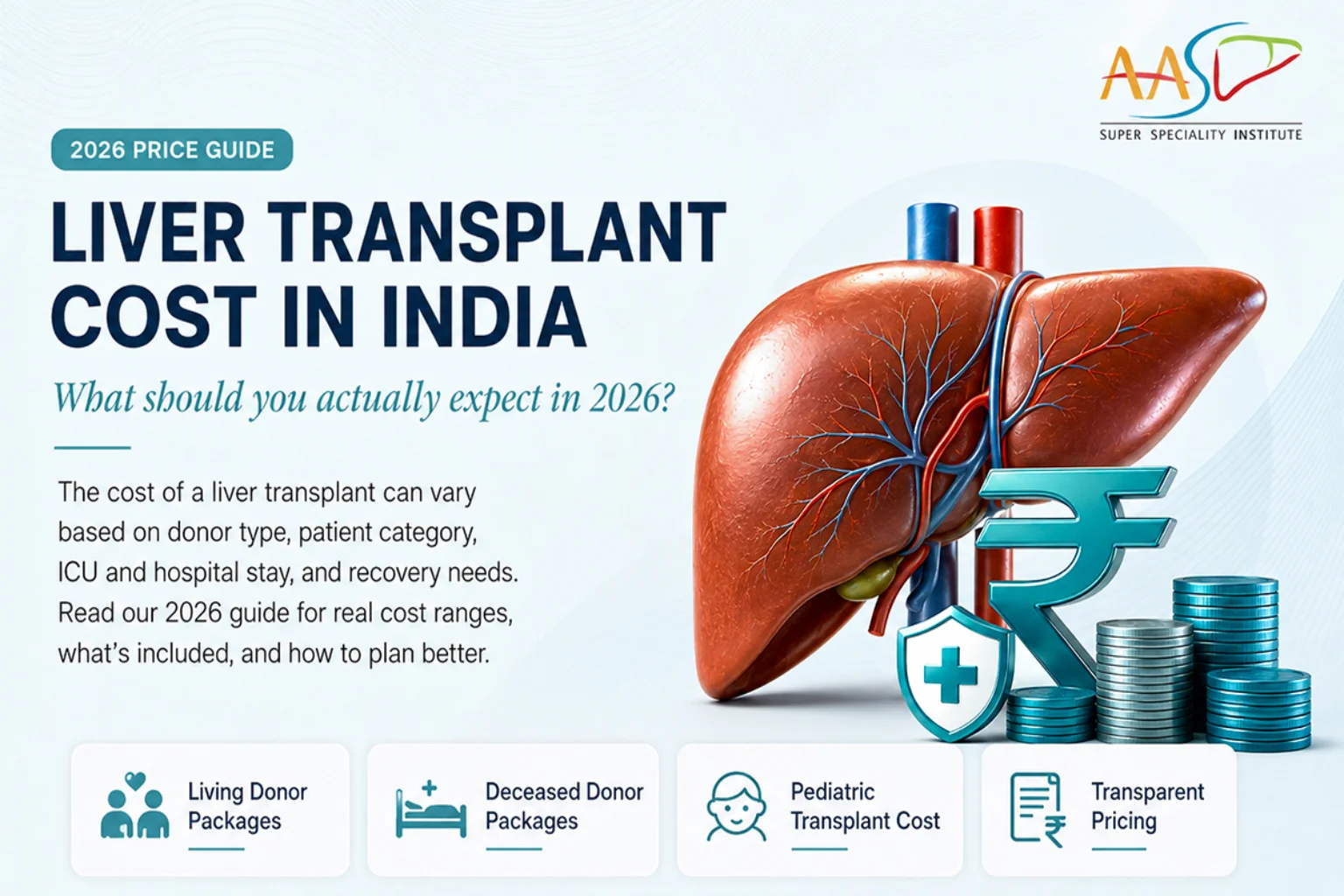
If you’ve just been told that a family member needs a liver transplant, the first thing everyone in the house starts Googling is “how much will this actually cost.” Fair enough — this is one of the biggest medical and financial decisions a family makes, and vague answers like “it depends” don’t help anyone plan.
So let’s skip the vague part. Here’s a real, working breakdown of liver transplant cost in India, why the number moves so much from patient to patient, and how to budget for it without getting blindsided halfway through treatment.
Why There’s No Single “Correct” Number
Every hospital website you visit will quote a different range, and none of them are lying — they’re just describing different situations. The final bill depends on:
- Whether it’s a living donor liver transplant (LDLT) or a deceased donor liver transplant (DDLT)
- How sick the patient is at the time of surgery (a stable cirrhosis patient costs less to manage than someone in acute liver failure with an ICU stay before surgery)
- Length of hospital stay, which is directly tied to how the patient recovers
- Whether there are complications like infection, bile leak, or rejection episodes
- The immunosuppressant regimen prescribed after discharge
- Room category chosen — general ward, semi-private, or private
This is why two patients at the same hospital, operated by the same surgeon, in the same month, can end up with bills that differ by several lakhs.
Living Donor vs Deceased Donor: The Cost Difference
Living Donor Liver Transplant (LDLT) involves two surgeries happening back-to-back — one to remove a portion of liver from a healthy donor, and one to implant it into the recipient. Because it involves two operating teams, two ICU beds, and two recovery tracks, LDLT typically costs somewhere in the range of ₹18–35 lakh in India, depending on the hospital and any complications along the way.
Deceased Donor Liver Transplant (DDLT) only involves the recipient’s surgery, since the donor organ comes through the national organ-sharing network. This usually brings the cost down slightly, though DDLT comes with its own uncertainty — the wait for a matching organ can stretch on, and every additional week on the waiting list (often in a hospital or with frequent monitoring) adds its own cost.
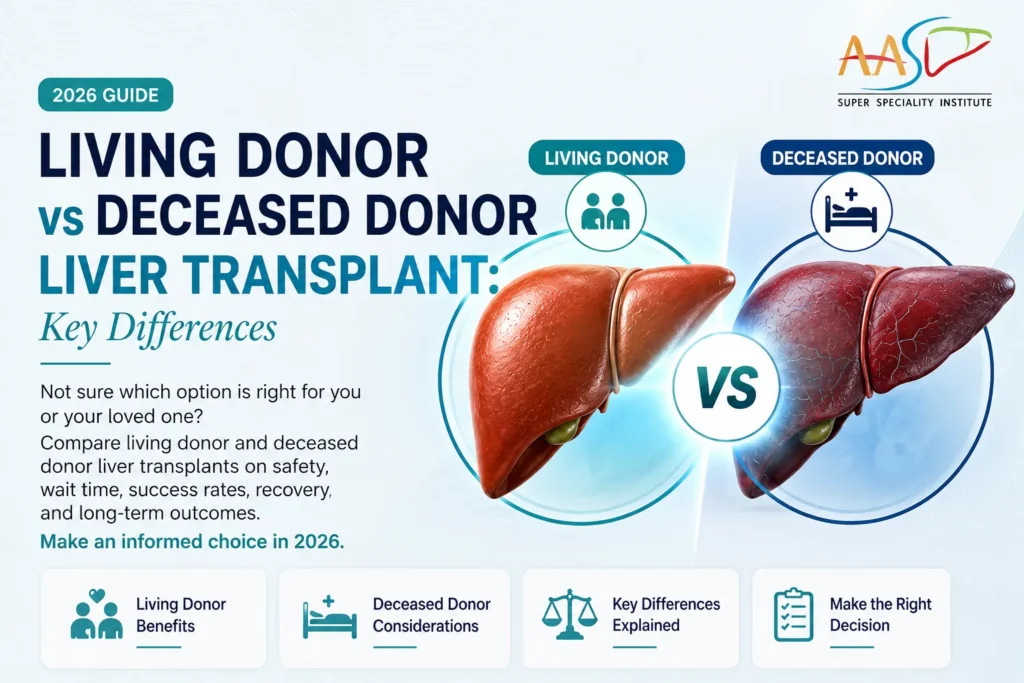
If you’re weighing which route makes sense for your family, our detailed comparison on living donor versus deceased donor liver transplant walks through the medical decision-making side of this, not just the pricing.
What the Bill Actually Breaks Down Into
A liver transplant package usually bundles these components:
- Pre-transplant workup — blood work, imaging, donor evaluation, cardiac and pulmonary fitness tests
- Surgery itself — OT charges, surgical team fees, anaesthesia
- ICU stay — typically 5–7 days for the recipient, shorter for the donor
- Ward stay — another 1–2 weeks depending on recovery pace
- Blood products and medication during admission
- Immunosuppressants — this continues for life, though doses (and cost) drop significantly after the first year
That last point catches families off guard the most. The transplant bill isn’t the end of the spending — immunosuppressive medication in the first year can run into tens of thousands of rupees per month, tapering down substantially after that as the body stabilises.
Hospital Stay Length: The Real Cost Driver
Families often fixate on the surgeon’s fee, but hospital-stay duration usually swings the total bill more than any single line item. A recipient who’s discharged in 12–14 days pays considerably less than one who develops a post-operative infection and stays 25 days. This is one reason surgical technique and post-operative monitoring protocols matter as much as the “headline price” a hospital quotes.
At AASLT, this is something Dr. Vishal Kumar Chorasiya has built his practice around. With over 18 years in liver transplant and HPB surgery and more than 2,500 transplants performed, his team’s focus on minimally invasive donor surgery and tight post-op protocols is specifically aimed at shortening recovery time — which, beyond the medical benefit, also keeps costs from spiralling. He’s an Associate Member of the International Liver Transplantation Society (ILTS) and a Lifetime Member of the Liver Transplant Society of India, credentials that reflect ongoing involvement in the field rather than a one-time qualification.
Are International Patients Charged Differently?
Generally, packages for international patients are quoted as fixed, all-inclusive costs to avoid the surprise-billing problem that’s common with itemised hospital invoices. If you’re coming from abroad, it’s worth reading through what’s covered under AASLT’s international patient support — visa assistance, interpreter support, and airport transfers are usually bundled in so the number you’re quoted upfront is close to the number you actually pay.
How to Get an Accurate Quote for Your Case
Because so much depends on the patient’s current liver condition, blood group compatibility with a potential donor, and any coexisting health issues, the only reliable way to get a number that applies to you is a direct evaluation. Bring:
- Recent liver function tests and imaging (ultrasound, CT, or MRI)
- MELD/PELD score if it’s already been calculated
- A list of potential living donors, if you have one, along with their blood groups
This lets the transplant team give you a realistic estimate instead of a generic range pulled from a brochure.
A Word on Choosing Based on Price Alone
It’s tempting to sort hospitals by the lowest quoted number, but a cheaper transplant with a longer, complication-heavy recovery often ends up costing more — in money, in time, and in stress on the patient. According to the World Health Organization’s guidance on organ transplantation, outcomes and post-transplant survival should weigh as heavily in a family’s decision as upfront cost, since transplant success rates vary meaningfully between centres.
Frequently Asked Questions
Does insurance cover liver transplant in India?
Many health insurance policies in India do cover liver transplant, but coverage limits, waiting periods, and pre-existing condition clauses vary widely. Check your policy’s organ transplant clause specifically before assuming full coverage.
Is the donor’s surgery cost included in the total package?
Yes, in an LDLT, the donor’s evaluation, surgery, and hospital stay are part of the overall transplant package — you’re not billed separately for the donor in most quoted packages.
How much does follow-up care cost after the first year?
Costs drop noticeably. Immunosuppressant doses reduce, and follow-up visits become less frequent, so ongoing monthly medication costs are usually a fraction of the first-year expense.
If you’d like a personalised cost estimate based on your reports, get in touch with the AASLT team for a consultation with Dr. Vishal Kumar Chorasiya and his transplant team.