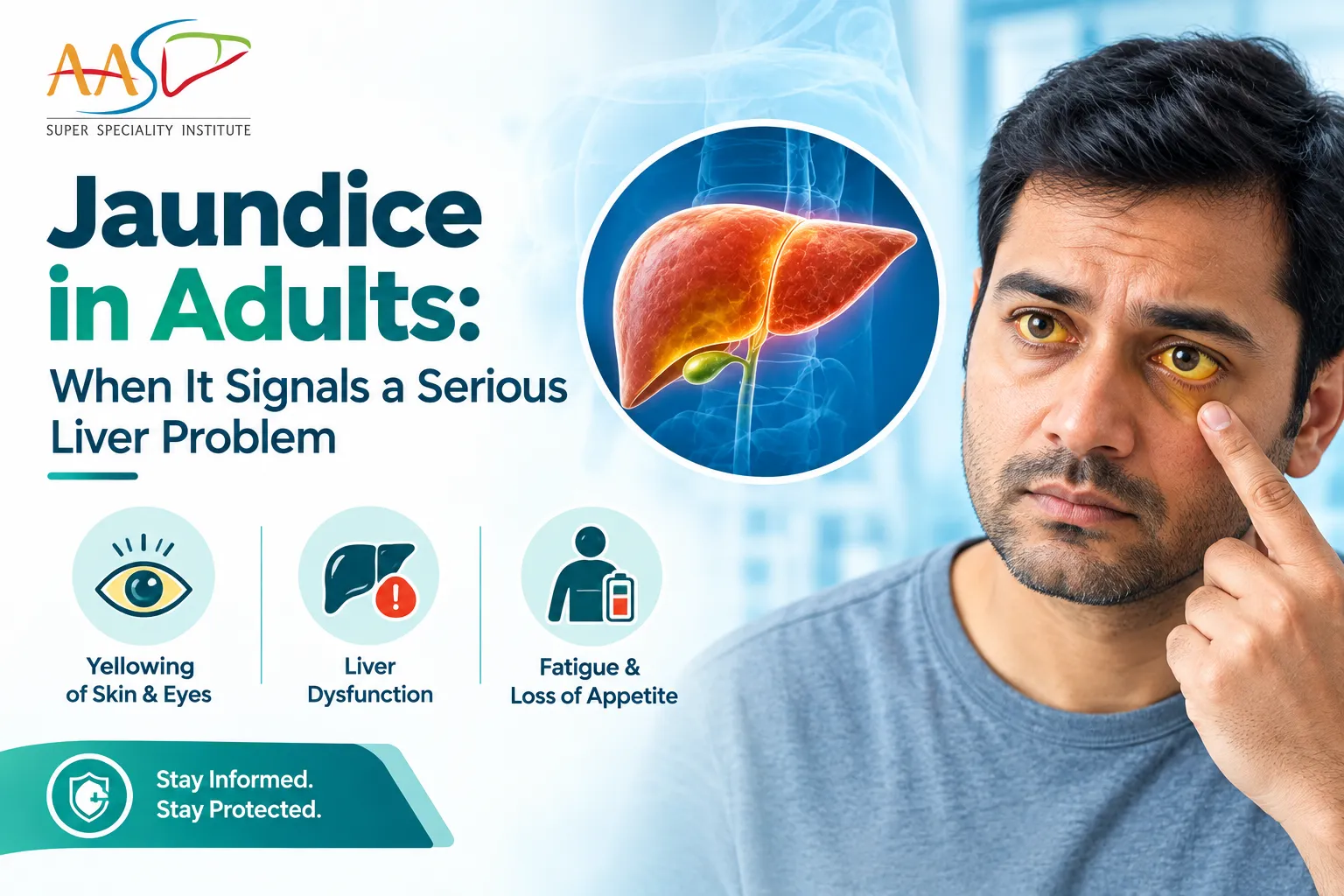
Yellow eyes tend to trigger panic, and rightly so — jaundice is your body’s most visible warning light that something’s off with the liver. But not every case means the same thing. Some resolve with rest and simple treatment; others are the first visible sign of advanced liver disease. Here’s how to tell them apart.
What Jaundice Actually Is
Jaundice happens when bilirubin — a yellow pigment produced when old red blood cells break down — builds up in the blood faster than the liver can process and clear it. Normally, the liver converts bilirubin into a form that gets excreted through bile into the intestine. When that process is disrupted, bilirubin accumulates and shows up as yellowing of the skin, the whites of the eyes, and sometimes dark urine.
Jaundice itself isn’t a disease — it’s a symptom. The real question is always: what’s causing it?
The Reassuring Cases
A fair number of adult jaundice cases are mild and reversible, including:
- Acute viral hepatitis (Hepatitis A or E, usually from contaminated food or water), which typically resolves with rest, hydration, and monitoring over a few weeks
- Gilbert’s syndrome, a common, harmless genetic condition where bilirubin processing is mildly slower than normal, causing intermittent, mild jaundice — usually discovered incidentally and needing no treatment
- Gallstone-related blockage that’s caught and treated early, before it causes lasting liver damage
In these situations, the yellowing typically fades once the underlying cause is treated, and the liver itself hasn’t necessarily sustained permanent damage.
Red Flags That Need Urgent Attention
Jaundice becomes a more serious signal when it comes with:
- Confusion or drowsiness — a possible sign of hepatic encephalopathy, where toxins the liver can’t clear are affecting brain function
- Swelling in the abdomen (ascites) or legs
- Easy bruising or bleeding — the liver produces clotting factors, and a struggling liver often shows up here first
- Rapid onset with severe abdominal pain and fever — could indicate a blocked bile duct with infection, which needs urgent intervention
- Jaundice that’s been building for weeks without an obvious cause
If jaundice appears alongside any of these, this isn’t a “wait and see” situation — get evaluated the same day, ideally at a centre with liver specialists and imaging on-site.
What Causes Jaundice in Chronic Liver Disease
In patients with long-standing liver conditions, jaundice often signals that the disease has moved into a more advanced or decompensated stage. Common underlying causes include:
- Cirrhosis, where extensive scarring has reduced the liver’s functional capacity below a critical threshold
- Chronic Hepatitis B or C that has progressed silently for years
- Alcohol-related liver disease, where ongoing damage eventually overwhelms the liver’s regenerative ability
- Liver cancer, particularly when a tumour obstructs bile flow or has significantly damaged liver tissue
For these patients, jaundice isn’t the disease starting — it’s often a sign the disease has been progressing quietly for a long time, and the liver’s reserve capacity is running out.
How Doctors Work Out the Cause
Diagnosis typically starts with a detailed history (alcohol use, medication history, recent travel, family history) and a blood panel checking:
- Total and direct bilirubin levels
- Liver enzymes (AST, ALT, ALP, GGT)
- Viral hepatitis markers
- Coagulation profile (PT/INR)
Depending on these results, imaging such as an ultrasound, CT, or MRCP may follow to check for blockages, tumours, or structural changes in the liver and bile ducts.
Treatment Depends Entirely on the Cause
There’s no single “jaundice treatment” — treatment targets whatever is causing the bilirubin buildup:
- Viral hepatitis: supportive care, sometimes antivirals for chronic cases
- Gallstone blockage: endoscopic or surgical removal of the obstruction
- Autoimmune liver disease: immunosuppressive medication
- Advanced cirrhosis with jaundice: management of complications, and evaluation for liver transplant if liver function has declined significantly
This last scenario is where our team’s experience in both hepatology and transplant surgery matters — a patient presenting with jaundice from decompensated cirrhosis needs an assessment of whether they’re approaching transplant-eligible territory, not just symptom management. You can read more about the full range of conditions we manage on our liver diseases page, and about transplant evaluation on our liver transplant page.
Dr. Vishal Kumar Chorasiya and the AASLT team see this exact scenario regularly — patients who came in for what looked like “just jaundice” and turned out to have significant, previously undiagnosed liver disease underneath it. With 18+ years managing the full spectrum from acute hepatitis to transplant-stage cirrhosis, the team is positioned to catch that distinction early rather than treating jaundice as an isolated symptom.
When to See a Doctor
According to Mayo Clinic, any new jaundice in an adult warrants prompt medical evaluation, since the underlying causes range from mild and self-limiting to serious conditions requiring urgent treatment — and there’s no reliable way to tell which one you’re dealing with just by looking at the skin.
Frequently Asked Questions
Can jaundice go away on its own?
Mild jaundice from a self-limiting cause like acute viral hepatitis can resolve on its own with supportive care. However, any new jaundice should still be evaluated, since it’s not possible to distinguish a mild cause from a serious one without testing.
Does jaundice mean liver damage is permanent?
Not necessarily. In many cases — especially acute viral hepatitis or a treated gallstone blockage — the liver recovers fully once the cause is addressed.
Is jaundice contagious?
Jaundice itself isn’t contagious, but if it’s caused by a viral hepatitis infection (like Hepatitis A), the underlying virus can be, depending on the type and mode of transmission.
If you’ve noticed yellowing of the eyes or skin, don’t wait to see if it fades. Book an evaluation with AASLT’s liver specialists in Delhi NCR.