
Navratri and Dussehra bring some of the most joyful eating patterns of the year in India — and also some of the most extreme. Nine days of fasting-friendly food, often followed straight into feasting once the fast breaks, puts a specific kind of stress on your digestive system that most people never connect to how they’re feeling by the end of the festival season.
Why This Particular Pattern Is Hard on Your Body
It’s not fasting itself that’s the issue, and it’s not feasting itself either — it’s the swing between the two, repeated over days or weeks, that catches your liver and gallbladder off guard.
During fasting days, many people replace regular meals with fried fasting snacks — sabudana vada, kuttu ki puri, deep-fried potato preparations — plus dairy-heavy sweets like kheer. These are often higher in fat than the meals they’re replacing, even though they feel “lighter” because they skip grains and lentils. Then, once the fast ends or a festival feast begins, rich, oily food arrives in large quantities, often eaten quickly and in bigger portions than usual.
For a healthy liver and gallbladder, this pattern is generally fine in moderation — your body is built to handle occasional rich meals. But for anyone with an existing vulnerability, the swings can genuinely tip things into a problem.
Who Should Be More Careful This Season
- People with known gallstones, even asymptomatic ones picked up incidentally on a scan — a sudden fatty meal is a classic trigger for a gallbladder attack (biliary colic)
- Anyone with fatty liver disease (NAFLD), where an extended run of high-fat eating can worsen liver fat levels, at least temporarily
- People with existing liver disease of any kind, where the liver’s reduced reserve capacity has less room to absorb dietary stress
- Anyone managing diabetes, since festive sweets and irregular meal timing can make blood sugar harder to control over these weeks
The Warning Sign Most People Dismiss as “Just Indigestion”
This is the one worth genuinely paying attention to: pain in the upper right side of the abdomen, especially if it comes on after a fatty meal and lasts more than 30 minutes. This is a classic pattern for a gallbladder attack, not ordinary indigestion — and if it happens repeatedly during the festival season, it’s a sign your gallbladder is struggling with what it’s being asked to process, not that you simply overate once.
If that pain comes with fever, chills, or yellowing of the skin or eyes, that’s no longer a “monitor it” situation — it needs same-day medical attention, since it can indicate an infected, blocked gallbladder or bile duct.
Practical Habits That Actually Help
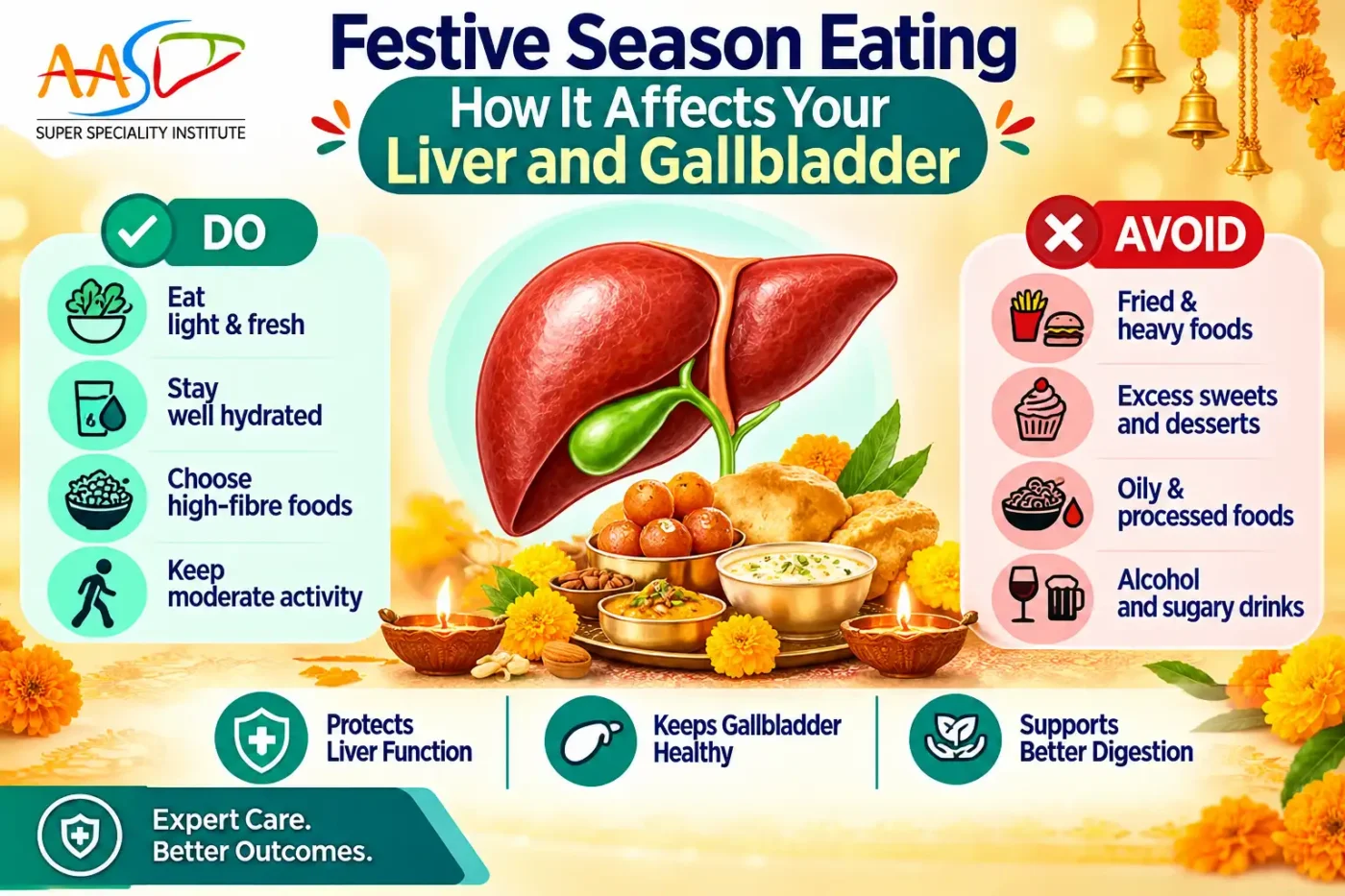
None of this means skipping the festivities. A few small adjustments go a long way:
- Don’t skip meals for long stretches before a big feast — arriving at a heavy dinner already starving tends to lead to overeating and larger, faster portions than your gallbladder can comfortably handle at once
- Favour roasted or steamed fasting foods over deep-fried versions where you have the choice — roasted makhana and steamed sabudana khichdi are just as filling as their fried counterparts
- Stay well hydrated, especially during fasting days, since dehydration alone can worsen digestive discomfort
- Pace festive meals rather than eating everything in one sitting where possible
- Pay attention to recurring symptoms rather than assuming every bit of discomfort is one-off indigestion, particularly if you already know you have gallstones or fatty liver
When to Actually See a Doctor
If you notice a pattern — recurring pain after fatty meals, bloating that’s become more frequent over the festival weeks, or any of the red-flag symptoms above — it’s worth getting checked rather than waiting until after the season ends. Gallstone-related problems in particular tend to escalate if ignored, and what starts as an occasional attack can progress to a more serious blockage or infection.
At AASLT, gallbladder and liver-related digestive issues are evaluated as part of the HPB and GI surgery programme, and if you’re managing a chronic liver condition, ongoing care sits under our liver diseases services. The team sees a genuine uptick in gallbladder-related consultations every festival season, which is exactly why a little planning around eating patterns during Navratri and Dussehra can save a lot of discomfort — and sometimes an emergency room visit.
A Note on Alcohol During the Festive Season
Diwali and the broader festive period often bring social drinking alongside rich food, and the combination is worth being mindful of if you have any existing liver condition. According to the American Liver Foundation, the liver processes both alcohol and dietary fat, and combining heavy amounts of both puts additional strain on an organ that may already be working harder than usual during a season of rich eating.
What a Gallbladder Attack Actually Feels Like
It helps to know the specific pattern, since so many people brush this off the first time it happens. A gallbladder attack (biliary colic) typically starts 30 minutes to a few hours after a fatty meal, builds to a steady, intense ache rather than coming in waves like typical stomach cramps, and settles in the upper right or central upper abdomen, sometimes radiating to the back between the shoulder blades or under the right shoulder. It usually lasts anywhere from 30 minutes to several hours before easing off on its own, only to potentially recur after the next rich meal.
What makes this different from routine indigestion is the specific triggering pattern (reliably after fatty food, not just any meal) and the intensity — this is usually described as a steady, gripping pain rather than the more generalised bloating or crampy discomfort of ordinary indigestion. If you notice this pattern repeating over the festival season, that repetition itself is diagnostic information worth bringing to a doctor, even if each individual episode eventually settles on its own.
Planning Ahead If You Already Know You Have Gallstones
If a previous scan has already shown gallstones, even without symptoms so far, the festive season is a reasonable moment to have a conversation with your doctor about whether elective gallbladder removal makes sense before symptoms force the issue. Patients with known, asymptomatic gallstones who go on to have a first attack often go on to have repeat attacks, and having that first attack land during a busy festival week — away from home, mid-celebration — is a genuinely worse time to discover you need urgent care than a calm, planned pre-season consultation.
According to the Mayo Clinic, once gallstones start causing symptoms, the likelihood of recurring attacks is high enough that most doctors recommend gallbladder removal rather than continued watchful waiting.
Frequently Asked Questions
Is it safe to fast during Navratri if I have fatty liver?
Generally yes, but favour whole, less fried fasting foods and stay well hydrated. If you have moderate to advanced fatty liver disease, it’s worth a quick check-in with your doctor before extended fasting.
How do I know if it’s a gallbladder attack and not just indigestion?
Gallbladder pain tends to be more localised (upper right abdomen), more intense, and lasts longer (often 30 minutes to a few hours) than typical indigestion, and it’s frequently triggered specifically by fatty meals.
Can festive overeating cause permanent liver damage?
A short period of rich eating is unlikely to cause lasting damage in an otherwise healthy liver. The concern is more for people with existing liver disease, or for patterns that continue well beyond the festival season into habitual overeating.
If festive-season digestive discomfort has become a recurring pattern, book a consultation or read more about our approach to HPB and GI surgery.