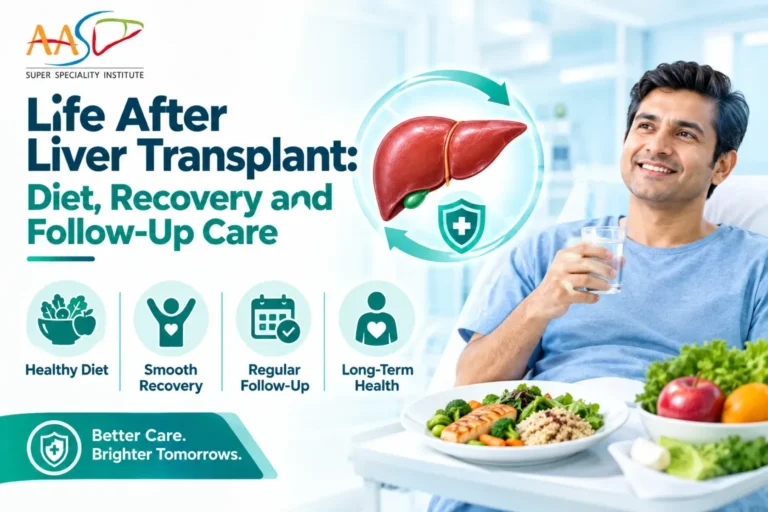
Key facts
- Medicines: Immunosuppressants (such as tacrolimus) prevent rejection and are taken for life at fixed times.
- Diet and lifestyle: High protein, low salt, freshly cooked food; No alcohol, ever; Avoid grapefruit and pomelo.
- Warning signs: Call the transplant team the same day for fever, jaundice, reduced urine, severe diarrhoea or if you miss medicine doses.
- Preventing infection: Wash hands often; wear a mask in crowded places for the first three months; Drink boiled or filtered water; avoid raw street food and unpasteurised milk; Keep away from people with colds, chickenpox or measles.
- Long-term health: Anti-rejection medicines can raise blood pressure, blood sugar and cholesterol, and affect the kidneys.
On this page
Medicines
Immunosuppressants (such as tacrolimus) prevent rejection and are taken for life at fixed times. Blood levels are checked often in the first months.
Follow-up schedule
| Time after surgery | Visits |
|---|---|
| First month | Twice a week |
| Months 2–3 | Weekly |
| Months 4–12 | Monthly |
| After 1 year | Every 3–6 months |
International patients can do most follow-up by video with local blood tests.
Diet and lifestyle
- High protein, low salt, freshly cooked food
- No alcohol, ever
- Avoid grapefruit and pomelo
- Walk daily; gym after 3 months with advice
Warning signs
Call the transplant team the same day for fever, jaundice, reduced urine, severe diarrhoea or if you miss medicine doses.
Common anti-rejection medicines
| Medicine | What it does | Points to know |
|---|---|---|
| Tacrolimus | Main medicine that prevents rejection | Fixed times, blood levels checked often |
| Mycophenolate | Adds to tacrolimus in the first months | Can upset the stomach |
| Steroids (prednisolone) | Used early and for rejection | Usually tapered off |
| Everolimus or sirolimus | Alternative in some patients | Can protect kidney function |
Never stop, skip or change a medicine without talking to the transplant team. Many common medicines, including some antibiotics and herbal remedies, change tacrolimus levels.
Preventing infection
- Wash hands often; wear a mask in crowded places for the first three months
- Drink boiled or filtered water; avoid raw street food and unpasteurised milk
- Keep away from people with colds, chickenpox or measles
- Keep pets clean; avoid cleaning bird cages and litter trays
- Take preventive antibiotics and antivirals exactly as prescribed
Long-term health
Anti-rejection medicines can raise blood pressure, blood sugar and cholesterol, and affect the kidneys. Regular checks, a healthy weight, daily exercise and no tobacco keep these risks low. Use sunscreen and have yearly skin and cancer screening, because skin cancers are more common after transplant.
Emotional recovery
Feeling low, anxious or irritable in the first months is common, and partly caused by medicines. Talk to the team; counselling helps. Many patients also find it useful to meet other recipients. See patient stories.
Frequently asked questions
Can women become pregnant after transplant?
Yes, usually after one to two years with planning; some medicines are changed first.
What should I eat after a liver transplant?
Freshly cooked, high-protein meals with plenty of vegetables, limited salt and sugar, and no alcohol. Avoid grapefruit and pomelo, which affect tacrolimus levels.
When can I drive or travel after transplant?
Driving is usually possible after about 6–8 weeks, once you can brake hard without pain. International patients usually fly home after the team clears them, often 6–8 weeks after surgery.
What are the signs of rejection?
Rejection often has no symptoms and is found on blood tests. Fever, jaundice, dark urine, pale stools or tummy pain need a same-day call to the team.
Can I exercise after liver transplant?
Walking starts in hospital. Swimming and the gym are usually possible after about three months, once the wound has healed.
How often will I need blood tests?
Twice a week in the first month, then weekly, then monthly, and every 3–6 months after the first year.

Group Director – Liver Transplant, HPB, GI & Robotic Surgery, Yatharth Group of Hospitals. 18+ years in liver transplantation.
This page is for general information and is not a substitute for medical advice. Speak to the transplant team for a personal assessment.