
Key facts
- Common causes: Viral hepatitis A and E; Paracetamol overdose; Drug and herbal medicine injury.
- Warning signs: Jaundice followed by drowsiness, confusion or unusual behaviour, bleeding and very low blood sugar.
- Emergency pathway: Patients are managed in a liver ICU.
- What is acute liver failure? Acute liver failure is a rapid loss of liver function, within days or weeks, in a person who usually had no previous liver disease.
- How it is treated: Admission to a liver ICU with close monitoring of the brain, kidneys and blood sugar; Specific antidotes where possible, for example N-acetylcysteine for paracetamol poisoning; Treatment of infection, bleeding and kidney failure.
On this page
Common causes
- Viral hepatitis A and E
- Paracetamol overdose
- Drug and herbal medicine injury
- Wilson disease
Warning signs
Jaundice followed by drowsiness, confusion or unusual behaviour, bleeding and very low blood sugar. Go to an emergency department immediately.
Emergency pathway
Patients are managed in a liver ICU. If recovery criteria are not met, an urgent living donor evaluation is completed in 24–48 hours. Call the transplant coordinator on +91 79007 20095.
What is acute liver failure?
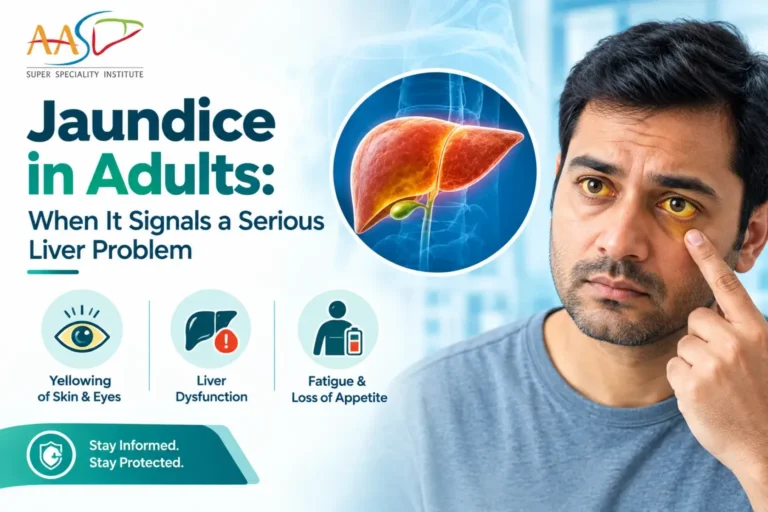
Acute liver failure is a rapid loss of liver function, within days or weeks, in a person who usually had no previous liver disease. The liver stops clearing toxins and making clotting proteins, which leads to jaundice, bleeding and swelling of the brain. It is a medical emergency.
How it is treated
- Admission to a liver ICU with close monitoring of the brain, kidneys and blood sugar
- Specific antidotes where possible, for example N-acetylcysteine for paracetamol poisoning
- Treatment of infection, bleeding and kidney failure
- Plasma exchange in selected patients while the liver recovers
- Early transplant assessment using the King’s College or similar criteria
Emergency liver transplant
When the liver is not expected to recover, an emergency transplant is life-saving. A family member can be evaluated as a living donor within 24–48 hours, or the patient is listed as top priority for a deceased donor liver. Survival after an emergency transplant for acute liver failure is good when it is done in time.
Acute-on-chronic liver failure
People with existing chronic liver disease can deteriorate suddenly after an infection, alcohol binge, hepatitis flare or bleeding. This is called acute-on-chronic liver failure (ACLF). It needs urgent ICU care, and some patients need an early transplant.
Frequently asked questions
What causes acute liver failure in India?
The most common causes are hepatitis E and A, drug-induced liver injury (including herbal and dietary supplements), and paracetamol overdose. Wilson disease is a cause in young people.
Can the liver recover from acute liver failure?
Yes, many patients recover with intensive care, especially after hepatitis A or paracetamol. Those who do not need an urgent transplant.
How quickly can an emergency transplant be done?
A living donor evaluation can be completed in 24–48 hours if a suitable family donor is available.
What are the warning signs?
Jaundice followed by confusion, drowsiness, unusual behaviour, bleeding or very low blood sugar.
Can herbal medicines damage the liver?
Yes. Some herbal, ayurvedic and bodybuilding supplements can cause serious liver injury. Tell your doctor about everything you take.

Group Director – Liver Transplant, HPB, GI & Robotic Surgery, Yatharth Group of Hospitals. 18+ years in liver transplantation.
This page is for general information and is not a substitute for medical advice. Speak to the transplant team for a personal assessment.