Key facts
- How it works: The donor gives either the right lobe (for adults) or the left lateral segment (for children).
- Donor safety: Donor safety is the first priority: the donor has their own independent assessment and can withdraw at any point.
- Donor recovery: Hospital stay about 7–10 days; Back to desk work in about 4–6 weeks; Heavy lifting avoided for about 3 months.
- When blood groups do not match: An ABO-incompatible transplant allows a willing donor with a different blood group to donate after preparation of the recipient.
- What is a partial liver transplant? A living donor transplant is also called a partial liver transplant, because only part of the donor’s liver is used.
On this page
How it works
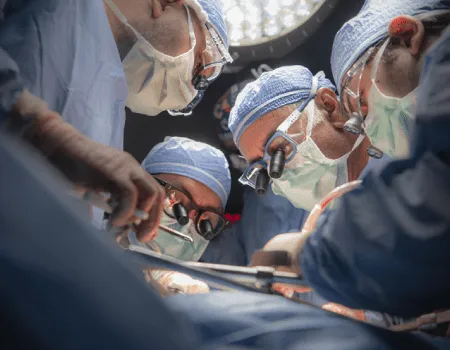
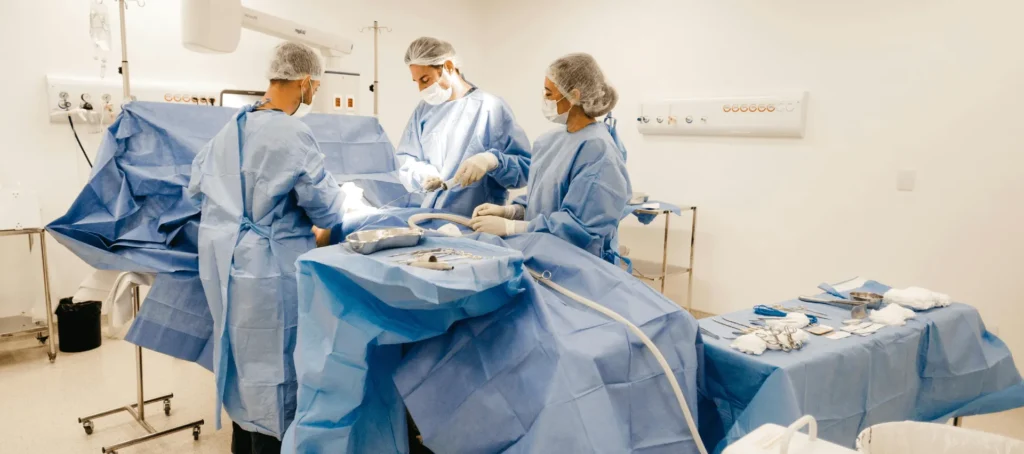
The donor gives either the right lobe (for adults) or the left lateral segment (for children). The operations take place at the same time in adjoining theatres.
Donor safety
Donor safety is the first priority: the donor has their own independent assessment and can withdraw at any point. Serious complications are uncommon but real, and are discussed openly before consent.
Donor recovery
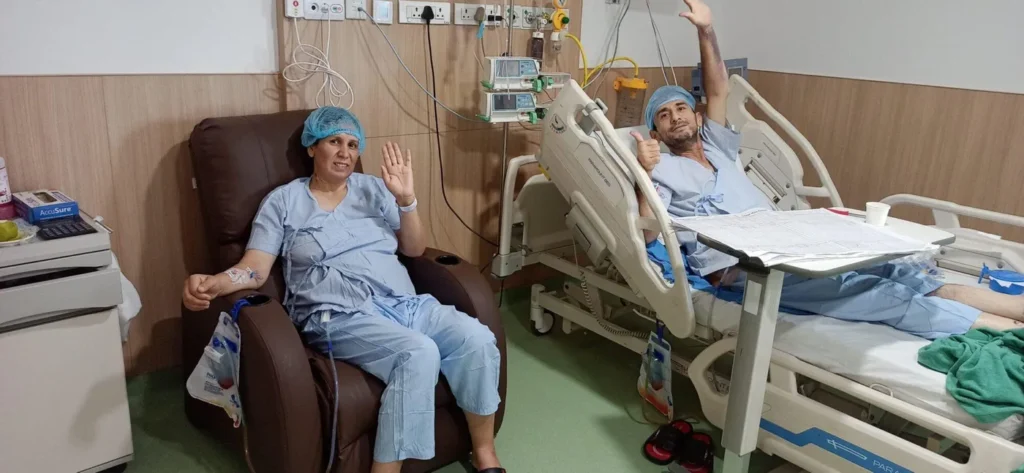
- Hospital stay about 7–10 days
- Back to desk work in about 4–6 weeks
- Heavy lifting avoided for about 3 months
- Liver regrows to near full size in about 6–8 weeks
When blood groups do not match
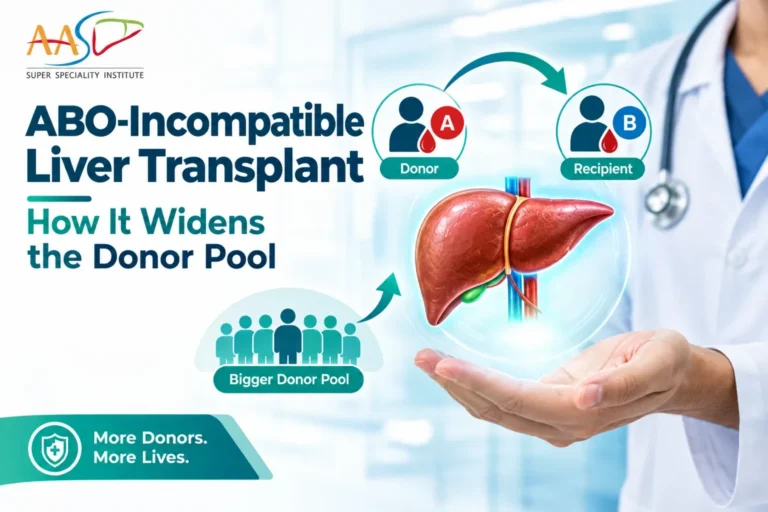
An ABO-incompatible transplant allows a willing donor with a different blood group to donate after preparation of the recipient.
What is a partial liver transplant?
A living donor transplant is also called a partial liver transplant, because only part of the donor’s liver is used. The liver is the only solid organ that regrows. Within weeks, both the donor’s remaining liver and the recipient’s new graft grow back to near full size.
| Graft | Share of the donor liver | Usually for |
|---|---|---|
| Right lobe | About 60% | Adult recipients |
| Left lobe | About 40% | Smaller adults and teenagers |
| Left lateral segment | About 20% | Infants and young children |
Advantages of a living donor transplant
- Surgery is planned at the best time, before the patient becomes critically ill
- No uncertain wait on the deceased donor list
- The donor is fully evaluated, so the quality of the graft is known
- The liver is transplanted within minutes, with very short cold storage
Who may need a partial liver transplant?
Adults with decompensated cirrhosis, liver cancer within criteria or acute liver failure, and children with biliary atresia or metabolic disease, especially when a deceased donor liver is unlikely in time. See eligibility.
Donor surgery: open, laparoscopic or robotic
The donor operation can be done through an open incision or, in selected donors, with laparoscopic or robotic assistance and smaller incisions. The approach is chosen for the donor’s safety first, depending on the liver’s anatomy.
Frequently asked questions
Will the donor need medicines for life?
No. Donors usually take pain relief for a few weeks and need no long-term medicines.
Can the donor have children later?
Yes, donation does not affect fertility.
Is living liver donation safe?
Donor surgery is a major operation, but serious complications are uncommon at experienced centres. Every donor has an independent assessment and can withdraw at any stage.
How long does it take for the donor’s liver to grow back?
Most of the regrowth happens within 6–8 weeks, and liver function returns to normal well before that.
Can the donor live a normal life after donation?
Yes. Donors return to normal work, exercise and family life, need no long-term medicines, and can have children.
What is the difference between a partial and a whole liver transplant?
A partial (living donor) transplant uses part of a living person’s liver. A whole liver transplant uses the full liver from a deceased donor.
How long does the donor stay in hospital?
About 7–10 days, with desk work usually possible in 4–6 weeks.

Group Director – Liver Transplant, HPB, GI & Robotic Surgery, Yatharth Group of Hospitals. 18+ years in liver transplantation.
This page is for general information and is not a substitute for medical advice. Speak to the transplant team for a personal assessment.