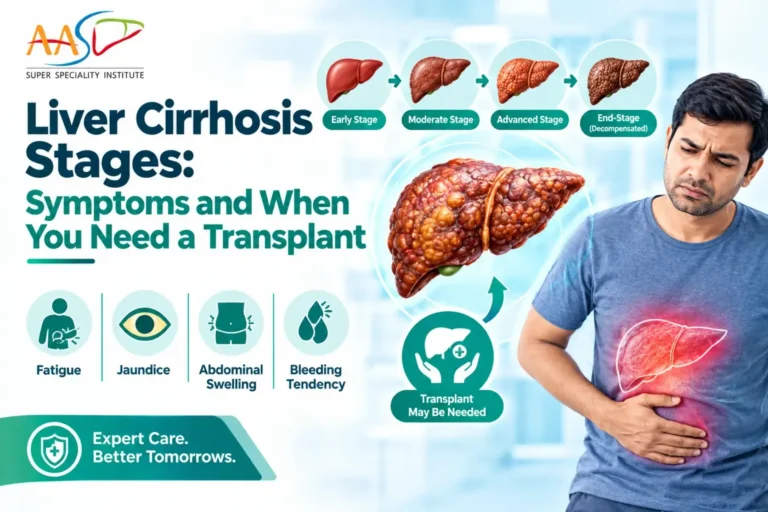
Key facts
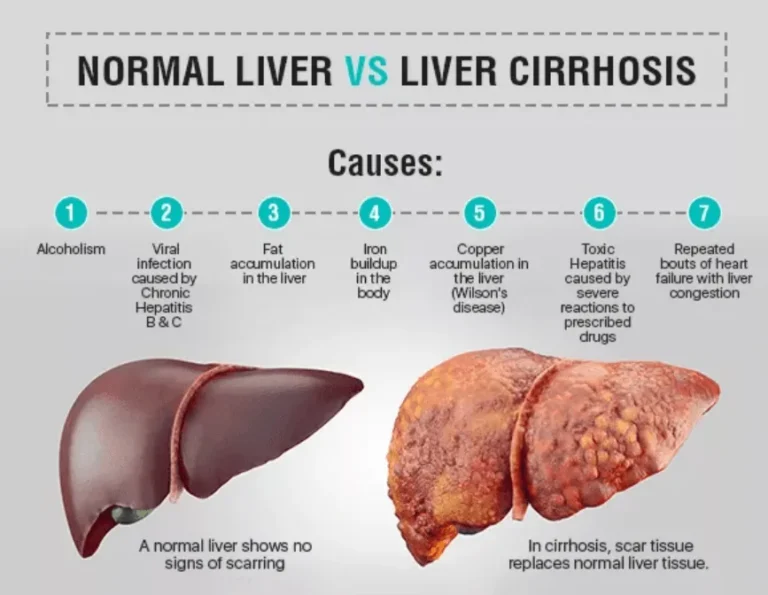
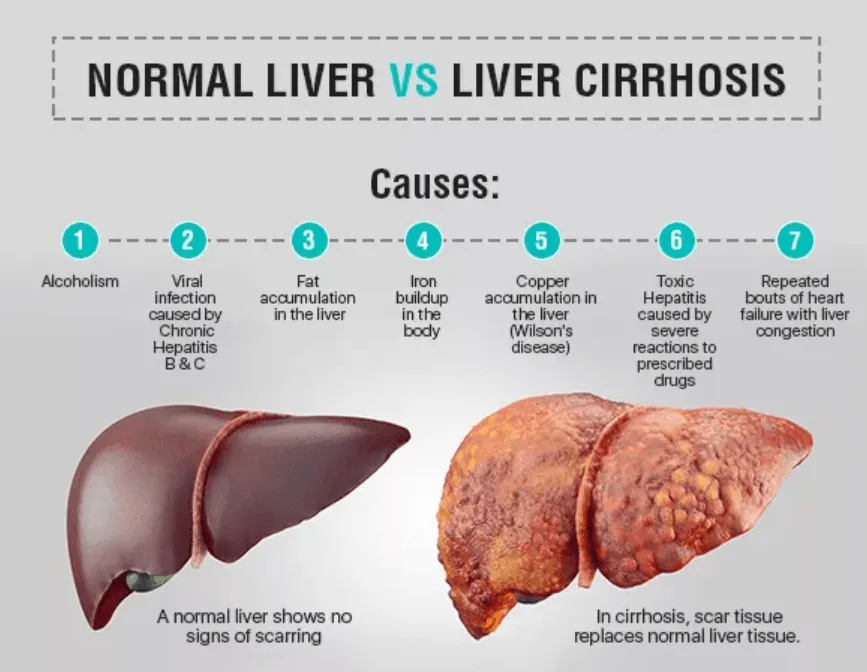
- Common causes in India: Alcohol; Hepatitis B and C; Fatty liver disease (MASLD / NASH).
- Stages: Compensated cirrhosis may cause no symptoms.
- Treatment: Stop alcohol and treat hepatitis; Diuretics and salt restriction for fluid; Beta-blockers or banding for varices.
- How cirrhosis is diagnosed: Blood tests (liver function, platelets, INR), an ultrasound and a FibroScan usually confirm cirrhosis.
- Living with cirrhosis: No alcohol in any amount; Eat a late-evening snack and enough protein; avoid prolonged fasting; Limit salt to about 5 g a day if you have fluid.
On this page
Common causes in India
- Alcohol
- Hepatitis B and C
- Fatty liver disease (MASLD / NASH)
- Autoimmune and genetic diseases
Stages
Compensated cirrhosis may cause no symptoms. Decompensated cirrhosis brings fluid in the abdomen, bleeding from varices, confusion or jaundice. Doctors use Child-Pugh and MELD scores to judge severity.
Treatment
- Stop alcohol and treat hepatitis
- Diuretics and salt restriction for fluid
- Beta-blockers or banding for varices
- Six-monthly ultrasound to screen for cancer
- Transplant evaluation once MELD rises or complications start
Symptoms of cirrhosis
| Early (compensated) | Late (decompensated) |
|---|---|
| Often none | Fluid in the abdomen (ascites) and leg swelling |
| Tiredness and weakness | Vomiting blood or black stools (varices) |
| Loss of appetite and weight | Confusion or drowsiness (encephalopathy) |
| Spider-like veins on the skin, red palms | Jaundice, easy bruising, muscle wasting |
How cirrhosis is diagnosed
Blood tests (liver function, platelets, INR), an ultrasound and a FibroScan usually confirm cirrhosis. An endoscopy checks for varices, which can bleed. A CT or MRI may be done to look for liver cancer. A biopsy is needed only when the cause is unclear.
Living with cirrhosis
- No alcohol in any amount
- Eat a late-evening snack and enough protein; avoid prolonged fasting
- Limit salt to about 5 g a day if you have fluid
- Avoid painkillers such as ibuprofen and diclofenac; check every new medicine with your doctor
- Get vaccinated against hepatitis A and B, influenza and pneumonia
- Have an ultrasound every six months to screen for liver cancer
When cirrhosis needs a transplant
A transplant is considered once cirrhosis decompensates (fluid, bleeding, confusion or jaundice), when the MELD score reaches about 15 or more, or when liver cancer develops. A transplant replaces the scarred liver and is the only cure for end-stage cirrhosis. See transplant eligibility.
Frequently asked questions
Can cirrhosis be reversed?
Early scarring can improve when the cause is removed; established cirrhosis usually cannot, but can be stabilised.
What is CLD cirrhosis?
CLD stands for chronic liver disease. Cirrhosis is its advanced stage, when long-term damage has replaced healthy liver tissue with scar tissue.
What are the symptoms of liver cirrhosis?
Early cirrhosis may cause none. Later it causes tiredness, fluid in the abdomen, swelling of the legs, jaundice, vomiting blood and confusion.
How long can you live with cirrhosis?
Many people with compensated cirrhosis live for years when the cause is controlled. Once complications appear, survival falls, and a transplant should be considered.
Is cirrhosis always caused by alcohol?
No. In India, hepatitis B and C and fatty liver disease are also common causes, along with autoimmune and genetic conditions.
What is the MELD score?
A score from 6 to 40 calculated from bilirubin, creatinine and INR that shows how severe liver disease is and helps decide when a transplant is needed.

Group Director – Liver Transplant, HPB, GI & Robotic Surgery, Yatharth Group of Hospitals. 18+ years in liver transplantation.
This page is for general information and is not a substitute for medical advice. Speak to the transplant team for a personal assessment.