Key facts
- Acute pancreatitis: Usually caused by gallstones or alcohol.
- Chronic pancreatitis: Causes long-term pain, diabetes and poor digestion.
- Cysts and tumours: Many cysts are harmless and only need monitoring; some need removal.
- Surgery for pancreatitis: Most acute pancreatitis is treated without an operation.
- Pancreatic cysts: Cysts are often found by chance on scans.
On this page
Acute pancreatitis
Usually caused by gallstones or alcohol. Most cases settle with hospital care; infected fluid collections may need endoscopic or keyhole drainage.
Chronic pancreatitis
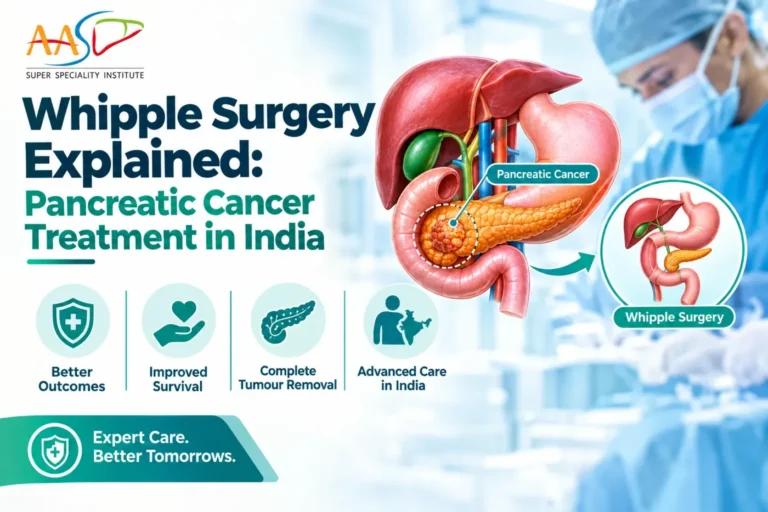
Causes long-term pain, diabetes and poor digestion. Surgery (such as Frey or Whipple) helps when medicines and endoscopy fail.
Cysts and tumours
Many cysts are harmless and only need monitoring; some need removal. Tumours are assessed with CT, MRI and endoscopic ultrasound.
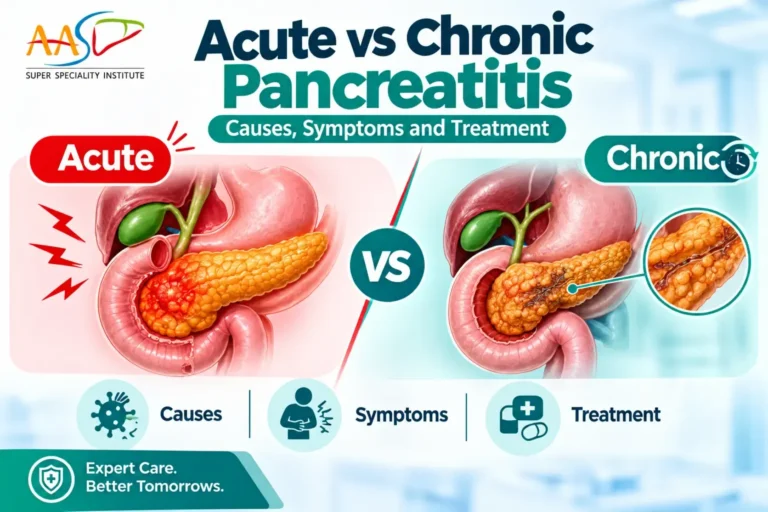
Acute vs chronic pancreatitis
| Acute pancreatitis | Chronic pancreatitis | |
|---|---|---|
| Onset | Sudden severe upper abdominal pain, often going to the back | Long-term or recurring pain |
| Common causes | Gallstones, alcohol, high triglycerides | Alcohol, tropical (idiopathic) pancreatitis, genetics |
| Course | Most recover fully | Permanent damage over time |
| Complications | Fluid collections, infected necrosis | Diabetes, poor digestion, stones in the duct |
| Treatment | Hospital care; drainage if infected; gallbladder removal | Pain control, enzymes, endoscopy, surgery |
Surgery for pancreatitis
Most acute pancreatitis is treated without an operation. Infected dead tissue (necrosis) is drained by endoscopy or keyhole surgery in a stepwise approach. After gallstone pancreatitis, the gallbladder is removed to prevent another attack. In chronic pancreatitis with a dilated duct or stones, a Frey or similar operation drains the duct and relieves pain when endoscopy has failed.
Pancreatic cysts
Cysts are often found by chance on scans. Most are harmless, but some types (mucinous cysts and IPMN) can turn into cancer. MRI and endoscopic ultrasound help decide which cysts only need watching and which should be removed.
Pancreatic cancer
Warning signs include painless jaundice, unexplained weight loss, new diabetes after the age of 50, and back pain. Surgery, such as a Whipple operation or distal pancreatectomy, combined with chemotherapy gives the best chance of cure when the cancer has not spread.
Frequently asked questions
What is the difference between acute and chronic pancreatitis?
Acute pancreatitis is a sudden inflammation that usually settles completely. Chronic pancreatitis is long-term damage that causes recurring pain, diabetes and poor digestion.
Can pancreatitis be cured?
Acute pancreatitis usually heals fully, especially when the cause, such as gallstones, is treated. Chronic pancreatitis cannot be reversed, but pain and digestion can be well controlled.
When does pancreatitis need surgery?
When infected fluid or dead tissue needs draining, to remove the gallbladder after gallstone pancreatitis, or for chronic pancreatitis pain that does not respond to other treatment.
Are all pancreatic cysts cancerous?
No. Most are benign. Some types carry a risk of cancer and are watched closely or removed.
What are the early signs of pancreatic cancer?
Painless jaundice, weight loss, loss of appetite, new-onset diabetes and upper abdominal or back pain.

Group Director – Liver Transplant, HPB, GI & Robotic Surgery, Yatharth Group of Hospitals. 18+ years in liver transplantation.
This page is for general information and is not a substitute for medical advice. Speak to the transplant team for a personal assessment.