
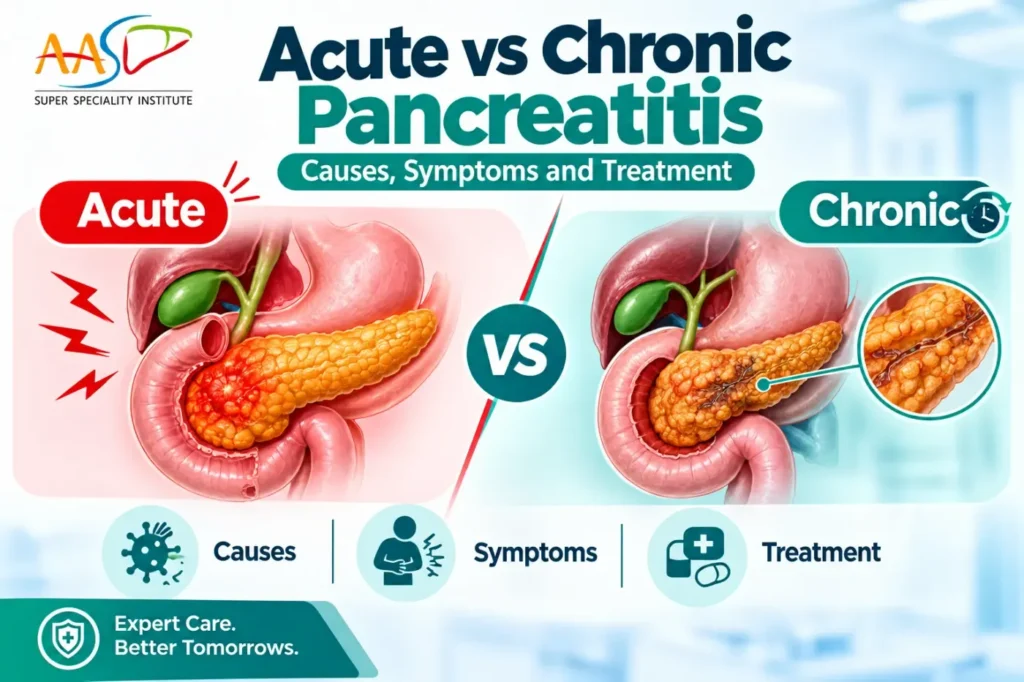
“Pancreatitis” gets used as if it’s one condition, but a single bad attack and a decade-long struggle with recurring pain are two very different diseases that happen to share a name. Confusing the two leads to confusing treatment expectations, so let’s separate them properly.
What the Pancreas Actually Does
The pancreas sits behind the stomach and does two jobs most people never think about until something goes wrong: it produces digestive enzymes that break down food in the small intestine, and it produces insulin and other hormones that regulate blood sugar. Pancreatitis is inflammation of this organ, and depending on how it behaves over time, it falls into one of two very different categories.
Acute Pancreatitis: A Sudden, Severe Episode
Acute pancreatitis comes on quickly, often within hours, and typically presents as:
- Severe, constant upper abdominal pain, frequently radiating to the back
- Pain that worsens after eating, especially fatty food
- Nausea and vomiting
- Fever and a rapid pulse in more severe cases
- A tender, sometimes swollen abdomen
This is a medical emergency, not something to wait out at home. Severe acute pancreatitis can lead to serious complications — infection, organ dysfunction, and fluid collections around the pancreas — so anyone with sudden, severe abdominal pain like this needs same-day evaluation.
The two most common causes of acute pancreatitis, by a wide margin, are gallstones (which can block the duct the pancreas drains through) and heavy alcohol use. Less commonly, it can be triggered by very high triglyceride levels, certain medications, or as a complication of a procedure like ERCP.
Treatment for acute pancreatitis usually involves hospital admission, IV fluids, pain control, and temporarily resting the digestive system before gradually reintroducing food. If gallstones are the cause, gallbladder removal is typically recommended once the acute episode has settled, to prevent it happening again.
Chronic Pancreatitis: Long-Term, Progressive Damage
Chronic pancreatitis is a different animal entirely — it’s the result of repeated or ongoing inflammation that gradually scars pancreatic tissue over months or years, permanently reducing the organ’s ability to function. Symptoms often include:
- Recurring or persistent abdominal pain, sometimes constant, sometimes in flares
- Unintentional weight loss, often because eating triggers pain
- Oily, foul-smelling stools (steatorrhea) — a sign the pancreas isn’t producing enough digestive enzymes
- New-onset diabetes, since long-term pancreatic damage affects insulin production as well
The most common cause of chronic pancreatitis is long-term, heavy alcohol use, though a meaningful number of cases have no identifiable cause (idiopathic), and some result from genetic conditions, autoimmune disease, or repeated bouts of acute pancreatitis that never fully resolved between episodes.
Why the Treatment Approach Is So Different
Acute pancreatitis is managed to get the current episode under control and address whatever triggered it. Chronic pancreatitis is managed as an ongoing condition, with treatment aimed at controlling pain, replacing what the pancreas can no longer produce on its own, and slowing further damage:
- Pancreatic enzyme replacement, taken with meals, to help with digestion and reduce the oily stools that come from unabsorbed fat
- Pain management, which can range from medication to nerve block procedures in more difficult cases
- Complete alcohol cessation, which is the single most impactful step for anyone whose chronic pancreatitis is alcohol-related
- Diabetes monitoring and management, since it commonly develops as the disease progresses
- Surgical or endoscopic intervention in select cases — draining blocked pancreatic ducts, removing badly damaged sections of the pancreas, or addressing complications like pseudocysts
This is where chronic pancreatitis crosses into HPB (hepato-pancreato-biliary) surgical territory rather than staying purely medical. Not every patient needs surgery, but for those with a blocked duct causing repeated flares, or a complication that medication alone can’t resolve, surgical drainage or resection can meaningfully reduce pain and slow further pancreatic damage.
When Pancreatitis Needs a Surgeon, Not Just a Physician
A subset of pancreatitis cases — particularly chronic pancreatitis with duct blockages, pseudocysts, or suspicion of an underlying tumour — need a surgical opinion alongside medical management. This is also where pancreatic cancer occasionally gets picked up, since a mass in the head of the pancreas can sometimes present with pancreatitis-like symptoms, which is part of why imaging is taken seriously rather than assuming every case is straightforward.
At AASLT, pancreatitis that needs surgical input is managed as part of the broader HPB and GI surgery programme, which also covers more complex pancreatic procedures like the Whipple surgery for tumours in this region. Dr. Vishal Kumar Chorasiya’s 18+ years across hepatobiliary and pancreatic surgery means patients with complicated pancreatitis don’t need to be referred elsewhere for a surgical opinion — the same team manages both the medical and surgical sides of the condition.
A Practical Note on Diet
During recovery from an acute episode, a low-fat diet introduced gradually is generally recommended. For chronic pancreatitis, ongoing dietary adjustments — smaller, more frequent meals, limiting fat, and taking prescribed enzyme supplements with food — often make a real difference in comfort and nutrition, though these should be tailored with a doctor or dietitian rather than self-managed based on generic advice, since the right approach depends on how much pancreatic function remains.
According to the National Institute of Diabetes and Digestive and Kidney Diseases (NIDDK), most people with a first episode of acute pancreatitis recover fully with appropriate treatment, while chronic pancreatitis requires long-term management to control symptoms and prevent complications. The Cleveland Clinic similarly notes that early treatment and complete alcohol avoidance are the strongest factors in slowing chronic pancreatitis progression.
What a Hospital Stay for Acute Pancreatitis Actually Looks Like
Families are often caught off guard by how much monitoring an acute pancreatitis admission involves, even in mild cases. Expect close tracking of pain levels, blood tests repeated over several days to watch pancreatic enzyme levels and organ function, and a gradual, carefully staged return to eating — starting with clear fluids and slowly progressing to solid food only once pain and nausea have settled. In more severe cases, this process takes longer and may involve imaging to check for fluid collections or areas of tissue damage around the pancreas that need separate management.
Most mild-to-moderate cases are discharged within 3 to 7 days once eating has resumed without triggering pain. Severe cases, particularly those involving complications, can require a longer stay, sometimes including ICU-level monitoring in the initial days.
Living With Chronic Pancreatitis Day to Day
Beyond the medical treatment outlined above, patients managing chronic pancreatitis often find that a few practical adjustments make daily life noticeably more manageable: eating smaller, more frequent meals rather than three large ones, taking prescribed enzyme supplements consistently with every meal and snack rather than only when pain is present, and tracking which specific foods tend to trigger flares, since this varies somewhat between individuals. Working closely with a dietitian familiar with pancreatic disease, rather than following generic low-fat diet advice alone, often produces better results, since the right balance of fat, protein, and enzyme dosing is genuinely individual.
Frequently Asked Questions
Can acute pancreatitis turn into chronic pancreatitis?
It can, particularly with repeated episodes or if the underlying cause (like ongoing alcohol use) isn’t addressed. A single, well-managed episode with the cause removed (like gallstone removal) usually doesn’t progress to chronic disease.
Is pancreatitis always caused by alcohol?
No. Gallstones are actually the leading cause of acute pancreatitis. Alcohol is a major cause of both acute and chronic pancreatitis, but far from the only one.
Can chronic pancreatitis be reversed?
The scarring itself isn’t reversible, but stopping the underlying cause (especially alcohol) and managing symptoms can significantly slow progression and improve quality of life.
Reviewed by Dr. Vishal Kumar Chorasiya, HPB, GI & Liver Transplant Surgeon, AASLT (Yatharth Super Speciality Hospital, Noida). If you’re dealing with recurring abdominal pain that hasn’t been fully explained, book a consultation or read more about our approach to HPB and GI surgery.