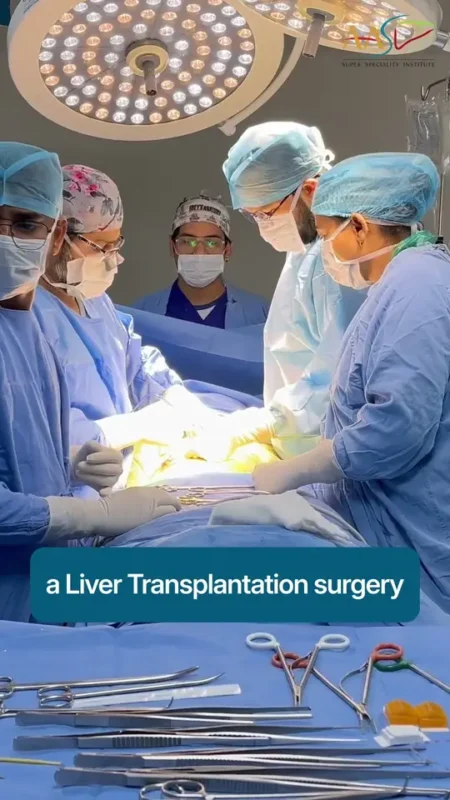

When a child needs a liver transplant, families rarely have the luxury of time. They are searching for cost estimates while simultaneously managing medical appointments, donor evaluations, and the emotional weight of a diagnosis that changes everything. What makes this harder is that hospitals almost never hand you a single clear number. They quote a “package price” that sounds manageable, but the fine print often tells a different story. Donor workup costs, extended PICU stays, post-discharge immunosuppressants, and complication-related expenses can push the final bill well beyond what any brochure suggests.
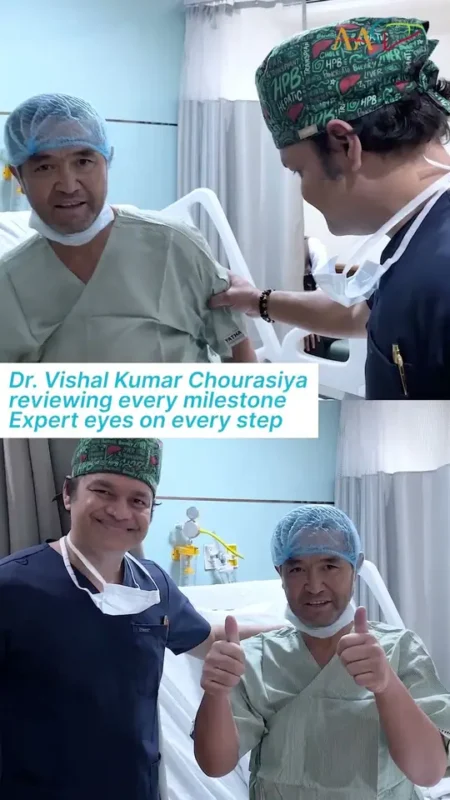
This article gives you what those brochures don’t: a realistic breakdown of the cost of paediatric liver transplant in Noida in Indian rupees and US dollars, a full itemised list of every major expense category, a practical guide to comparing hospital packages, and a clear map of every financial support option available to families in India. Much of the practical guidance here draws on the approach used at AASLT India, a specialist paediatric and adult liver transplant centre at Yatharth Super Speciality Hospital in Delhi NCR, led by Dr. Vishal Kumar Chorasiya, who has over 18 years of hepatobiliary and transplant surgery experience. If you are evaluating options for your child, read this before you sign anything.
What Is the Cost of a Paediatric Liver Transplant in Noida?
The Realistic Cost Range in 2026
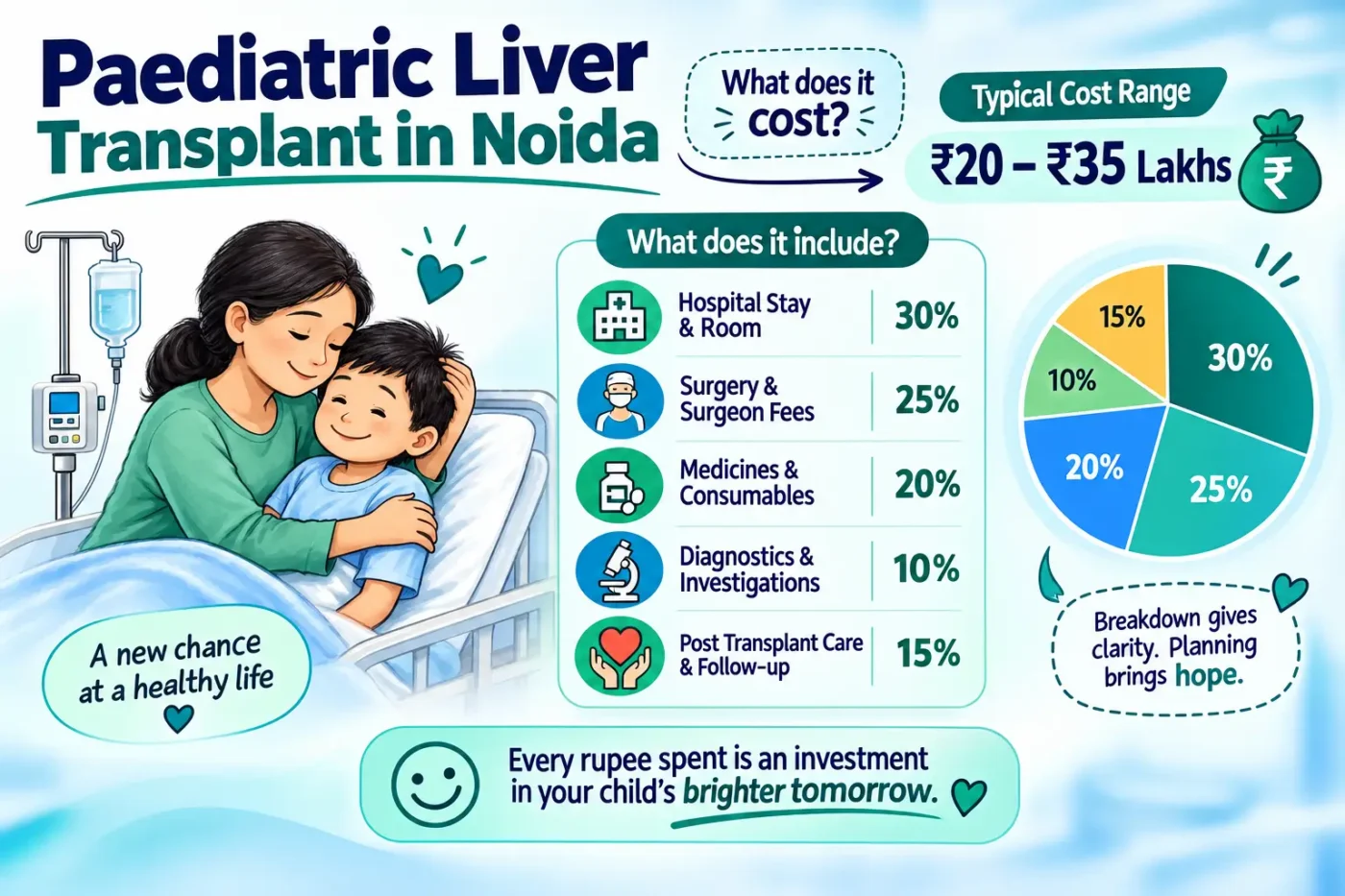
For Indian resident families, quoted packages for paediatric liver transplant in Noida generally fall between ₹20 lakh and ₹35 lakh. For international families or those opting for comprehensive, all-inclusive packages, the range rises to ₹30–45 lakh (approximately US$35,000–50,000). Both figures are planning estimates, not fixed tariffs. The gap between a quoted package and the final bill is real, and it comes down to what is included versus what is capped or excluded entirely.
Complications, extended PICU stays, blood products beyond the package allowance, and post-discharge immunosuppressants are the most common reasons a family ends up paying more than the headline figure. The number that matters is the written, itemised quotation from your transplant centre, not a figure sourced from a third-party website.
Living Donor vs Deceased Donor: Does the Type Change the Price?
For paediatric cases in India, living donor transplants are the more common route. A parent typically donates a portion of their liver, most often the left lateral segment for smaller children, and the child receives this graft. The total package for a living donor procedure broadly falls within the ₹30–45 lakh range cited above, and this is what most families planning a child liver transplant in Noida should use as their planning baseline.
Deceased donor transplants carry a different cost structure. Organ retrieval, allocation logistics, and the unpredictability of timing add expenses that are not present in a planned living donor case. In Delhi NCR, deceased donor transplants typically cost ₹4–10 lakh more than their living donor equivalents, with some complex cases pushing higher. Request a separate quotation for each scenario if a deceased donor transplant is a possibility for your child.
A Full Itemised Breakdown of Paediatric Liver Transplant Costs in Noida
Surgeon, Anaesthesia and Operating Theatre Fees
The transplant surgeon and team fees for a paediatric procedure typically run between ₹8 lakh and ₹14 lakh. Operating theatre time, anaesthesia, and surgical consumables add another ₹5–9 lakh. Paediatric transplants demand specialised anaesthesia, child-sized equipment, and a larger multidisciplinary team than adult procedures, all of which is reflected in these figures.
ICU, Ward Stay and Donor Evaluation
PICU care is the most variable and often the most misunderstood cost component. For an uncomplicated recovery, a child spends roughly 3–7 days in the PICU before transferring to the ward, with total hospitalisation lasting around 2–3 weeks. The PICU component typically costs ₹4–8 lakh. Ward and nursing charges add ₹2–5 lakh. Paediatric ICU rates are higher than adult ICU rates because of the intensity of monitoring, specialist nursing, and the level of equipment involved.
Donor evaluation and workup, which includes imaging, blood tests, anaesthesia assessment, and the donor’s own surgical care, adds ₹1.5–4 lakh. This component is frequently underrepresented in headline package prices, so confirm it explicitly with the transplant coordinator before you agree to any quote.
Medicines, Investigations and Post-Discharge Follow-Up
In-hospital medicines during the admission period run approximately ₹2–4 lakh. Diagnostics, blood products, and a follow-up allowance add another ₹2–5 lakh. The cost that catches most families off-guard comes after discharge: first-year immunosuppressants typically add ₹3–5 lakh, and this is almost always billed separately from the package. On a monthly basis, expect to budget ₹6,000–₹12,000 for generic regimens, or ₹15,000–₹25,000 for branded medicines, particularly in the early months when doses are higher.
Paediatric Liver Transplant Cost Breakdown Table (Noida, 2026)
| Component | Estimated INR | Approx. USD |
|---|---|---|
| Surgeon and transplant team fees | ₹8–14 lakh | US$8,900–15,600 |
| Operating theatre, anaesthesia and consumables | ₹5–9 lakh | US$5,600–10,000 |
| PICU care | ₹4–8 lakh | US$4,400–8,900 |
| Ward, nursing and hospital charges | ₹2–5 lakh | US$2,200–5,600 |
| Medicines during admission | ₹2–4 lakh | US$2,200–4,400 |
| Donor workup and evaluation | ₹1.5–4 lakh | US$1,700–4,400 |
| Diagnostics, blood products and follow-up | ₹2–5 lakh | US$2,200–5,600 |
| Typical total (living donor) | ₹30–45 lakh | US$35,000–50,000 |
Note: All figures are indicative estimates for 2026 based on typical paediatric living donor liver transplant cases at private super-speciality centres in Delhi NCR. Figures should be verified directly with your transplant centre, as individual cases vary significantly.
Why Paediatric Liver Transplant Quotes Vary So Much from One Family to the Next
Graft Type and Surgical Complexity
A left lateral segment graft, used most commonly for smaller children, involves different surgical complexity and theatre time compared to a right lobe graft needed for older or larger children. The complexity directly affects surgeon fees and consumable costs. A child who has had previous abdominal surgeries, or who has a rare metabolic condition, presents additional operative difficulty that a good surgeon will factor into the quotation honestly, rather than hiding it in vague “package terms.”
ICU Duration and Post-Operative Complications
The PICU component is the single most volatile cost driver in any paediatric transplant. A smooth recovery might mean 7–10 days before discharge. Complications such as vascular problems, biliary issues, infections, or rejection episodes can extend that by several weeks. One documented Indian case required approximately 50 days of hospitalisation in total. Packages almost always cap the number of included ICU days, and any additional days are billed at the daily tariff, which at a private super-speciality hospital can be significant.
Length of Stay, Hospital Tier and Bed Category
A private suite versus a shared ward adds considerably to room and nursing charges over a multi-week stay. Hospital tier also matters: a super-speciality centre with a dedicated paediatric transplant team charges more upfront, but often reduces the risk of complications and re-admissions that would cost far more in the long run. Choose your centre based on the team’s paediatric transplant experience, not the lowest headline package number.
Which Hospitals Offer Paediatric Liver Transplants in Noida, and What Do Their Packages Include?
What Noida Hospitals Offer for Paediatric Liver Transplants
Apollo Hospitals Noida advertises paediatric liver transplant programmes covering children with congenital and metabolic disorders, though no verified child-specific package price is publicly available. Jaypee Hospital carries published estimates of approximately US$28,000–30,000 for an international liver transplant package including a 16-day stay; this figure has not been confirmed as paediatric-specific. Fortis Noida and Max Healthcare carry general liver transplant estimates in the ₹22–42 lakh range. Most figures you find through third-party guides are adult procedure estimates and do not reflect the additional complexity and cost of paediatric cases.
What a Genuinely Family-Friendly Package Actually Includes
A package worth signing should separately itemise each of the following:
- Recipient surgery fees and donor surgery fees
- Surgeon and anaesthesia charges
- Number of included PICU days and the daily rate beyond the cap
- Medicines during admission and blood products
- All investigations and discharge medicines
- Outpatient follow-up visits
- Whether complications are covered or billed separately
If a hospital’s “package” does not answer all of these questions in writing, you don’t yet have a quote. You have a marketing document.
Why Families Choose AASLT India for Paediatric Liver Transplant in Noida
AASLT India, led by Dr. Vishal Kumar Chorasiya, operates from Yatharth Super Speciality Hospital in Noida with a specific focus on hepatobiliary and paediatric liver transplant surgery. With over 18 years of experience in complex paediatric presentations, Dr. Chorasiya brings the same rigour to how costs are presented to families as he does to surgical planning. Rather than a vague package that bundles everything until a complication surfaces, AASLT India provides itemised pricing so families understand exactly what they are agreeing to before surgery begins.
For outstation and international families, AASLT India offers virtual pre-travel consultations with Dr. Chorasiya, so the medical plan is clear before anyone boards a flight. The international patient support infrastructure includes medical visa guidance, airport transfers, and multilingual coordination, making the logistics manageable alongside everything else families are already handling. Get in touch with the AASLT India team to request a consultation and a written, itemised estimate for your child’s case.
Making Paediatric Liver Transplant Affordable: Funding Options Every Family Should Know
Government Schemes That Can Cover a Large Portion of Costs
Ayushman Bharat PM-JAY provides cashless treatment at empanelled hospitals for eligible low-income families. Check eligibility through the PM-JAY portal or call helpline 14555. The Rashtriya Arogya Nidhi (RAN) offers assistance of up to ₹15 lakh for BPL patients receiving treatment at designated government hospitals; apply through the treating hospital’s Medical Superintendent with income proof, Aadhaar, medical reports, and a cost estimate. Families where a parent is a CGHS or ECHS member (central government employee) should apply for prior approval before admission, as defined package rates apply. State-specific schemes in Rajasthan, Karnataka, Tamil Nadu, Maharashtra, and others may also carry transplant coverage depending on the child’s domicile, so ask the hospital’s Ayushman desk to screen for all applicable schemes at the time of evaluation.
TPAF and Charitable Grants for Children
The Pravin Agarwal Foundation (TPAF) directly supports Indian children under 18 who need liver transplantation. This is the most directly relevant national charitable fund for paediatric cases. Funds are disbursed to the treating hospital rather than to the family, and applications should be submitted before surgery. Contact TPAF at +91 7768853030 or email info@tpaf.in, and submit the child’s clinical summary, income proof, and the hospital’s itemised estimate. The hospital’s social work department can assist with the application.
Insurance, Instalment Plans and Crowdfunding
Private health insurance may cover the recipient’s transplant surgery, but donor evaluation, immunosuppressants, blood products beyond the package, and complication-related admissions are frequently excluded. Confirm in writing with the insurer exactly what is covered, what the transplant sub-limit is, and whether the hospital is in their cashless network before admission. Many policies carry waiting periods of 2–4 years, so check this early.
Most transplant centres offer milestone-based instalment plans covering evaluation, surgery, ICU, discharge, and follow-up. Get the terms in writing, including what happens if an instalment is delayed and whether surgery can begin before the full deposit is paid. Verified crowdfunding can bridge the remaining funding gap and works well when the clinical urgency is clearly communicated alongside transparent documentation.
Getting the Clarity Your Family Deserves
The cost of paediatric liver transplant in Noida typically falls between ₹20 lakh and ₹45 lakh, depending on surgical complexity, graft type, PICU duration, and what the package actually includes. That range is wide precisely because no two children present identically. The number that should drive your financial planning is not a figure from a cost guide; it is the written, itemised quotation from your transplant centre, with separate line items for every major cost category.
Before you commit to any centre, request a breakdown that covers recipient surgery, donor surgery, surgeon and anaesthesia fees, the number of included PICU days, daily rates beyond the cap, medicines, blood products, investigations, complications, discharge medicines, and post-transplant follow-up. Apply for government schemes and TPAF before admission, not after. And if you are still comparing options and want an honest medical assessment of your child’s case before making any decisions, AASLT India offers virtual consultations with Dr. Chorasiya for families evaluating a paediatric liver transplant in Noida or elsewhere in Delhi NCR. Getting the medical plan right first makes every financial conversation that follows far more straightforward.
Frequently Asked Questions
What is the cost of a paediatric liver transplant in Noida for an Indian family?
For Indian resident families, the paediatric liver transplant cost in Noida typically falls in the ₹20–35 lakh range for a standard living donor procedure, rising to ₹30–45 lakh for comprehensive all-inclusive packages. These are planning estimates; the precise figure depends on the child’s condition, surgical complexity, and duration of PICU stay.
Which hospital offers the best paediatric liver transplant package for families in Noida?
The “best” package is the one that is fully itemised in writing, with clear caps on PICU days, defined rates beyond the cap, and explicit coverage for donor workup and post-discharge medicines. AASLT India at Yatharth Super Speciality Hospital is one centre that structures its quotations this way, allowing families to plan with confidence rather than relying on a headline figure that may exclude critical costs.
Is a deceased donor paediatric liver transplant more expensive than a living donor one?
Yes. In Delhi NCR, deceased donor transplants typically cost ₹4–10 lakh more than equivalent living donor procedures, owing to organ retrieval logistics, allocation fees, and the unpredictability of timing. If a deceased donor transplant is a possibility, request a separate written quotation for that scenario.
Does PM-JAY cover paediatric liver transplants?
Ayushman Bharat PM-JAY covers liver transplantation at empanelled hospitals for eligible low-income families. Eligibility must be confirmed through the PM-JAY portal or helpline 14555 before admission. Families not covered by PM-JAY may also apply to the Rashtriya Arogya Nidhi (RAN) or state-specific health schemes.