
If your idea of Hepatitis C treatment involves months of interferon injections, crushing fatigue, and uncertain results, you’re working from an outdated picture. That was the reality a decade ago. It isn’t anymore, and the gap between what people assume and what’s actually available today causes a lot of unnecessary anxiety — and a lot of untreated infections.
How Hepatitis C Actually Spreads
Hepatitis C spreads through contact with infected blood. In India, this most commonly happens through:
- Unsafe injections or reused medical equipment
- Blood transfusions received before screening became standard practice
- Shared needles, including for tattoos or piercings done with unsterilised equipment
- Mother-to-child transmission, though less common than with Hepatitis B
Unlike Hepatitis B, there’s currently no vaccine for Hepatitis C, which makes early detection and treatment the main tools available for controlling it.
Why So Many Cases Go Unnoticed
Hepatitis C is often called a silent infection for good reason — most people feel completely fine for years, even decades, after being infected, while the virus slowly damages the liver in the background. It’s frequently discovered by accident: a routine blood test, a pre-surgery screening, or a check prompted by a family member’s diagnosis. By the time symptoms like fatigue, abdominal discomfort, or jaundice show up, meaningful liver damage may have already occurred.
This is exactly why testing matters more than waiting for symptoms — a simple blood test (anti-HCV antibody, followed by HCV RNA if positive) is all it takes to know where you stand.
The Real Change: Direct-Acting Antivirals (DAAs)
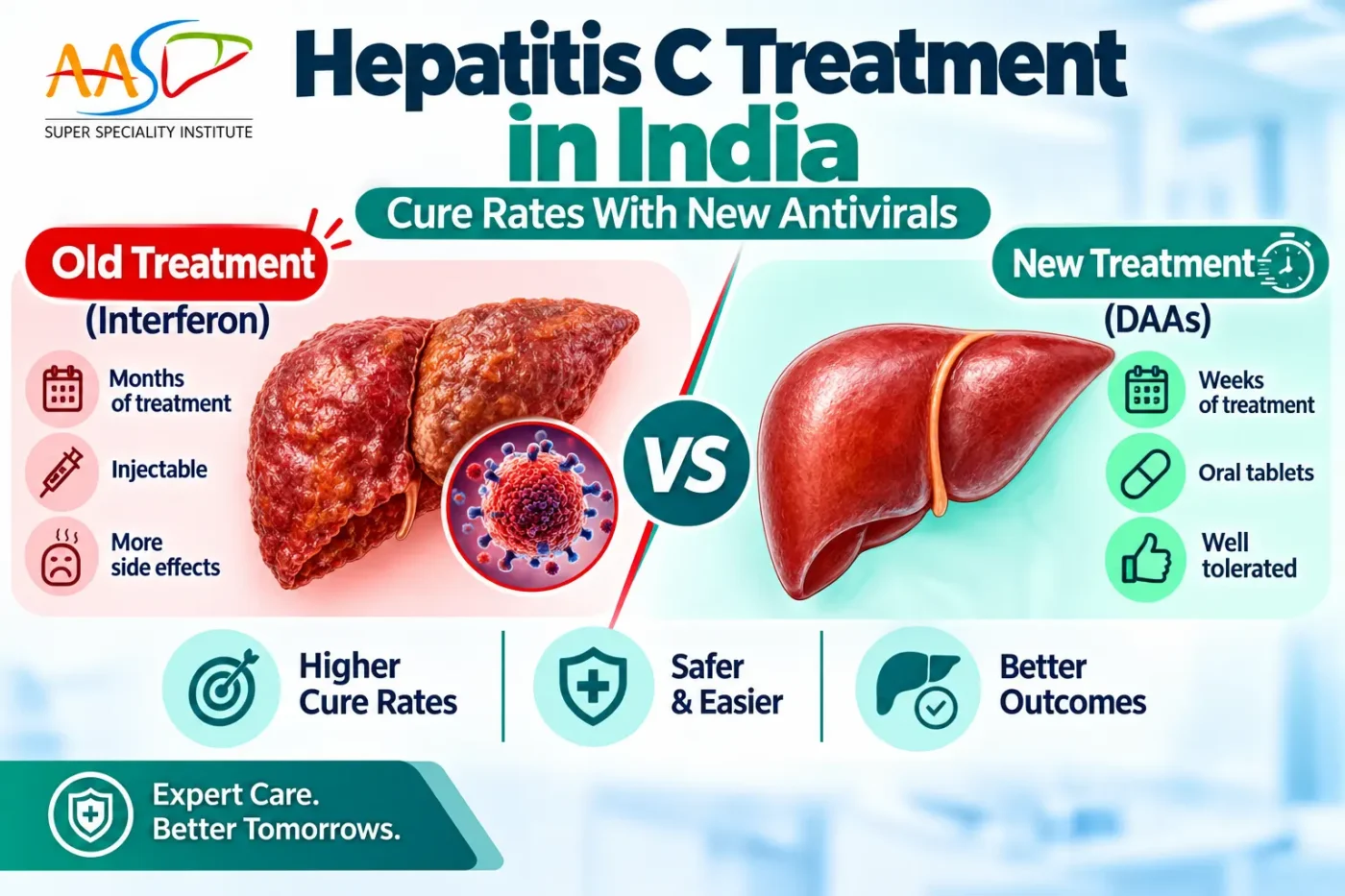
Here’s the part that genuinely surprises people who haven’t looked into Hepatitis C treatment recently: modern antiviral medications, called DAAs (direct-acting antivirals), cure the majority of Hepatitis C cases in just 8 to 12 weeks, taken as oral tablets with minimal side effects compared to the older interferon-based regimens.
A few things that make this treatment genuinely different from what came before:
- Cure rates exceeding 95% in most patient groups, across different Hepatitis C genotypes
- Oral medication, not injections, taken once or twice daily
- Far fewer side effects — most patients tolerate DAAs well, without the severe fatigue and flu-like symptoms associated with older interferon treatment
- A defined, short treatment course, rather than an open-ended one
“Cure” here means something specific and measurable: sustained virologic response, or SVR, meaning the virus is undetectable in the blood 12 weeks after finishing treatment. For the vast majority of patients, this means the infection is genuinely gone, and it stays gone.
What Treatment Actually Involves
The process typically looks like this:
- Confirm the diagnosis with an HCV RNA test (not just the antibody test, which only shows past exposure, not current infection)
- Assess liver damage, usually through blood tests and sometimes a FibroScan to check for existing fibrosis or cirrhosis
- Identify the genotype, if needed, to guide which specific DAA combination is most appropriate
- Start the 8-12 week oral medication course, with periodic monitoring
- Confirm cure with a follow-up blood test after treatment ends
For patients whose Hepatitis C has already progressed to cirrhosis before treatment, curing the virus stops further damage, but existing scarring doesn’t fully reverse — which is exactly why these patients need continued monitoring even after a successful cure, including ongoing liver cancer screening given the elevated risk that cirrhosis carries regardless of the underlying cause.
Why Undiagnosed Cases Are the Bigger Problem Now
With treatment this effective, the real challenge with Hepatitis C in India has shifted from “can we treat it” to “can we find it.” A large number of infected people have never been tested, often because they have no symptoms and no obvious risk factor they’re aware of. If you’ve ever received a blood transfusion before routine screening became standard, or you’re simply unsure of your status, testing is quick and the upside — catching a completely curable infection before it causes lasting damage — is significant.
When Hepatitis C Has Already Caused Cirrhosis
For patients diagnosed later, after Hepatitis C has already led to decompensated cirrhosis, curing the virus is still valuable, but it isn’t always enough on its own to reverse liver failure. These patients may need the full evaluation covered on our liver diseases page, and in advanced cases, assessment for liver transplant. This is the exact patient journey AASLT’s team, led by Dr. Vishal Kumar Chorasiya, manages end to end — from an initial Hepatitis C diagnosis through antiviral cure, ongoing surveillance, and transplant evaluation if the liver’s damage has progressed too far to reverse with cure alone.
Who Should Actually Get Tested
Testing guidelines have broadened considerably as DAA treatment has become more accessible, since there’s now a clear, low-risk path to cure once someone tests positive. Testing is generally worth considering if you:
- Received a blood transfusion, organ transplant, or any invasive medical procedure before your country’s blood and equipment screening standards were fully in place
- Have ever used injection drugs, even a single time, at any point in the past
- Were born to a mother with Hepatitis C
- Have unexplained, persistently abnormal liver function tests
- Work in a setting with occupational exposure to blood, such as healthcare
- Simply want peace of mind and have never been tested, particularly if you fall into a higher-prevalence age group
None of these on their own confirm infection — they’re simply reasons the test is worth having, given how straightforward and low-cost it is relative to the value of knowing.
What Changed Between the Old Treatment Era and Now
It’s worth being specific about why older Hepatitis C treatment had such a difficult reputation. Interferon-based regimens, the standard before DAAs became widely available, involved weekly injections over 24 to 48 weeks, frequently caused severe flu-like symptoms, depression, and significant fatigue, and still only cured roughly 40-50% of patients depending on genotype. DAAs replaced nearly all of this: oral pills, 8-12 weeks, minimal side effects for most patients, and cure rates above 95% across most genotypes. This isn’t an incremental improvement — it’s a fundamentally different treatment experience, which is exactly why outdated assumptions about Hepatitis C treatment cause so much unnecessary hesitation today.
According to the World Health Organization’s Hepatitis C fact sheet, an estimated 58 million people worldwide live with chronic Hepatitis C infection, and direct-acting antivirals can cure more than 95% of those treated, though global access to testing and treatment remains uneven. The Centers for Disease Control and Prevention similarly notes that most people with Hepatitis C have no symptoms in the disease’s earlier stages, reinforcing why testing — not waiting for symptoms — is the key first step.
Frequently Asked Questions
Is Hepatitis C treatment covered by insurance in India?
Coverage varies by policy and insurer. It’s worth checking your specific policy’s terms for hepatitis treatment, since DAA courses, while far shorter than older regimens, are still a meaningful expense.
Can you get Hepatitis C again after being cured?
Yes, if re-exposed to the virus (for example, through unsafe injections). Being cured removes the current infection but doesn’t confer future immunity the way a vaccine would.
How do I know if I’ve ever been exposed to Hepatitis C?
A simple anti-HCV antibody blood test will show whether you’ve ever been exposed. If positive, a follow-up HCV RNA test confirms whether the infection is currently active.
If you think you may have been exposed to Hepatitis C, book a consultation or read more about our approach to liver disease care.