
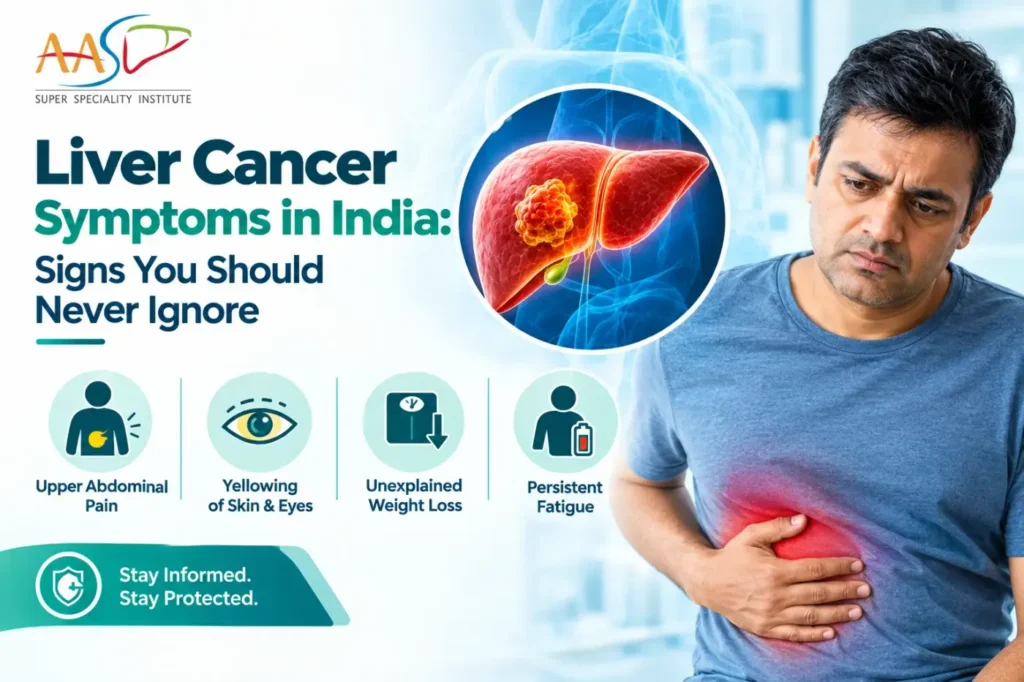
Most people picture cancer as something that announces itself — a lump, sudden pain, something obviously wrong. Liver cancer usually doesn’t work that way. It tends to grow quietly inside an organ that has no pain receptors of its own, which is exactly why so many cases in India are diagnosed later than anyone would like.
That doesn’t mean it’s undetectable. It means you have to know what to actually watch for, and who should be watching more closely than others.
Why Liver Cancer Stays Quiet for So Long
The liver has enormous spare capacity. It can lose a significant portion of its function and still keep the rest of the body running normally, which is part of what makes it such a resilient organ — and also why a tumour can grow for months before it starts causing symptoms noticeable enough to send someone to a doctor.
By the time symptoms do show up, they’re often a sign the tumour has grown large enough to affect surrounding tissue or the liver’s remaining function, which is why doctors keep pushing “screening over symptoms” as the real strategy for high-risk patients.
The Symptoms Worth Taking Seriously
None of these guarantee liver cancer — several have far more common, benign explanations. But if you’re noticing more than one of these, especially if you already have chronic liver disease, it’s worth getting checked rather than waiting it out:
- Persistent pain or a dull ache in the upper right abdomen, sometimes spreading toward the right shoulder blade
- Unexplained weight loss without any change in diet or activity
- Loss of appetite or feeling full after eating very little
- Swelling in the abdomen (which can be fluid buildup, or ascites) or in the legs
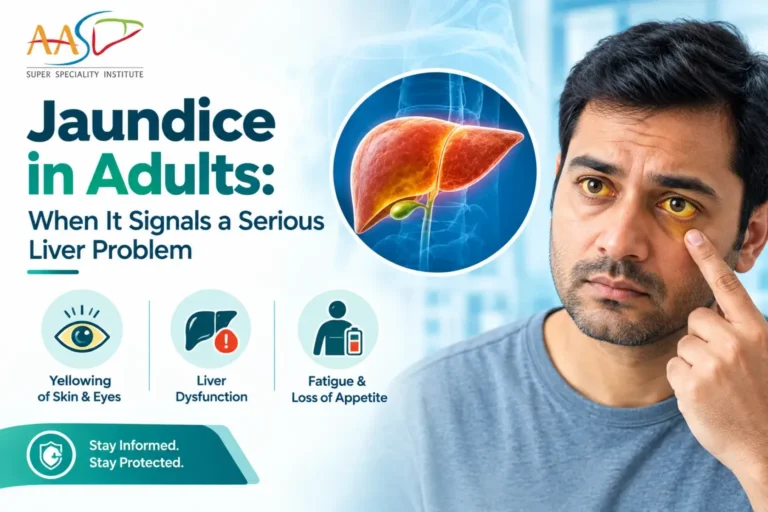
- Yellowing of the skin or eyes (jaundice)
- General fatigue that doesn’t improve with rest
- A noticeable lump or feeling of fullness under the right ribs
Any one of these on its own is more likely to point to something else — a gallbladder issue, a viral infection, simple dehydration. It’s the combination, or the fact that they’re new and persistent, that should prompt a proper evaluation.
Who’s Actually at Higher Risk
This is the part that matters most for early detection, because liver cancer very rarely appears in a liver that was previously completely healthy. The vast majority of cases develop in people who already have one of the following:
- Chronic Hepatitis B or Hepatitis C infection
- Cirrhosis, regardless of what originally caused it
- Long-standing fatty liver disease (NAFLD/NASH), increasingly common alongside rising obesity and diabetes rates
- Heavy, long-term alcohol use
- A family history of liver cancer or chronic Hepatitis B
If you fall into any of these groups, the conversation with your doctor shouldn’t be “let me know if something feels off” — it should be “let’s set up a screening schedule,” because by the time this disease causes symptoms in someone with an already-damaged liver, it’s often had a considerable head start.
How Doctors Actually Check for It
Screening for at-risk patients typically combines two simple tools used together every six months:
- Abdominal ultrasound, which can pick up new or growing masses in the liver
- AFP blood test (alpha-fetoprotein), a marker that’s often elevated in liver cancer, though not always, which is why it’s used alongside imaging rather than on its own
If something suspicious turns up, a CT or MRI with contrast usually follows to characterise it more precisely, sometimes along with a biopsy depending on how clear the imaging picture is.
What Happens If It’s Caught Early vs Late
This is really the crux of why awareness matters here. A small, early-stage tumour confined to the liver has genuinely good treatment options — surgical removal, liver transplant in select cases, or localised treatments like radiofrequency ablation or TACE (transarterial chemoembolisation) that target the tumour directly without major surgery. A tumour caught late, after it’s grown large or spread beyond the liver, has a much narrower set of options, mostly focused on controlling the disease rather than removing it entirely.
At AASLT, this is exactly the range of cases the team manages — from a small, early tumour suitable for resection or ablation, all the way to advanced disease requiring a full liver transplant evaluation when cirrhosis is also present. Dr. Vishal Kumar Chorasiya’s background spans over 18 years and more than 4,000 liver-related surgeries, including complex liver resections for tumours — the kind of experience that matters when deciding whether a tumour is operable and what approach gives the best outcome.
A Word on Vaccination and Prevention
A meaningful share of liver cancer cases trace back to chronic Hepatitis B, which is largely preventable through vaccination. According to the World Health Organization, Hepatitis B vaccination has already reduced rates of chronic infection and its long-term complications, including liver cancer, in populations with high vaccine coverage. If you haven’t been vaccinated or aren’t sure of your status, it’s a simple, one-time conversation worth having with your doctor. Beyond vaccination, managing diabetes and cholesterol, limiting alcohol, and treating chronic Hepatitis C with modern antivirals all meaningfully lower long-term risk, as outlined by the American Cancer Society’s overview of liver cancer risk factors.
If You’re Already Managing Chronic Liver Disease
If you’ve been diagnosed with cirrhosis, Hepatitis B, or Hepatitis C, the most useful thing you can do isn’t to memorise a symptom list — it’s to make sure you’re actually on a screening schedule with your hepatologist, rather than waiting to notice something wrong yourself. You can read more about how AASLT manages the full range of underlying liver conditions on our liver diseases page.
Why the Same Symptom Can Mean Very Different Things
One of the more confusing parts of researching liver cancer symptoms online is that almost every symptom on the list can also point to something far less serious. Upper right abdominal pain is far more often a gallbladder issue than a tumour. Fatigue has dozens of common causes, from poor sleep to anaemia to thyroid problems. Weight loss can come from stress, a change in diet, or an unrelated illness entirely.
This is genuinely not meant to cause more anxiety — it’s meant to explain why doctors don’t treat a single symptom as a red flag on its own, and why self-diagnosing from a symptom checklist rarely gives an accurate picture either way. What actually matters clinically is the combination of symptoms, how long they’ve persisted, and crucially, whether you already belong to one of the higher-risk groups described above. A 30-year-old with no liver disease history and occasional fatigue is in a completely different risk category than a 55-year-old with known cirrhosis experiencing the same fatigue alongside unexplained weight loss.
The Cost of Waiting Versus the Cost of a Check-Up
A liver ultrasound and AFP blood test, done together, are quick, non-invasive, and considerably less expensive and less stressful than the alternative — discovering a tumour later, after it has grown large enough to cause obvious symptoms. For patients already managing a chronic liver condition, this kind of monitoring is often something insurance or ongoing treatment packages already account for, since it’s considered a standard part of managing conditions like cirrhosis or chronic hepatitis, not an optional extra.
Frequently Asked Questions
Does liver cancer always cause jaundice? No. Jaundice tends to appear when a tumour is large enough to block bile flow or when overall liver function has declined significantly — many early-stage liver cancers cause no jaundice at all.
Can liver cancer be cured? Small, early-stage tumours confined to the liver can often be treated successfully through surgical resection, liver transplant, or localised ablation. Outcomes depend heavily on how early the cancer is caught and how well the surrounding liver is functioning.
How often should high-risk patients get screened? Most guidelines recommend an ultrasound and AFP blood test every six months for patients with cirrhosis or chronic Hepatitis B, though your specific interval should be set by your treating doctor based on your individual risk factors.
Reviewed by Dr. Vishal Kumar Chorasiya, HPB, GI & Liver Transplant Surgeon, AASLT (Yatharth Super Speciality Hospital, Noida). If you have chronic liver disease and haven’t had a recent screening, book a liver health consultation or read more about our approach to liver disease management.