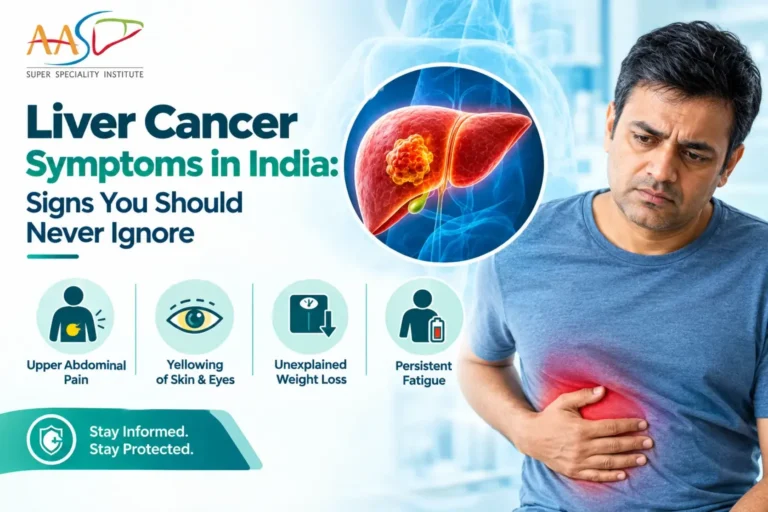

Throughout October’s Liver Cancer Awareness Month, the message has largely been about recognising symptoms. But here’s the more useful truth: by the time liver cancer causes noticeable symptoms, screening should already have caught it. This post is about the practical follow-through — who actually needs surveillance, what it involves, and how often it should happen.
Why Screening Matters More Than Symptom-Watching
Liver cancer overwhelmingly develops in livers that already have some form of chronic damage — cirrhosis, chronic viral hepatitis, or long-standing fatty liver disease. In these patients, the liver’s ability to signal that something new and serious has developed is already compromised, and a small, early tumour typically causes no symptoms at all. Structured surveillance exists precisely to catch tumours at this early, highly treatable stage, rather than waiting for symptoms that, by definition, tend to show up later.
Who Actually Needs Regular Screening
Not everyone needs liver cancer screening — it’s specifically recommended for people with an elevated underlying risk:
- Anyone with cirrhosis, regardless of what originally caused it
- Chronic Hepatitis B carriers, even without cirrhosis, particularly those with a family history of liver cancer, older age, or other specific risk factors
- Chronic Hepatitis C patients with significant fibrosis or cirrhosis, including those who’ve been successfully treated and cured, since existing scar tissue still carries elevated risk
- Patients with advanced NAFLD/NASH, particularly once fibrosis has developed
- Anyone with a family history of liver cancer or chronic Hepatitis B
If you fall into more than one of these categories, your risk is generally considered higher still, and your doctor may recommend more vigilant monitoring accordingly.
What Screening Actually Involves
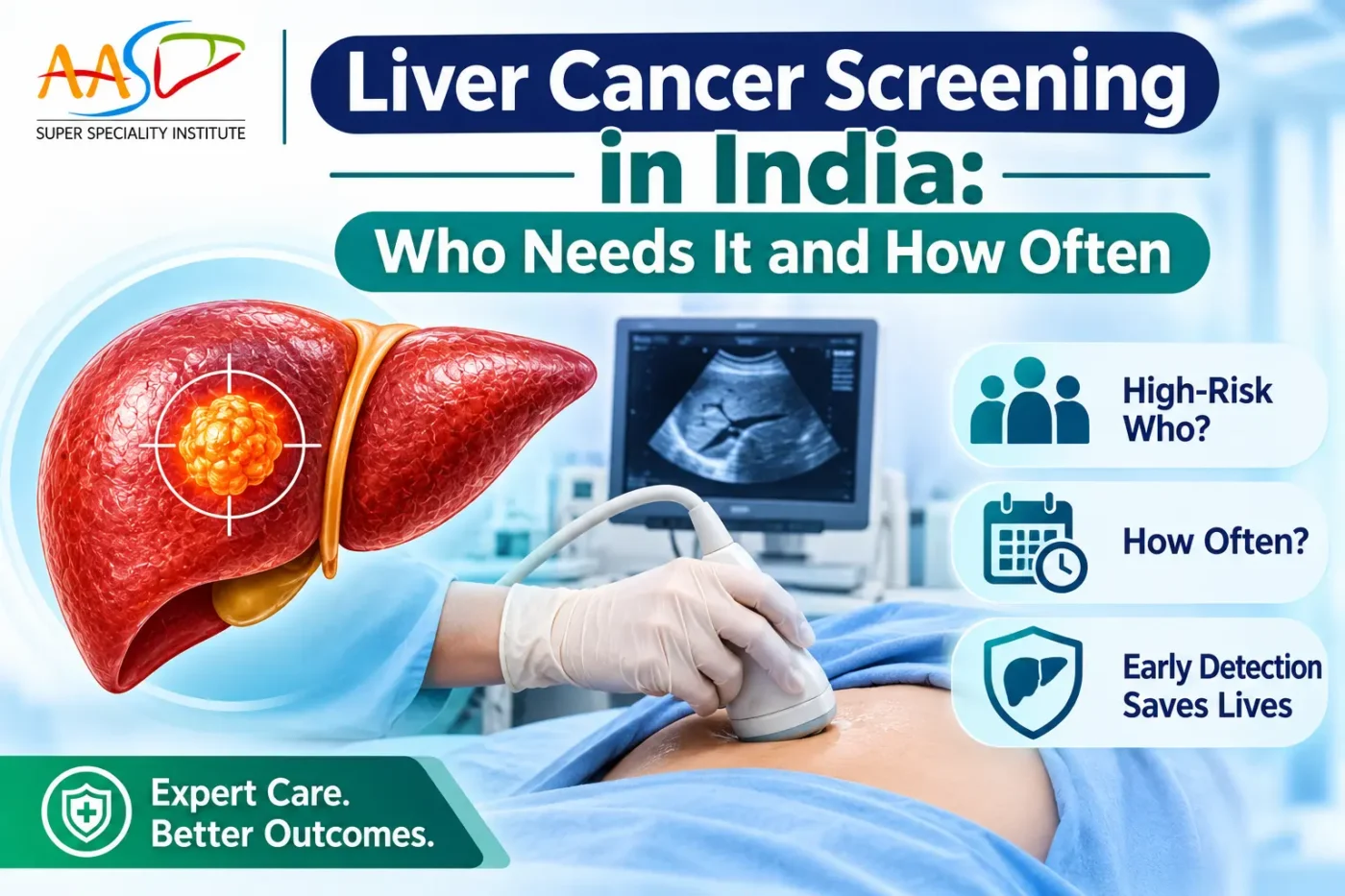
The standard surveillance protocol combines two straightforward, non-invasive tests used together:
Abdominal ultrasound — this is the primary screening tool, capable of detecting new liver masses, often while they’re still small. It’s quick, doesn’t involve radiation, and can be repeated regularly without any cumulative risk.
AFP blood test (alpha-fetoprotein) — a blood marker that’s frequently elevated in liver cancer, used alongside ultrasound rather than as a standalone test, since AFP levels can be normal in some liver cancers and elevated for other, unrelated reasons.
How often: For most high-risk patients, this combination is recommended every six months. This interval isn’t arbitrary — it’s based on how liver tumours tend to grow, aiming to catch new tumours while they’re still small enough for the most effective treatment options to apply.
If ultrasound or AFP results raise any concern, the next step is typically a CT or MRI scan with contrast, which can characterise a liver mass much more precisely and often determines the next steps without necessarily needing a biopsy, given how characteristic liver cancer’s appearance can be on these more detailed scans.
What Happens If Something Is Found Early
This is really the entire point of screening. A small, early-stage tumour, caught while still confined to the liver, has genuinely strong treatment options:
- Surgical resection, removing the tumour along with a margin of healthy tissue, for patients with adequate remaining liver function
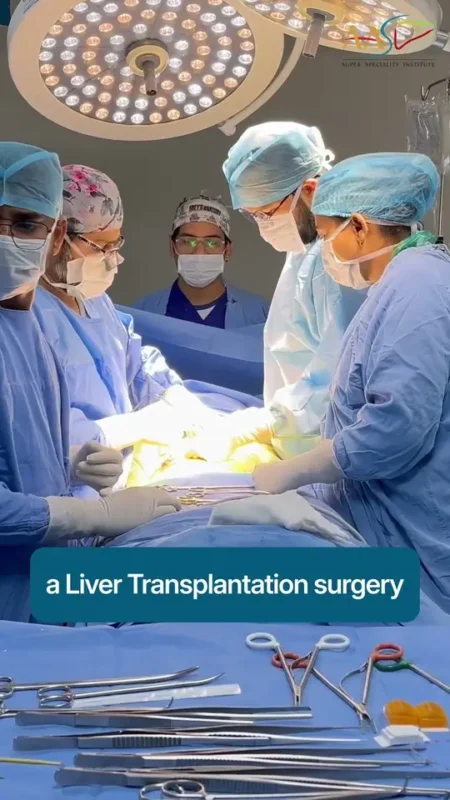
- Liver transplant, for select patients, particularly those whose underlying cirrhosis limits how much liver can safely be removed surgically
- Ablation techniques (like radiofrequency ablation), which destroy small tumours directly without major surgery, often suitable for patients who aren’t ideal surgical candidates
- TACE (transarterial chemoembolisation), which delivers treatment directly to the tumour’s blood supply, often used for tumours not suitable for surgery or ablation alone
The specific approach depends on tumour size, number, location, and how well the surrounding liver is functioning — which is exactly why an experienced multidisciplinary team, rather than a single specialist working in isolation, tends to produce the best outcomes for these decisions.
Building Screening Into Ongoing Care, Not Treating It as a One-Off
The patients who benefit most from screening are the ones for whom it’s built into a structured, ongoing monitoring plan rather than something done once and forgotten. At AASLT, patients with cirrhosis or chronic viral hepatitis have liver cancer surveillance integrated into their regular hepatology follow-up, alongside broader management covered on our liver diseases page. For patients where screening does identify a tumour, the same team can move directly into treatment planning, including liver transplant evaluation when appropriate — without the delays that come from being referred between separate diagnostic and surgical teams.
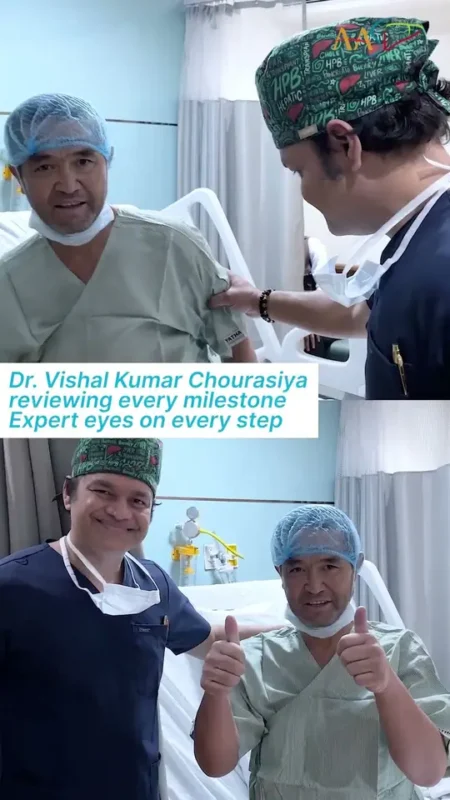
Dr. Vishal Kumar Chorasiya’s experience spans this entire pathway: over 4,000 liver-related procedures, including more than 600 complex liver resections, alongside 2,500+ liver transplants — meaning a tumour found early through screening has a clear, well-managed path forward, whatever treatment approach ends up being the right fit.
Closing Out Liver Cancer Awareness Month
If there’s one thing worth taking away from this October’s focus on liver cancer, it’s this: awareness without action doesn’t change outcomes. Knowing the risk factors and symptoms matters, but actually getting on a screening schedule if you fall into a high-risk group is what genuinely moves the needle on catching this disease early. According to the American Cancer Society, regular surveillance in high-risk patients is associated with detecting liver cancer at an earlier, more treatable stage compared to diagnosis prompted by symptoms alone. The World Health Organization similarly emphasises that early detection through appropriate screening programmes significantly improves treatment outcomes across most cancer types, liver cancer included.
What Getting Started With Screening Actually Involves
If you fall into a high-risk category and haven’t started screening yet, the first step is simpler than most people expect. It doesn’t require a specialist referral to begin — a conversation with your regular doctor about your cirrhosis, Hepatitis B, or Hepatitis C history is enough to get an initial ultrasound and AFP test ordered. From there, if you’re not already under a hepatologist’s ongoing care, that’s the natural next step, both for the screening itself and for managing the underlying liver condition that put you in a high-risk category to begin with.
For patients who’ve been meaning to get back on a screening schedule after a gap — perhaps an initial diagnosis years ago that wasn’t followed up consistently — there’s no need to feel like you’ve “missed the window.” The six-month interval is a going-forward recommendation, not a countdown that resets or penalises a late start. The right time to resume is now, not after waiting for the next symptom to appear.
A Realistic Look at What Screening Can and Can’t Do
It’s worth being honest about the limits here too. Screening significantly improves the odds of catching liver cancer early, but it isn’t foolproof — a small number of tumours can be missed on ultrasound, particularly in a liver already distorted by significant cirrhosis, which can make new masses harder to distinguish from existing nodules. This is exactly why any new, unexplained symptom should still prompt a conversation with your doctor even if you’re up to date on screening, rather than assuming screening alone guarantees nothing will be missed.
Frequently Asked Questions
Do I need liver cancer screening if I don’t have any symptoms?
Yes, if you fall into a high-risk category (cirrhosis, chronic Hepatitis B or C, advanced fatty liver disease). Screening is specifically designed to catch cancer before symptoms appear, which is when treatment options are strongest.
Is the AFP blood test enough on its own?
No. AFP is used alongside ultrasound because it can be normal in some liver cancers and elevated due to unrelated causes, so combining both tests gives a more reliable picture than either alone.
If I’ve been cured of Hepatitis C, do I still need screening?
Often yes, particularly if you had significant fibrosis or cirrhosis before treatment. Curing the virus stops further viral damage, but existing scar tissue still carries elevated cancer risk, which your doctor will factor into your ongoing monitoring plan.
If you fall into a high-risk group and haven’t had a recent screening, book a liver cancer screening consultation or read more about our approach to liver disease management.