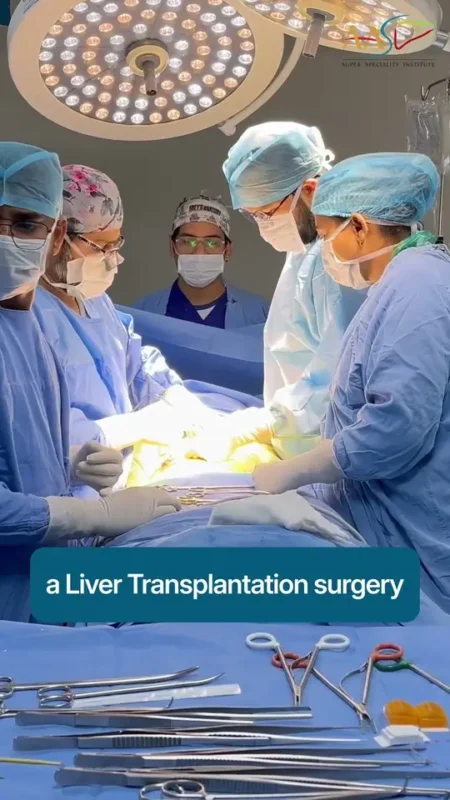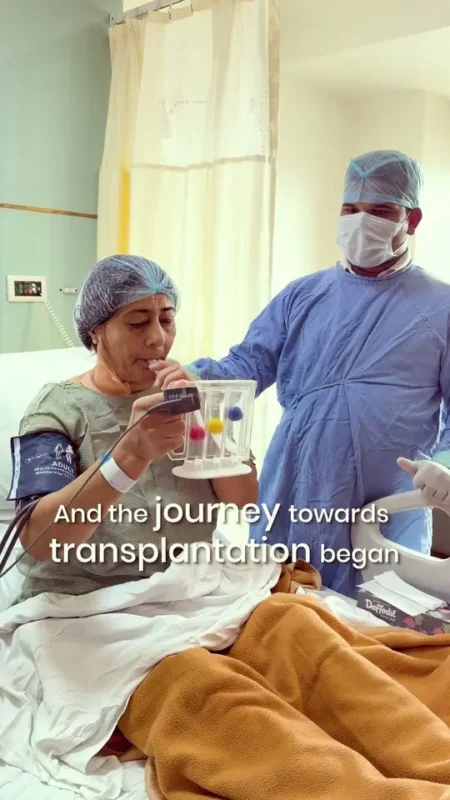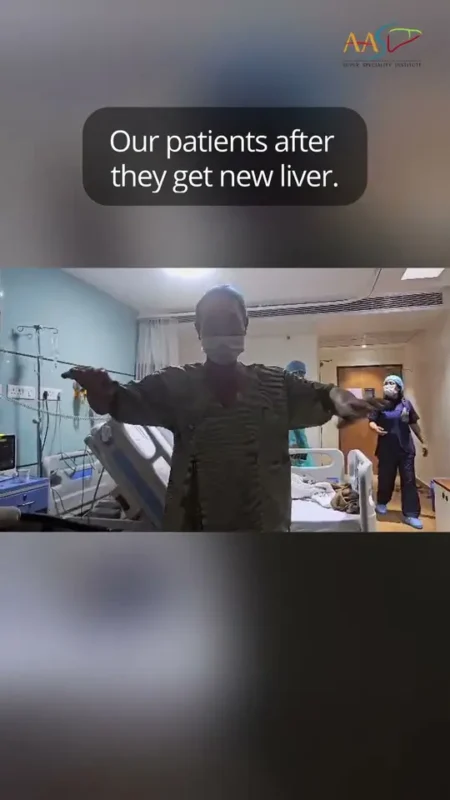

When families ask us about a liver transplant, one of the first questions is almost always the same: “What is your success rate?” It is the right question. The problem is that the answer, on its own, can mislead you. The liver transplant success rate in India at experienced centres is genuinely good, but two hospitals quoting “90%” may be measuring very different things.
This guide explains what the numbers mean, what typical outcomes look like in India, and the questions that help you compare one programme with another.
The short answer: At experienced Indian transplant centres, about 85 to 90 out of every 100 adult recipients are alive one year after surgery, and roughly 70 to 75 are alive at five years. A published series of nearly 2,000 adults at one large Indian centre reported 84.3% survival at one year, 75.5% at five years and 72.2% at ten years (Choudhary, Bhangui and Soin, Clinical Liver Disease, 2022). Children who receive a liver from a living donor tend to do even better.
What “success rate” actually means in a liver transplant
There is no single official definition. When a hospital quotes a figure, it is usually one of these four:
1. Patient survival. The share of recipients still alive at a fixed point, usually one year and five years after surgery. This is the most widely used measure.
2. Graft survival. The share of recipients whose new liver is still working. This is always equal to or lower than patient survival, because some patients need a second transplant.
3. Donor safety. In living donor transplants, the rate of serious complications in the healthy family member who donated. This matters a great deal in India, where most liver transplants use living donors.
4. Quality of life. Whether recipients return to work, school and normal family life. Few centres report this as a number, but it is what most families care about in the end.
If a hospital says “95% success” and does not tell you which of these it means, over what time period, or for how many patients, you cannot judge the figure yet. That is not a reason to distrust the hospital. It is simply a reason to ask.
Liver transplant survival rates in India: what the published data shows
India now performs more than 1,800 liver transplants a year across roughly 90 to 100 active centres, and about 85% of them use living donors (Choudhary et al., 2022). Here is what published Indian data and our own success rate page show:
| Measure | Typical figure | What it tells you |
| 1-year patient survival, adults | 85–90% at experienced centres | How well the team gets patients through surgery, ICU and the first year |
| 5-year patient survival, adults | 70–75% | Long-term care, follow-up and recurrence of the original disease |
| 10-year survival, adults (one large series) | 72.2% | Most patients who pass the first year do well long term |
| 1-year survival, children after living donor transplant (one centre, first 200 cases) | 95% | Pediatric outcomes are often better than adult outcomes |
| Survival after transplant for acute liver failure (Indian studies) | 64–88% | Emergency transplants carry higher risk, as expected |
These numbers are broadly in line with large programmes in the United States and Europe. The main gap in India is not the quality of results but the reporting: India does not yet have a mature public registry that publishes risk-adjusted results for every centre.
Why two hospitals’ success rates are hard to compare
Say Hospital A reports 92% and Hospital B reports 86%. It is tempting to pick A. Before you do, consider these points.
Who they operate on. A centre that accepts very sick patients, such as those with acute liver failure, high MELD scores, kidney failure or a previous abdominal surgery, will have lower raw numbers than one that mainly treats stable patients. Lower numbers can sometimes mean a team is willing to take on harder cases.
The time window. A 30-day or “in-hospital” survival figure will always look better than a one-year figure. Make sure you are comparing one-year with one-year.
How many patients are counted. A programme that did 40 transplants last year can swing from 90% to 97% because of two patients. A larger programme’s numbers are more stable and more meaningful.
Who chooses the data. Self-reported figures are not the same as audited registry data. In the United States, the Scientific Registry of Transplant Recipients (SRTR) publishes risk-adjusted results for every programme, which is the standard to aim for. In India, the National Organ and Tissue Transplant Organisation (NOTTO) oversees organ donation and allocation, but centre-wise outcome reporting is still developing.
None of this means you should ignore success rates. It means you should read them with their context attached.
7 questions to ask any liver transplant team about their numbers
Take this list to your consultation. A good team will be glad you asked.
1. Is your figure patient survival or graft survival?
2. Is it measured at one year, five years or at discharge?
3. How many transplants does it include, and over which years?
4. Does it include emergency transplants for acute liver failure?
5. What is your rate of serious complications in living donors?
6. How many transplants does the lead surgeon personally perform each year?
7. What would my own expected outcome be, given my MELD score, age and other health problems?
The last question is the most important one. Population averages matter less than an honest view of your own situation.
What affects your own chance of a successful liver transplant
Your outcome depends far more on your own health and the timing of surgery than on any headline number. The factors that matter most are:
• How sick you are at the time of transplant. Doctors measure this with the MELD score (PELD in children). Patients transplanted before they become critically ill tend to recover faster and with fewer complications.
• Kidney and heart function. Kidney failure and heart disease raise surgical risk. Some patients need extra tests or treatment before they are fit for surgery.
• Age and physical fitness. Age alone does not rule anyone out. Muscle strength and general fitness matter more than the number on your birth certificate.
• The cause of liver disease. Hepatitis B, hepatitis C, alcohol, fatty liver and liver cancer each carry different risks of the disease coming back after transplant.
• Graft size and quality. In living donor transplants, the surgical team checks that the part of the liver being donated is large enough for the recipient and that the donor is left with enough for themselves.
• Team experience and ICU support. Complications are part of any major surgery. What separates good centres is how quickly they spot and manage them.
• Taking medicines and attending follow-up. Anti-rejection medicines, regular blood tests and early reporting of fever or jaundice protect the new liver for years.
If you want to understand each stage, from evaluation to discharge, our liver transplant procedure guide walks through it step by step.
Do not forget the donor’s side of the numbers
In a living donor transplant, two people go into surgery. A healthy son, daughter, spouse or sibling gives part of their liver, which regrows over the following weeks and months. Donor safety is therefore as much a part of a programme’s success as recipient survival.
Deaths among living liver donors are rare, but complications such as bile leaks or infections can occur. Ask the team how donors are assessed, whether a separate doctor reviews the donor’s fitness, and how many donors have needed further treatment. A programme that answers this openly is one that takes donors seriously.
How AASLT reports its outcomes
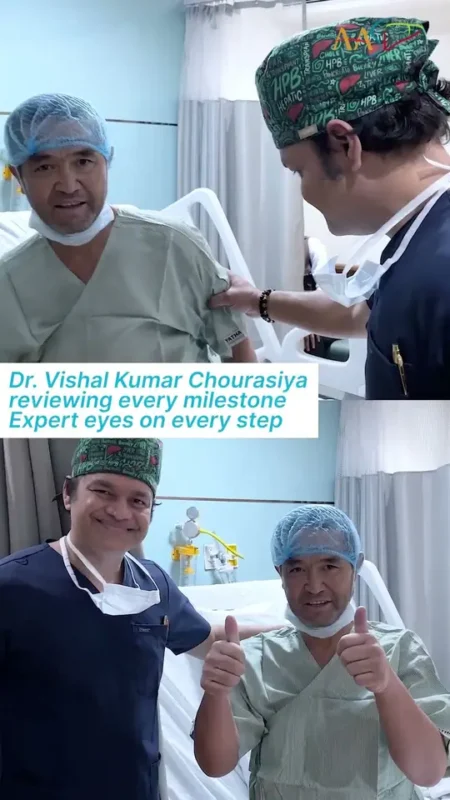
At AASLT, the liver transplant programme is led by Dr Vishal Kumar Chorasiya, who has more than 20 years of experience in liver transplantation and has been the lead or co-surgeon in more than 2,700 liver transplants across centres. Our programme figure is a 95% success rate, and we treat patients from more than 25 countries at Yatharth Super Speciality Hospital, Noida Extension.
We would rather you understand that number than simply be impressed by it. At your consultation, ask us how it is calculated, which patients it includes and what it means for your own case. We will walk you through it honestly, including the risks.
If you are still comparing hospitals, our guide to choosing a liver transplant hospital in India lists the other things worth checking, from ICU facilities to donor assessment.
Frequently asked questions
What is the success rate of liver transplant in India?
At experienced Indian centres, one-year survival after adult liver transplant is about 85–90%, and five-year survival is about 70–75%. Results for children after living donor transplant are often higher, around 95% at one year in published series.
Is living donor liver transplant as successful as a deceased donor transplant?
Yes, outcomes are broadly similar. Living donor transplant has one practical advantage: surgery can be planned before the patient becomes critically ill, rather than waiting for a deceased donor liver.
How long can a person live after a liver transplant?
Many recipients live 20 years or more with a good quality of life. Long-term survival depends on taking anti-rejection medicines, regular follow-up and controlling the original cause of liver disease.
Which hospital has the highest liver transplant success rate in India?
There is no official, risk-adjusted national ranking in India yet, so any “highest” claim is self-reported. Compare centres on one-year survival, the number of transplants performed, donor safety and how openly they answer your questions.
Does age affect liver transplant success?
Age alone is not a barrier. Fitness, heart health and kidney function matter more. Patients in their 60s regularly undergo successful liver transplants after careful evaluation.
Get an honest opinion on your case
If you or someone in your family has been told a liver transplant may be needed, start with a clear picture of your own situation. Call our 24×7 transplant coordinator on +91 79007 20095, or send your reports on WhatsApp to the same number for Dr Vishal Kumar Chorasiya’s team to review.