
No parent expects to hear the words “your child needs a liver transplant”. If you have just been told this, or if your doctor has mentioned that it may be needed in the future, you are probably carrying a hundred questions and very little sleep.
This guide is written for you. It explains why young children need liver transplants, what the process looks like at a centre in Delhi NCR, how a parent can donate, and what life looks like afterwards. The most important thing to know first is this: children usually do very well after a liver transplant, and most grow up to live full, ordinary lives.
The short answer: A pediatric liver transplant in Delhi NCR is most often needed for biliary atresia in babies and toddlers, especially when an earlier Kasai operation has not worked. Most children receive part of a parent’s liver. They usually stay in hospital for 2–3 weeks, return to school around three months after surgery, and need lifelong medicines and check-ups. In one published Indian series of living donor pediatric transplants, 95% of children were alive at one year and 87% at five years (Choudhary et al., 2022).
Why do young children need a liver transplant?
In children under 10, a small number of conditions account for most transplants.
Biliary atresia is by far the most common reason. In this condition, the bile ducts that carry bile out of the liver are blocked or missing from birth or soon after. Bile builds up and damages the liver. Babies usually have an operation called the Kasai procedure in the first few months of life to help bile drain. For some children it works for years. For many, the liver still becomes scarred and a transplant is eventually needed. The US National Institute of Diabetes and Digestive and Kidney Diseases (NIDDK) has a clear overview of the condition for families.
Other reasons include:
• Metabolic and genetic liver diseases, where the liver cannot process certain substances properly.
• Acute liver failure, when a previously healthy child’s liver suddenly stops working, sometimes after an infection or medicine reaction.
• Liver tumours such as hepatoblastoma, when the tumour cannot be removed safely with ordinary surgery.
Early signs parents should never ignore
Many liver problems in babies are first noticed by parents. See a pediatrician or pediatric hepatologist urgently if your baby has:
• Yellow eyes or skin that lasts beyond two weeks of age
• Pale, chalky or clay-coloured stools
• Dark urine that stains the nappy
• A swollen tummy or poor weight gain
Pale stools in a jaundiced baby are a red flag. In biliary atresia, the Kasai operation works best when it is done early, ideally within the first two months of life, so a few weeks can make a real difference.
When does a child need a transplant rather than more treatment?
Your child’s liver team will consider transplant when the liver is failing or is likely to fail, despite the best medical care. Common signs include:
• Jaundice that keeps getting worse after a Kasai operation
• Poor growth and weight gain, even with special feeds
• Fluid in the abdomen
• Bleeding from swollen veins in the food pipe or stomach
• Repeated infections of the bile ducts
• Severe itching that disturbs sleep
Doctors use a scoring system called PELD (Pediatric End-stage Liver Disease) for children under 12 to judge how serious the disease is. The aim is to transplant at the right time: before the child becomes too unwell, but not so early that it is unnecessary.
The pediatric liver transplant journey, step by step
Every child’s path is a little different, but most families go through these stages:
1. Referral and first consultation. You share your child’s reports, and the team reviews them. Many families send reports on WhatsApp first, before travelling.
2. Evaluation of your child. Blood tests, scans, heart checks and a nutrition assessment. Catch-up vaccinations are given wherever possible, because some vaccines cannot be given after transplant.
3. Evaluation of the donor. Usually one or both parents are tested to see who is the better match.
4. Approval paperwork. Living donor transplants in India need approval from a hospital authorisation committee. The coordinator guides you through this.
5. Preparing your child. Nutrition support, sometimes special formula or tube feeding, and age-appropriate explanations for older children. Parents are trained in giving medicines and keeping things clean at home.
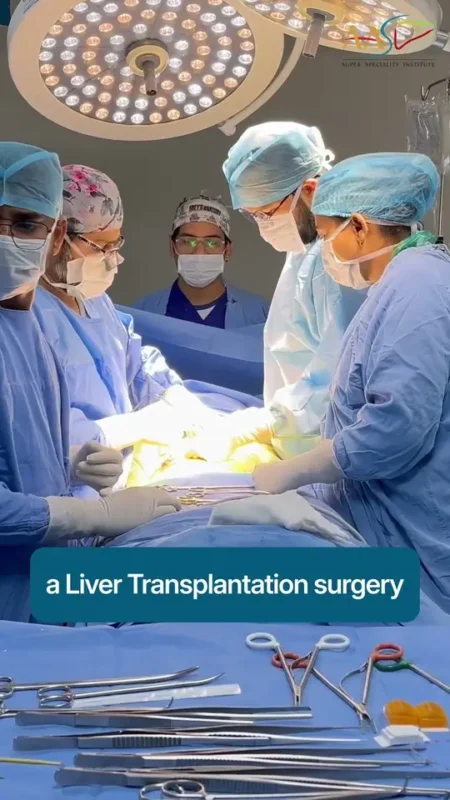
6. Surgery. The donor and child have their operations on the same day, in parallel theatres.
7. Pediatric ICU. Your child is closely watched for the first few days. Parents can usually stay close throughout.
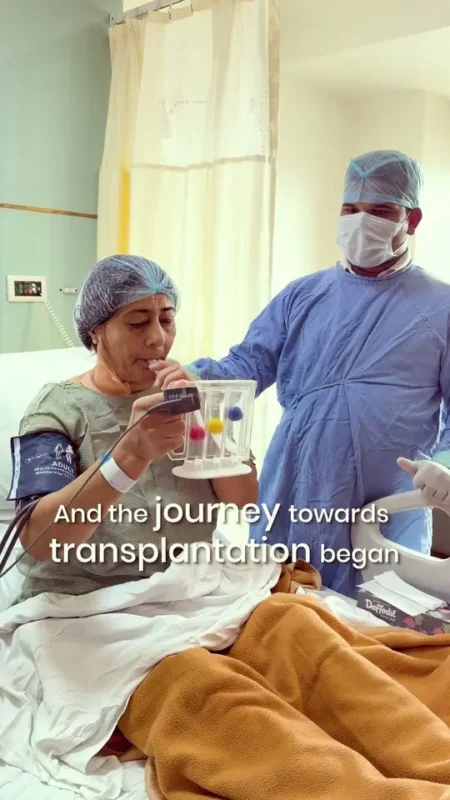
8. Ward stay and going home. Most children stay 2–3 weeks in total, depending on their age and how sick they were before surgery.
9. Follow-up. Check-ups are weekly at first, then gradually less frequent, eventually a few times a year.
Can a parent donate part of their liver to a child?
Yes. In India, most children receive part of a parent’s liver. Because a child’s body is small, the parent usually donates the left lateral segment, about 20% of their liver. This is a smaller portion than in adult-to-adult transplants, which makes the operation safer for the parent.
A parent can usually donate if they:
• Are in good general health
• Have a compatible blood group (in some cases, a mismatch can still be managed)
• Have a healthy liver with no significant fatty change
• Choose to donate freely, without pressure
The donor stays on the adult ward and usually goes home after about a week, often before the child. The liver regrows over the following weeks and months. Most parents return to normal activity within six to eight weeks. Our page on living donor liver transplant explains donor safety and recovery in detail.
If neither parent can donate, the team may look at other family members or the deceased donor waiting list.
How is surgery different for a small child?
Transplanting a liver into a baby or toddler is technically demanding. The blood vessels can be just a few millimetres wide, and the space in the abdomen is small. Children’s transplants need:
• Surgeons experienced in pediatric and reduced-size liver grafts
• Anaesthetists and intensivists trained to look after small children
• A pediatric ICU with nurses used to transplant care
• Pediatric hepatologists, dietitians and child-friendly support
When you are choosing a centre, ask how many pediatric transplants the team has done and who will look after your child in the ICU.
Life after a pediatric liver transplant
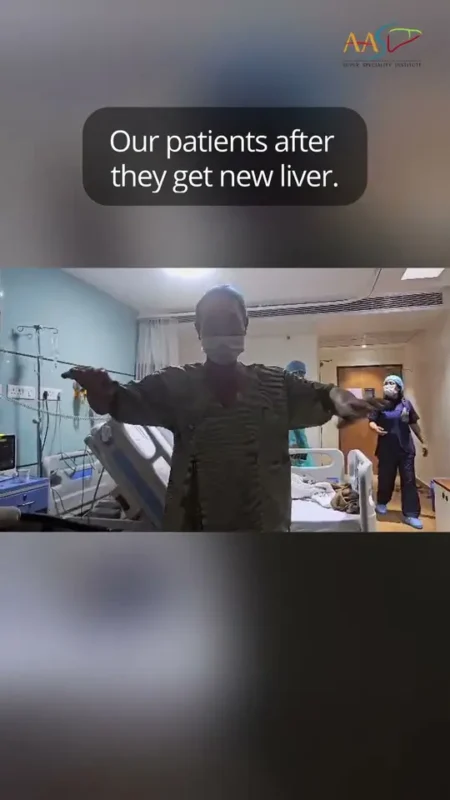
The first few months involve a lot of hospital visits and blood tests. After that, life settles into a new normal.
• School. Most children return to school around three months after surgery.
• Play and sport. Children can run, play and take part in sport as they recover.
• Growth. Many children who were small before the transplant catch up on growth afterwards.
• Medicines. Anti-rejection medicines are needed for life, but doses are often reduced over time.
• Vaccines. Inactivated vaccines can be given after transplant. Live vaccines are usually avoided, which is why they are given before surgery where possible.
• The teenage years. Teenagers sometimes skip medicines as they seek independence. This is one of the most common reasons for late problems, so the team will support your child through this stage.
Most importantly, children who have had a liver transplant can go on to study, work, marry and have families of their own.
What does it cost?
Cost depends on the type of transplant, your child’s condition and how long they need to stay in hospital. We have covered this in detail in our guide to pediatric liver transplant cost in Noida. There are also government schemes, relief funds and charities that help families meet the cost.
Pediatric liver transplant at AASLT, Delhi NCR
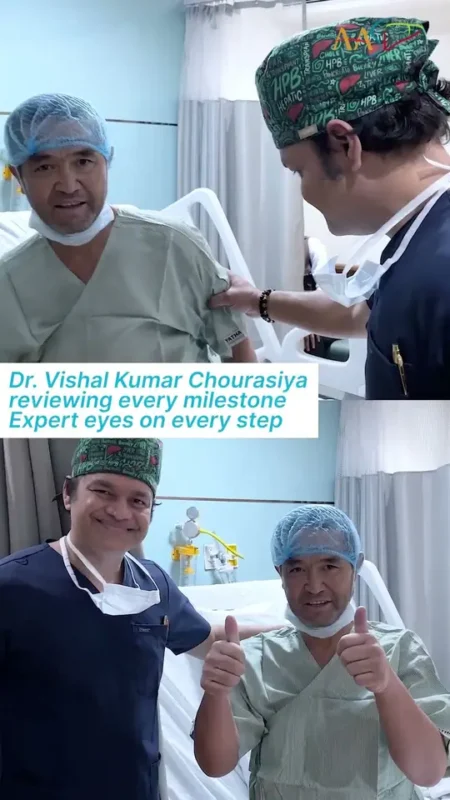
At AASLT, pediatric liver transplants are performed at Yatharth Super Speciality Hospital, Noida Extension, under Dr Vishal Kumar Chorasiya, who has more than 20 years of experience in liver transplantation. The team includes pediatric-trained anaesthetists, intensivists and transplant coordinators, and families stay with their child through ICU and ward care.
One of our youngest patients, Mokshita, received part of her parent’s liver. You can watch her family’s story on Dr Chorasiya’s YouTube channel. Stories like hers are why we do this work.
Frequently asked questions
What is the most common reason for a liver transplant in children?
Biliary atresia is the most common reason, especially when a Kasai operation in infancy has not fully restored bile drainage.
What is the success rate of pediatric liver transplant in India?
Outcomes are generally very good. One large Indian series reported 95% survival at one year and 87% at five years after living donor pediatric liver transplant.
Can a mother donate her liver to her baby?
Yes. Either parent can donate if they are healthy and have a compatible blood group. Usually about 20% of the parent’s liver is enough for a small child.
How long does a child stay in hospital after a liver transplant?
Most children stay 2–3 weeks, including a few days in the pediatric ICU. Families usually need to stay near the hospital for a few more weeks for check-ups.
Can my child live a normal life after a liver transplant?
Yes. Most children return to school within about three months, grow normally and lead full lives, with lifelong medicines and regular check-ups.
Speak to our pediatric transplant team
If your child’s doctor has mentioned a liver transplant, an early conversation helps you plan without panic. Call our 24×7 transplant coordinator on +91 79007 20095, or WhatsApp your child’s reports to the same number.