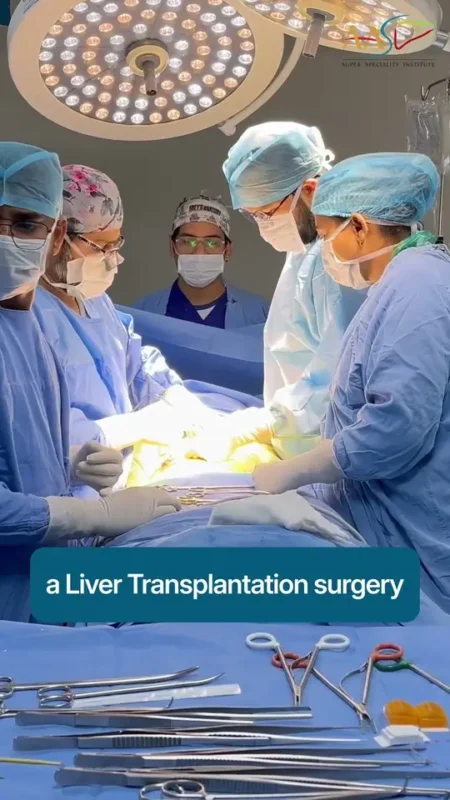

Two families can be quoted the same price for a liver transplant and end up paying very different amounts. The difference is rarely the surgery itself. It is what the package leaves out: the weeks of stay near the hospital after discharge, the donor’s lost wages, a readmission for a complication, and a lifetime of medicines.
This guide breaks down the liver transplant package cost in India, line by line, so you can compare quotes properly and plan for the costs that never appear on the first estimate.
The short answer: A living donor liver transplant package in India usually costs ₹18–29 lakh (about US$22,000–35,000), covering both operations and the hospital stay. Deceased donor transplants usually cost ₹24–35 lakh. On top of this, families should budget for 2–3 months of stay near the hospital, possible complications (₹3–8 lakh), and anti-rejection medicines (₹1–2 lakh a year, for life).
Liver transplant package cost in India by transplant type
The type of transplant is the biggest single factor in the price. These are typical ranges at experienced centres in Delhi NCR, based on our liver transplant cost page:
| Transplant type | Typical package range | Notes |
| Living donor liver transplant (LDLT) | ₹18–29 lakh | Includes donor and recipient surgery and stay |
| Deceased donor liver transplant (DDLT) | ₹24–35 lakh | Recipient only; timing depends on organ availability |
| Split liver transplant | ₹24–33 lakh | One deceased donor liver shared between two recipients |
| Robotic or complex surgery | ₹28–40 lakh | ABO-incompatible, redo surgery or very sick patients |
Why is a deceased donor transplant often more expensive even though there is no donor surgery? Patients waiting for a deceased donor liver are usually sicker by the time an organ becomes available. Sicker patients need longer ICU stays, more blood products and sometimes dialysis.
What a good liver transplant package should include
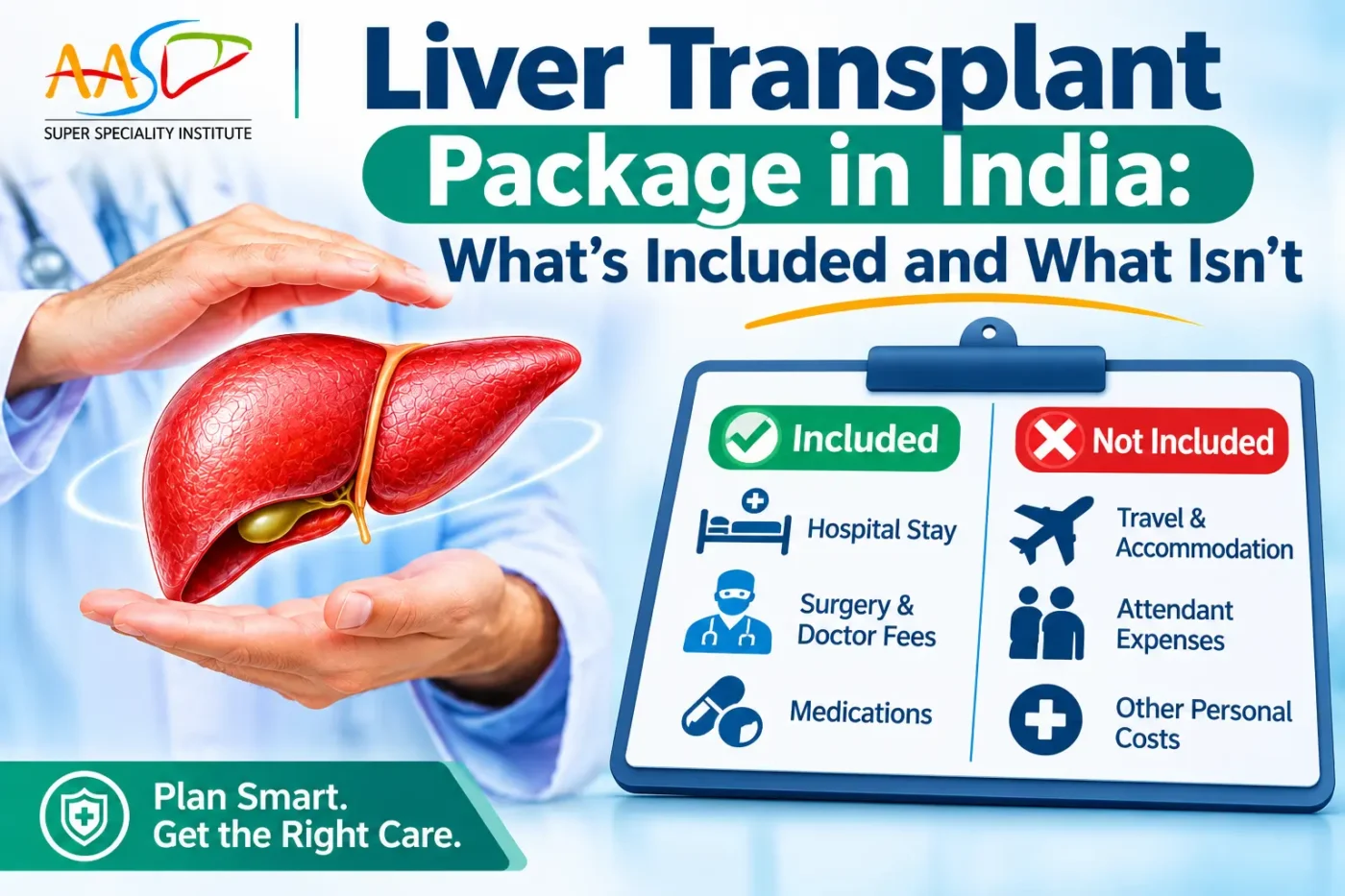
A clear package is written down, signed, and lists its inclusions. At a well-run centre, a living donor package typically covers:
1. Evaluation of both donor and recipient. Blood tests, scans, heart and lung checks, and the donor’s liver volume assessment.
2. Both operations. Surgical team fees, operating theatre, anaesthesia and surgical consumables.
3. ICU and ward stay for both. Usually 3–5 days in the ICU and 10–14 days in total for the recipient, and about 7–10 days for the donor.
4. Medicines during admission. Anti-rejection medicines, antibiotics and blood products used while in hospital.
5. Early follow-up. Clinic visits and routine blood tests during the first 90 days, at many centres.
Ask for the package in writing, with the number of ICU days, ward days and room category spelled out. If a quote is a single number with no breakdown, ask for one.
Where the money actually goes
It helps to know roughly how the bill is divided, so you can see which parts can change:
| Part of the bill | Approximate share |
| Surgery and operating theatre | 35–45% |
| ICU and ward stay | 20–30% |
| Medicines during admission | 10–15% |
| Pre-transplant evaluation | 8–12% |
| First 90 days of follow-up | 5–8% |
The ICU and ward share is the part most likely to grow. Each extra ICU day adds significantly to the final bill, which is why the patient’s condition at the time of surgery matters so much to cost.
What liver transplant packages usually don’t include
This is where families get caught out. These costs are real, they are common, and most first estimates leave them out:
• Tests done before you reach the centre. Scans and blood tests at your local hospital are paid separately.
• Stay near the hospital after discharge. Recipients usually need to stay close by for 2–3 months for frequent check-ups. A caregiver stays too.
• The donor’s lost income. A living donor typically needs 4–6 weeks off work. For many families, this is a bigger cost than they expect.
• Complications. A bile leak, a blood clot or an episode of rejection can add ₹3–8 lakh, especially if the patient needs readmission after discharge.
• A second donor’s tests. If the first family member turns out to be unsuitable, another donor’s evaluation adds cost.
• Lifelong medicines and tests. Anti-rejection medicines and blood tests usually cost ₹1–2 lakh a year. The cost is highest in year one and falls as doses settle.
• Room upgrades. A higher room category raises the daily rate for every day of stay.
None of these are “hidden” in a dishonest sense. They are simply outside what any hospital can control or predict. A good team will talk about them before you sign, not after.
The 6 things that push the cost up
If you are trying to understand why your estimate is higher or lower than another family’s, look at these:
1. The MELD score at surgery. A higher score means a sicker patient, a longer ICU stay and more blood products.
2. Blood group mismatch. An ABO-incompatible transplant needs extra treatment before surgery to lower antibodies.
3. The underlying disease. Liver cancer, active infection or previous abdominal surgery can make the operation longer and more complex.
4. Length of stay. Most patients stay 2–3 weeks. Complications extend this.
5. Room category. A private room costs more per day than a twin-sharing room.
6. Donor availability. Living donation allows surgery to be planned. Waiting for a deceased donor can mean the patient deteriorates in the meantime.
How to compare two liver transplant quotes fairly
“Best value for money” does not mean the lowest number. It means the most care, and the least financial surprise, for what you pay. When you hold two quotes side by side, check:
• Are both quotes for the same transplant type (living or deceased donor)?
• Do both include the donor’s surgery and stay?
• How many ICU and ward days does each assume?
• What happens to the price if the stay runs longer?
• Are admission medicines and blood products included, or billed separately?
• Are the first 90 days of follow-up covered?
• What is the room category?
A lower quote that excludes donor care or caps ICU days can end up costing more. Our earlier complete guide to liver transplant cost in India explains the overall price range in more detail.
Paying for the transplant: insurance and government schemes
Many families combine more than one source of funding:
• Private health insurance. Most policies cover transplant up to the sum insured, but cover for the donor’s expenses varies between policies. Check your policy wording and the rules set by the insurance regulator, IRDAI, and ask the hospital’s insurance desk to start pre-authorisation early. It can take a few days.
• Ayushman Bharat PM-JAY. Eligible families get cover of up to ₹5 lakh per family per year at empanelled hospitals. Check your eligibility on the official PM-JAY website.
• CGHS and ECHS. Central government employees, pensioners and ex-servicemen may be eligible for cover.
• Relief funds and charitable trusts. The Prime Minister’s and Chief Ministers’ relief funds, along with several trusts, support transplant patients. The hospital’s social worker can help with the paperwork.
• Crowdfunding. Many families raise part of the cost online, often with help from the hospital in verifying the medical need.
For international patients
Patients travelling from abroad usually receive a fixed, all-inclusive package quoted in US dollars. Ask whether it includes airport transfers, interpreter support, accommodation for the donor and attendant, and the post-discharge stay in India. Our international packages in USD page lists what is typically included.
How AASLT handles transplant costs
At AASLT, Yatharth Super Speciality Hospital, Noida Extension, every family receives a written package that lists what is included and what is not, before admission. The transplant coordinator also talks you through the likely post-discharge costs, so the budget you plan for is close to the one you actually need.
Dr Vishal Kumar Chorasiya and the team have more than 20 years of experience in liver transplantation, which helps keep ICU stays and complications, the two biggest cost drivers, as low as possible.
Frequently asked questions
What is the cost of a liver transplant package in India?
A living donor liver transplant package usually costs ₹18–29 lakh, and a deceased donor transplant ₹24–35 lakh. Complex or robotic cases can reach ₹28–40 lakh.
Does the liver transplant package include the donor’s surgery?
For living donor transplants, a good package includes the donor’s evaluation, surgery and hospital stay. Always confirm this in writing.
How much do medicines cost after a liver transplant?
Anti-rejection medicines and routine blood tests usually cost ₹1–2 lakh a year. They are needed for life, but the cost is highest in the first year.
Does health insurance cover liver transplant in India?
Most health insurance policies cover liver transplant up to the sum insured. Cover for donor expenses varies, so check your policy wording before admission.
Why is a deceased donor liver transplant more expensive?
Patients waiting for a deceased donor are often sicker at the time of surgery, which means longer ICU stays, more blood products and sometimes dialysis.
Ask for a written estimate
If you are comparing hospitals, start with a clear, written estimate for your own case. Call our transplant coordinator on +91 79007 20095, or WhatsApp your reports to the same number, and we will explain what your package would include.