
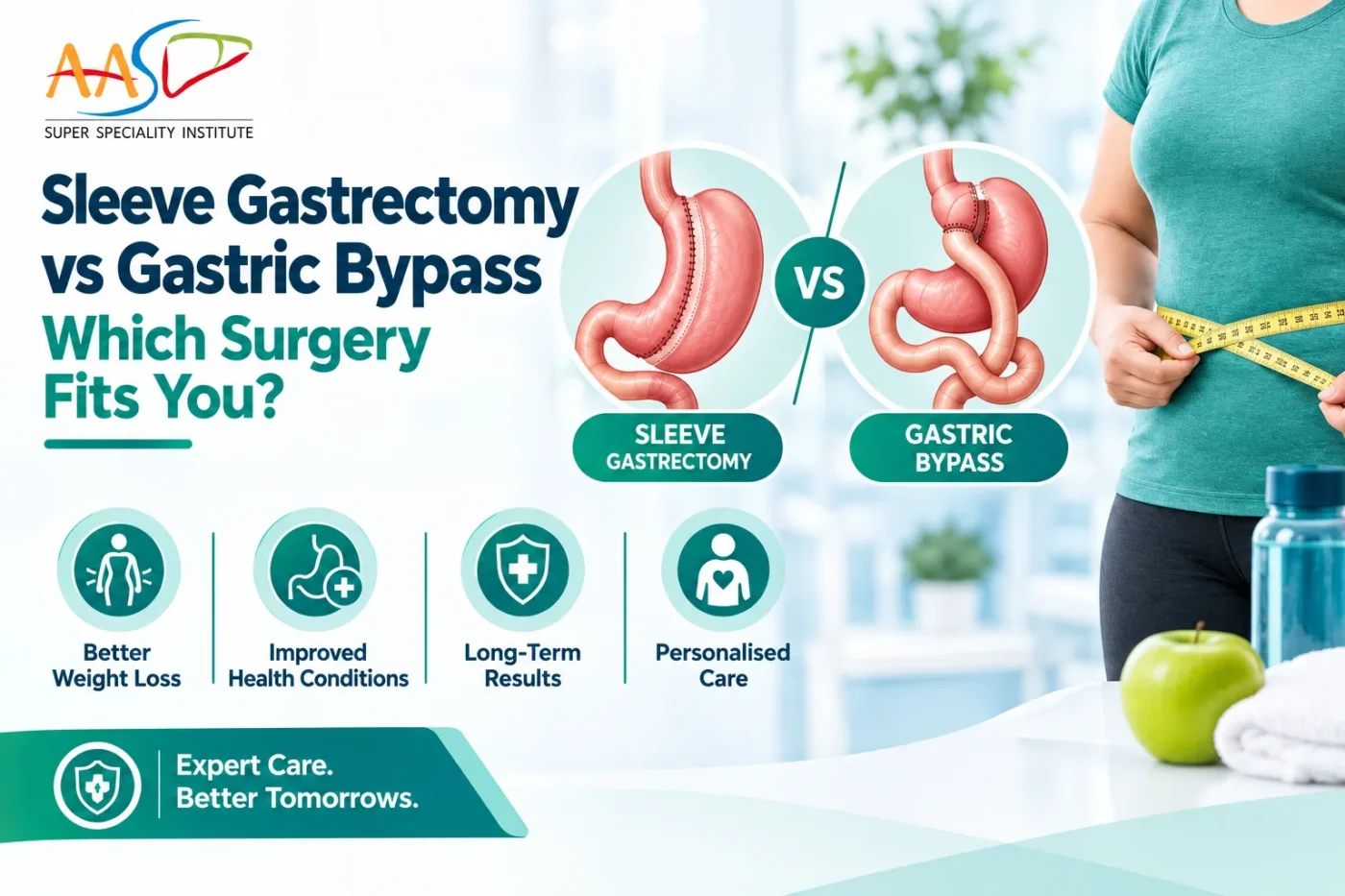
Once someone decides they’re ready to consider bariatric surgery, the next question is almost always the same: sleeve or bypass? Both are well-established, effective procedures, and both show up constantly in online comparisons that rarely go beyond generic pros-and-cons lists. Here’s a more useful way to think about which one might actually suit your situation.
What Each Surgery Actually Does
Sleeve Gastrectomy removes roughly 75-80% of the stomach, leaving a narrow, tube-shaped stomach (the “sleeve”). This restricts how much food you can eat at once and also reduces production of ghrelin, a hormone that drives hunger — meaning the weight loss effect comes from both a smaller stomach and genuinely reduced appetite, not willpower alone.
Gastric Bypass (Roux-en-Y) creates a small stomach pouch and reroutes part of the small intestine to connect directly to it, bypassing a portion of the stomach and upper intestine. This works through both restriction (smaller stomach pouch) and reduced calorie/nutrient absorption from the bypassed intestine, along with hormonal changes that also help reduce hunger and improve blood sugar control.
Where They Actually Differ in Practice
Weight loss outcomes: Both procedures produce substantial, durable weight loss for most patients. Gastric bypass has historically shown slightly greater average weight loss in some studies, though the gap has narrowed considerably as sleeve gastrectomy technique and long-term data have matured. Individual results vary more based on lifestyle changes and follow-up than which procedure was chosen.
Effect on diabetes and metabolic conditions: Gastric bypass tends to have a more pronounced and often faster effect on Type 2 diabetes remission, largely due to the additional hormonal changes from intestinal rerouting. For patients whose primary goal is aggressive metabolic improvement alongside weight loss, this can be a meaningful factor.
Surgical complexity and risk: Sleeve gastrectomy is generally considered a technically simpler procedure with a somewhat shorter operating time and a lower rate of certain long-term complications, since it doesn’t involve rerouting the intestines. Gastric bypass, being more complex, carries a slightly higher risk profile but offers its additional metabolic benefits in return.
Long-term nutritional considerations: Because gastric bypass reduces nutrient absorption in addition to restricting food intake, patients need more rigorous lifelong vitamin and mineral supplementation (particularly B12, iron, calcium, and folate) to avoid deficiencies. Sleeve gastrectomy patients still need supplementation, but generally to a lesser degree.
Reversibility: Sleeve gastrectomy is not reversible, since stomach tissue is permanently removed. Gastric bypass is technically reversible in rare circumstances, though this is a major additional surgery and not something typically planned as an option.
Acid reflux (GERD): Sleeve gastrectomy can sometimes worsen existing GERD symptoms in some patients, since the altered stomach shape can affect how well acid stays down. Gastric bypass, by contrast, often improves GERD symptoms, since the small stomach pouch reduces acid production and the rerouted anatomy changes how acid interacts with the oesophagus. For patients with significant, pre-existing GERD, this is often a genuinely deciding factor toward bypass.
Who Tends to Be a Better Fit for Sleeve Gastrectomy
- Patients without severe, longstanding Type 2 diabetes requiring aggressive metabolic intervention
- Patients without significant pre-existing GERD
- Those who prefer a technically simpler procedure with a somewhat more straightforward recovery
- Patients concerned about the more intensive long-term nutritional monitoring that bypass requires
Who Tends to Be a Better Fit for Gastric Bypass
- Patients with significant Type 2 diabetes where more pronounced metabolic improvement is a priority
- Patients with significant, symptomatic GERD
- Those with a higher starting BMI, where the combined restrictive-and-malabsorptive effect may offer an advantage
- Patients who are prepared for more rigorous, lifelong nutritional supplementation and monitoring
What Neither Surgery Does on Its Own
This is worth being direct about: neither surgery is a standalone fix. Both require a genuine, lasting commitment to dietary changes, regular follow-up, and in most cases, lifelong vitamin and mineral supplementation. Patients who treat the surgery as the entire solution, without adjusting eating habits and activity levels afterward, generally see less durable results than those who treat it as a powerful tool within a broader lifestyle change.
Eligibility: Who Actually Qualifies
Bariatric surgery in India is generally considered for patients with a BMI of 37.5 or higher, or a BMI of 32.5 or higher with significant obesity-related health conditions like Type 2 diabetes, hypertension, or sleep apnoea — broadly consistent with international guidelines, though your specific surgical team will assess your full health picture rather than applying BMI as a rigid cutoff alone.
How the Decision Actually Gets Made
In practice, this isn’t a decision patients make alone from a comparison chart — it’s made together with a bariatric surgeon after a full evaluation of your BMI, existing health conditions (particularly diabetes and GERD), eating patterns, and personal preferences around risk and long-term follow-up requirements. At AASLT, bariatric surgery is offered as part of the broader HPB and GI surgery programme, with both sleeve gastrectomy and gastric bypass available depending on what genuinely fits each patient’s health profile and goals.
According to the American Society for Metabolic and Bariatric Surgery (ASMBS), both sleeve gastrectomy and gastric bypass are safe, effective, and well-studied procedures, with the right choice depending on individual patient factors rather than one procedure being universally superior to the other.
What the Pre-Surgery Evaluation Actually Looks Like
Neither procedure is scheduled based on a single consultation. A proper bariatric work-up typically includes a detailed medical history, blood work to assess nutritional status and metabolic health, an endoscopy to check the stomach and oesophagus (particularly relevant for the sleeve-vs-bypass decision if GERD is a concern), and often a psychological evaluation to confirm realistic expectations and readiness for the significant lifestyle changes surgery requires. Many programmes also involve a nutritionist early on, since the post-surgical eating pattern is something patients need to understand and prepare for well before the operation itself.
This thorough evaluation isn’t a formality — it’s what allows the surgical team to actually make an informed sleeve-versus-bypass recommendation specific to your body, rather than a generic one based on BMI alone.
The Cost Conversation, Honestly
Bariatric surgery cost in India varies considerably based on the specific procedure, the hospital, length of stay, and whether any complications extend recovery. Gastric bypass, being the more complex of the two procedures, generally costs somewhat more than sleeve gastrectomy at most centres, reflecting the additional operating time and technical complexity involved. Rather than comparing on price alone, it’s worth asking whether a quoted package includes the full pre-surgical work-up, the surgery itself, hospital stay, and a defined period of post-operative follow-up and nutritional counselling — since incomplete packages that look cheaper upfront can end up costing more once follow-up care is added separately. According to Johns Hopkins Medicine, successful long-term outcomes after bariatric surgery depend heavily on this kind of structured, ongoing follow-up care, not just the operation itself — which is worth factoring into any cost comparison between centres.
Frequently Asked Questions
Which surgery leads to more weight loss?
Both lead to substantial weight loss, and the difference between them has narrowed with modern surgical technique. Individual results depend more on post-surgical lifestyle adherence than the specific procedure chosen.
Do I need to stay on a special diet forever after bariatric surgery?
Yes, though the specifics evolve over time — early recovery involves a structured diet progression, and long-term, most patients follow a protein-focused diet with lifelong vitamin and mineral supplementation, more extensively for gastric bypass than sleeve gastrectomy.
Can bariatric surgery be reversed if I change my mind?
Sleeve gastrectomy cannot be reversed, since stomach tissue is removed. Gastric bypass is technically reversible in rare cases but involves major additional surgery and isn’t typically planned as a fallback option.
If you’re exploring bariatric surgery, book a consultation or read more about our approach to bariatric and GI surgery.