
Piles (hemorrhoids) are one of the most common conditions people quietly deal with for months, sometimes years, before mentioning it to a doctor. The embarrassment factor often causes more delay than the condition itself deserves — this is an extremely common, well-understood problem with straightforward treatment options at every stage.
What Piles Actually Are
Hemorrhoids are swollen blood vessels in and around the anus and lower rectum — essentially cushions of tissue that everyone has, which become a problem when they swell, become inflamed, or prolapse (protrude). They’re broadly categorised as:
- Internal hemorrhoids — inside the rectum, often painless but can cause bleeding, and may prolapse (protrude) in more advanced cases
- External hemorrhoids — under the skin around the anus, which can become painful, especially if a blood clot forms within them (thrombosed hemorrhoid)
Common Symptoms
- Bright red bleeding, often noticed on toilet paper or in the toilet bowl after a bowel movement
- Itching or irritation around the anal area
- Discomfort or pain, particularly with external hemorrhoids or thrombosed ones
- A lump or swelling near the anus
- A feeling of incomplete emptying after a bowel movement, sometimes associated with prolapsed internal hemorrhoids
It’s worth saying clearly: bleeding should always be evaluated by a doctor rather than assumed to be piles, since other more serious conditions can present similarly, and ruling them out matters more than avoiding an uncomfortable conversation.
The Grading System That Actually Guides Treatment
Internal hemorrhoids are graded on a scale that directly determines the treatment approach:
- Grade 1: Small, don’t prolapse, may cause mild bleeding — usually managed with dietary and lifestyle changes alone
- Grade 2: Prolapse during bowel movements but retract on their own afterward — often managed conservatively, sometimes with minor procedures if symptoms persist
- Grade 3: Prolapse and need to be manually pushed back in — typically need a procedural or surgical intervention for lasting relief
- Grade 4: Permanently prolapsed and cannot be pushed back in — generally require surgical treatment
This grading is exactly why “just live with it” or “just have surgery immediately” are both often the wrong advice — the right approach genuinely depends on where your specific case sits on this scale.
When Home Care and Lifestyle Changes Are Actually Enough
For Grade 1 and many Grade 2 cases, conservative management is often genuinely effective:
- Increasing dietary fibre to soften stools and reduce straining
- Staying well hydrated
- Avoiding prolonged sitting on the toilet, including phone use while seated
- Topical treatments for symptom relief during flare-ups
- Regular physical activity, which helps prevent constipation
When It’s Time for a Procedure or Surgery
If symptoms persist despite consistent lifestyle changes, or if you’re dealing with Grade 3 or 4 hemorrhoids, procedural treatment becomes the more realistic path to lasting relief. Options include less invasive procedures (like rubber band ligation for select Grade 2-3 cases) and, for more advanced or recurrent cases, surgical treatment.
What MIPH Surgery Actually Involves
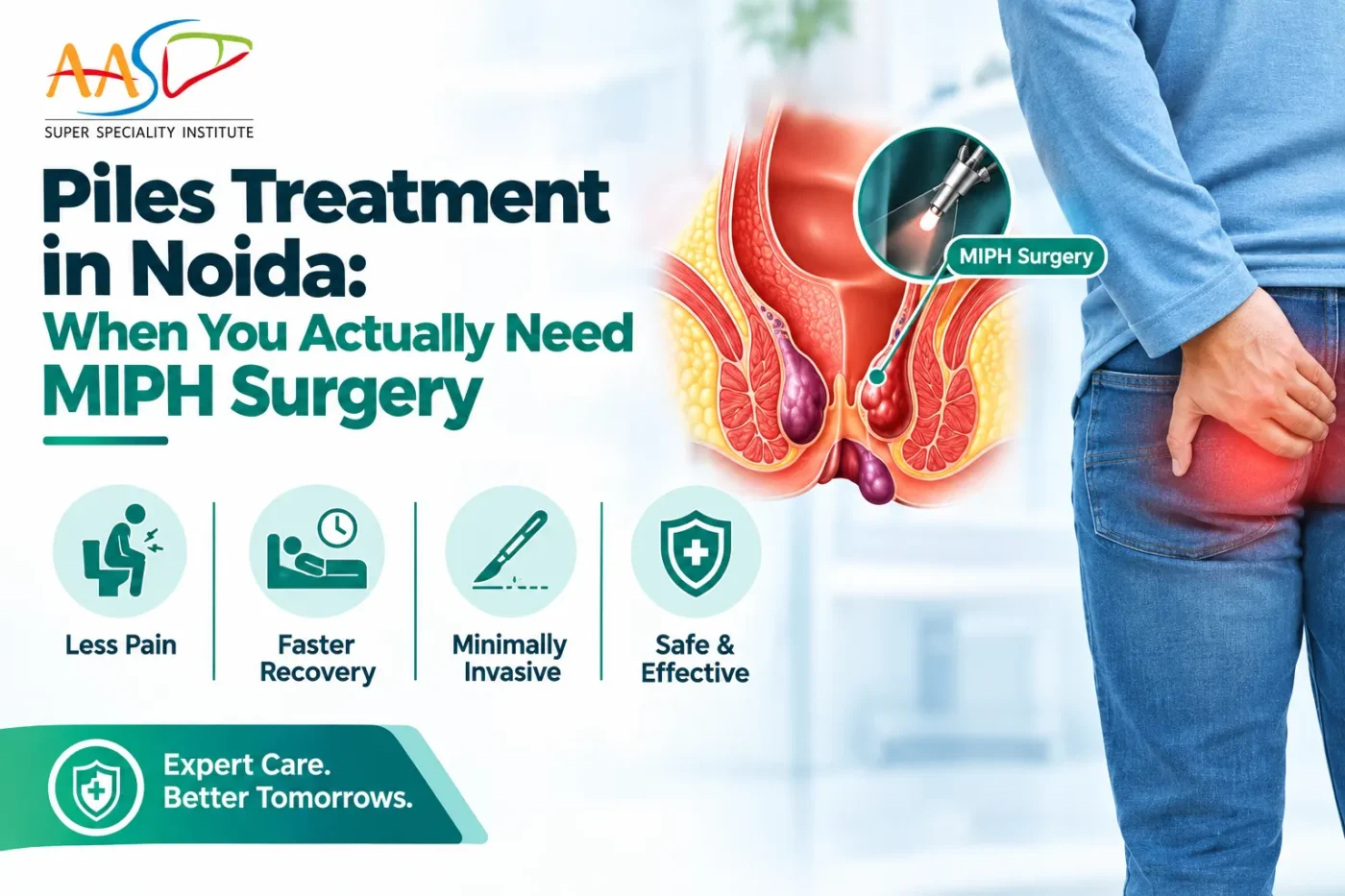
MIPH (Minimally Invasive Procedure for Hemorrhoids), also known as stapled hemorrhoidopexy, is a surgical technique that differs meaningfully from traditional hemorrhoidectomy. Rather than cutting away the hemorrhoidal tissue directly, MIPH uses a circular stapling device to reposition the prolapsed tissue back into its normal position and interrupt the blood supply feeding the enlarged hemorrhoids, allowing them to shrink.
Compared to traditional surgical hemorrhoidectomy, MIPH generally offers:
- Significantly less post-operative pain, since it avoids cutting the sensitive skin around the anus that traditional surgery involves
- Faster recovery and return to normal activity, often within a week to ten days
- Shorter hospital stay, frequently a same-day or overnight procedure
MIPH isn’t the right fit for every case — it’s generally best suited to circumferential (all-around) prolapsing internal hemorrhoids, and a surgeon will assess whether your specific presentation is appropriate for this technique versus a different surgical approach.
Recovery After MIPH
Most patients experience mild discomfort rather than significant pain in the days following surgery, manageable with standard pain relief. A high-fibre diet and stool softeners are typically recommended in the recovery period to keep bowel movements comfortable while the area heals. Most people return to normal daily activities within a week to ten days.
Why the Right Surgical Approach Matters
Choosing between conservative management, a minor procedure, or surgery — and choosing the right surgical technique if surgery is needed — genuinely affects both comfort during recovery and long-term results. This is exactly the kind of assessment that benefits from an experienced GI surgical opinion rather than a generic recommendation.
At AASLT, hemorrhoid treatment, including MIPH surgery, is offered as part of the HPB and GI surgery programme in Noida. According to the National Institute of Diabetes and Digestive and Kidney Diseases (NIDDK), most cases of hemorrhoids can be managed successfully, and surgical treatment is generally reserved for more severe or persistent cases that don’t respond to conservative measures — exactly the graded approach outlined above.
Why So Many People Delay Getting This Checked
It’s worth naming the obvious reason directly: embarrassment keeps people from booking this appointment far longer than the condition itself warrants. Piles are extremely common — a large share of adults will deal with symptomatic hemorrhoids at some point in their life — and any GI surgeon has this conversation multiple times a week. The examination itself is brief, routine, and handled with the same clinical matter-of-factness as any other physical exam.
The actual cost of delaying isn’t emotional, it’s medical: a Grade 1 hemorrhoid managed early with dietary changes is a much simpler problem than a Grade 3 or 4 hemorrhoid that’s been left to progress for years, sometimes causing anaemia from chronic, unnoticed blood loss along the way. If embarrassment has been the main thing standing between you and a five-minute consultation, it’s worth remembering that the appointment is far less uncomfortable than the years of managing symptoms alone tend to be.
Ruling Out Something More Serious First
Because bleeding is also a symptom of other, more serious conditions, including colorectal polyps or, less commonly, colorectal cancer, any doctor evaluating rectal bleeding will typically want to confirm it’s actually coming from hemorrhoids rather than assuming it based on symptoms alone — particularly in patients over 45, those with a family history of colorectal cancer, or anyone with a change in bowel habits alongside the bleeding. This sometimes means a colonoscopy is recommended alongside hemorrhoid treatment, not because hemorrhoids are unlikely, but because ruling out the more serious possibility is worth the extra step. According to the American Cancer Society, rectal bleeding should always be evaluated rather than automatically attributed to hemorrhoids, since colorectal cancer can present with very similar symptoms.
Frequently Asked Questions
Is piles surgery very painful?
Traditional hemorrhoidectomy has a reputation for a painful recovery, but modern approaches like MIPH have significantly reduced post-operative pain by avoiding cutting sensitive perianal skin.
Can piles come back after surgery?
Recurrence is possible with any hemorrhoid treatment, though surgical options generally have lower recurrence rates than conservative management alone for higher-grade hemorrhoids. Maintaining good bowel habits afterward helps reduce this risk.
Are piles related to diet?
Yes, low-fibre diets and chronic constipation (leading to straining) are significant contributing factors, which is exactly why dietary changes are often the first line of treatment for milder cases.
If you’ve been dealing with symptoms in silence, book an appointment or read more about our approach to GI surgery.