

If you search for the best hepatobiliary surgeon in India, you will find dozens of lists, each with different names. Most are based on hospital marketing, not on what matters for your operation. The truth is that there is no single “best” HPB surgeon for everyone. There is a surgeon who is right for your condition, your stage of disease and your situation.
This guide explains what HPB surgeons do, how their experience differs by condition, and the questions that help you decide.
The short answer: The best hepatobiliary surgeon in India for you is one who regularly performs your specific operation, works in a high-volume HPB unit with a full team (hepatologists, interventional radiologists, oncologists and an ICU), offers open and minimally invasive options where suitable, and explains risks and outcomes honestly. For complex operations such as a Whipple or major liver resection, surgeon and hospital volume are among the strongest predictors of safe outcomes.
What does an HPB surgeon do?
HPB stands for hepato-pancreato-biliary. An HPB surgeon specialises in operations on the liver, pancreas, gallbladder and bile ducts. These organs are packed closely together, share a complex network of blood vessels and ducts, and often need to be operated on together.
Typical HPB operations include:
• Liver resection for primary liver cancer, cancer that has spread from the bowel, and benign tumours
• The Whipple operation and other pancreatic surgery
• Surgery for bile duct cancer and gallbladder cancer
• Repair of bile duct injuries
• Removal of choledochal cysts
• Complex gallstone disease
• Surgery for complications of pancreatitis
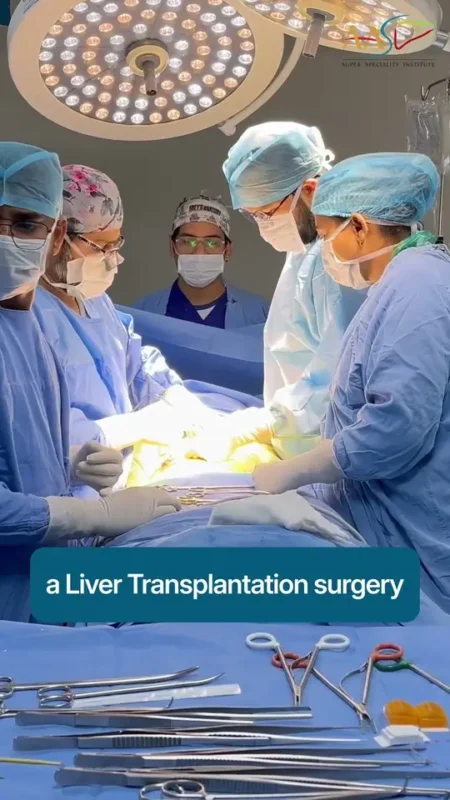
Many HPB surgeons are also liver transplant surgeons, because the two fields share the same anatomy and skills. The International Hepato-Pancreato-Biliary Association (IHPBA) is the global professional body for this speciality.
Why surgeon experience matters so much in HPB surgery
In most fields of surgery, experience helps. In HPB surgery it can be decisive. A review published in the Annals of Surgery looked at studies of nearly 20,000 patients who had pancreatic surgery. In Dutch data, hospital death rates were 13.8% to 16.5% in hospitals doing fewer than five pancreatic resections a year, and 0% to 3.5% in hospitals doing more than 24 (van Heek et al., 2005).
The reason is not just the surgeon’s hands. High-volume units have teams that recognise and treat complications early: a pancreatic leak, a bile leak, bleeding. They have interventional radiologists who can drain a collection without a second operation, and ICUs used to these patients.
Match the surgeon to your condition
Different HPB conditions call for different kinds of experience. Use this table as a guide when you speak to a surgeon:
| Your condition | Experience to look for | Ask specifically |
| Liver cancer (HCC) | Liver resection and liver transplant, ablation options | Am I better suited to resection, transplant or another treatment? |
| Bowel cancer spread to liver | Major and staged liver resections, work with oncologists | Can the liver and bowel be treated together or in stages? |
| Pancreatic cancer | Regular Whipple and distal pancreatectomy | How many Whipple operations do you do a year? |
| Pancreatic cysts and neuroendocrine tumours | Pancreas-preserving and minimally invasive options | Does this cyst need surgery, or can we watch it? |
| Bile duct cancer and gallbladder cancer | Combined liver and bile duct resections | Will I need part of my liver removed? |
| Bile duct injury after gallbladder surgery | Bile duct reconstruction (hepaticojejunostomy) | How many bile duct repairs have you done? |
| Choledochal cyst | Complete cyst excision in adults and children | Will the whole cyst be removed? |
| Complicated gallstones or bile duct stones | Laparoscopic surgery with ERCP support | Can the stones be cleared in one admission? |
| Severe pancreatitis complications | Step-up approach with radiology and endoscopy | Can this be managed without open surgery? |
The common thread: ask how often the surgeon performs your specific operation, not just HPB surgery in general.
8 things to check before you choose an HPB surgeon
1. Specialist training. Look for formal training in HPB surgery, liver transplant or surgical gastroenterology.
2. Volume for your operation. How many of your specific procedure does the surgeon perform each year?
3. The team around them. Hepatologists, gastroenterologists, interventional radiologists, oncologists, anaesthetists and an ICU used to HPB patients.
4. A multidisciplinary tumour board. For cancer, your case should be discussed by a group of specialists before surgery.
5. Range of approaches. Open, laparoscopic and robotic surgery, offered based on what suits you rather than on marketing.
6. Honesty about risk. A good surgeon tells you the likely complications and how they are managed.
7. Professional credentials. Memberships of national and international surgical societies and fellowships show ongoing training. In the US, the letters FACS after a surgeon’s name show that the surgeon has met the American College of Surgeons’ standards for training and ethics (American College of Surgeons).
8. Clear communication. You should leave the consultation understanding your options.
Red flags to watch for
• The surgeon cannot tell you how often they perform your operation.
• You are pushed towards a robotic or “advanced” approach without a clear reason.
• There is no mention of a tumour board or other specialists for a cancer case.
• Complications are described as “almost never happening”.
• You are discouraged from getting a second opinion.
When to get a second opinion
A second opinion is worth seeking if:
• You have been told your tumour is “inoperable”. Some tumours considered inoperable at one centre can be removed at another with more experience, sometimes after chemotherapy or portal vein embolisation.
• You have had a bile duct injury during gallbladder surgery. Repair by an experienced HPB team gives the best long-term results.
• You are being offered a major operation and are unsure whether it is needed.
• The plan does not make sense to you.
Most experienced HPB teams can review your scans and reports remotely before you travel.
What to bring to your HPB consultation
• CT, MRI or PET scan reports, and the images on a CD or download link
• Biopsy reports, if any
• Blood tests including liver function and tumour markers (such as CA 19-9 or AFP)
• Endoscopy or ERCP reports
• Previous operation notes and discharge summaries
• A list of your medicines
About Dr Vishal Kumar Chorasiya
Dr Vishal Kumar Chorasiya is Group Director – Liver Transplant, HPB, GI and Robotic Surgery at Yatharth Group of Hospitals, and leads AASLT at Yatharth Super Speciality Hospital, Noida Extension. He has more than 20 years of experience in liver transplant, HPB and GI surgery.
His qualifications include MBBS, MS and FACS, with fellowships in robotic surgery (FICRS) and advanced laparoscopic HPB surgery. He is an associate member of the International Liver Transplantation Society, and a lifetime member of the Liver Transplant Society of India, the Association of Surgeons of India, the Association of Minimal Access Surgeons of India and the Indian Association of Gastrointestinal Endo-Surgeons. His work covers liver resection, Whipple surgery, bile duct reconstruction and robotic HPB surgery. Read his full profile.
If your condition involves the pancreas, our pancreatic diseases page explains the treatment options. For liver transplant specifically, see our earlier article on what to look for in top liver transplant surgeons in India.
Frequently asked questions
Who is the best hepatobiliary surgeon in India?
There is no official ranking. The right surgeon for you is one who regularly performs your specific operation, works in a high-volume HPB unit with a full team, and explains your options and risks clearly.
What is the difference between an HPB surgeon and a general surgeon?
An HPB surgeon has specialist training and experience in operations on the liver, pancreas, gallbladder and bile ducts. Complex operations such as Whipple surgery and major liver resections are best done by HPB specialists.
Does surgeon volume really affect HPB surgery outcomes?
Yes. Studies of pancreatic surgery show much lower death rates in high-volume hospitals than in low-volume ones. Experienced teams also manage complications better.
Should I see an HPB surgeon for gallstones?
Most uncomplicated gallstones can be treated by an experienced laparoscopic surgeon. See an HPB surgeon if stones have entered the bile duct, caused pancreatitis, or if a bile duct injury has occurred.
Is robotic HPB surgery better than open surgery?
For suitable patients, robotic and laparoscopic surgery can mean less pain and a quicker recovery. Not every tumour is suitable. The choice should be based on your condition, not on the technology.
Talk to our HPB team
Share your scans and reports for an opinion from Dr Vishal Kumar Chorasiya’s team. Call +91 79007 20095, or WhatsApp your reports to the same number.